
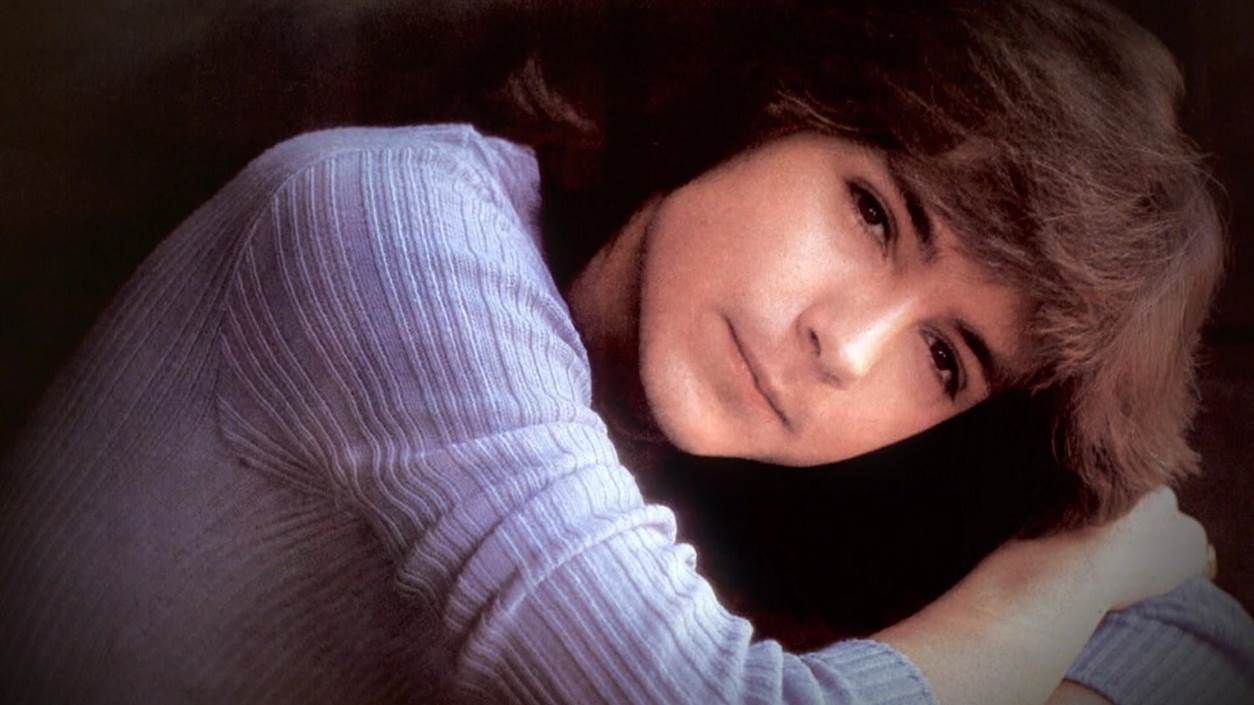
“The Council Chamber” is the sound of a life cornered—where public respectability meets private ruin, and one terrible decision begins to echo like a verdict.
When you see David Cassidy attached to a title like “The Council Chamber,” it can catch you off guard—because this isn’t the kind of track that lived on pop radio. It belongs to the theatre, to a story told under stage lights, where voices don’t just sing but testify. “The Council Chamber” is a short dramatic sequence from Blood Brothers, the musical written by Willy Russell, and Cassidy appears on the 1995 International Cast Recording alongside Petula Clark (as Mrs Johnstone) with Russell himself credited on the recording as well.
This recording is often listed as released in 1995 on First Night Records. And the track itself is fleeting—about 1 minute and 23 seconds on major streaming listings—almost like the intake of breath before a tragedy lands. It was not issued as a single, so there’s no meaningful “debut position” on pop charts to report; its impact is measured the way theatre is measured: by the knot it ties in your throat, and how long it stays there after the curtain.
To understand what Cassidy is doing here, you have to remember what Blood Brothers is at heart: a modern fable about twin brothers separated at birth—one raised in wealth, the other in grinding poverty—destined to collide again and again as adults, until the social distance between them becomes unbearable. The council chamber scene is late-story gravity. It’s where the world has finally sorted the two men into their “proper” places: one of them has climbed into civic authority, the other has been chewed up by circumstance. And the room itself—the council chamber—isn’t just a location. It’s a symbol. It’s society sitting in judgement, polished and official, while something raw and desperate bangs at the door.
If I’m speaking as the old radio storyteller—low voice, late hour, letting the silence do some of the work—I’d tell you that “The Council Chamber” is the moment when the past stops being memory and becomes evidence. The song doesn’t need a long running time because the tension is already fully grown. The music and dialogue feel compressed, like the walls are closing in. In the staging materials and scripts for the show, “THE COUNCIL CHAMBER” is explicitly marked as its own scene, a turning point where the plea—don’t do this—arrives too late to be purely hopeful.
And then there’s David Cassidy—a performer whose public image once felt inseparable from youthful adoration—standing inside a work that demands something very different: not charm, but consequence. Blood Brothers is not interested in preserving anyone’s innocence. It asks its actors to carry fear, regret, and social anger without blinking. In the production history, Cassidy is directly tied to this musical’s high-profile era: Petula Clark was brought in on Broadway, and David Cassidy appeared as one of the twins, a casting choice that drew major attention; he later also starred in the U.S. national tour with Clark. That context changes how you hear him: not as “a star doing theatre,” but as a singer-actor stepping into a story built to bruise.
What does “The Council Chamber” mean, emotionally? It’s the sound of bridges already burned—and still someone tries to cross the ashes. It’s about power: who gets to speak, who gets believed, who gets called “respectable,” and who gets called “trouble.” It’s also about family—how the word can feel sacred in the mouth and useless in the moment. The council chamber is a public room, but what happens there is painfully intimate. The tragedy of Blood Brothers is that love exists in the story—real love—but it is constantly outvoted by money, class, and timing.
So if you press play on “The Council Chamber” expecting a “song,” you may be startled. It’s closer to a flash of theatre: a scene distilled into music, a crack of lightning that shows you the whole landscape for a second—then darkness again. And in that second, David Cassidy helps turn a familiar voice from pop history into something sharper, older, and haunted: the voice of a man standing in a room that was never built for him, asking—too late—whether anybody will listen now.