
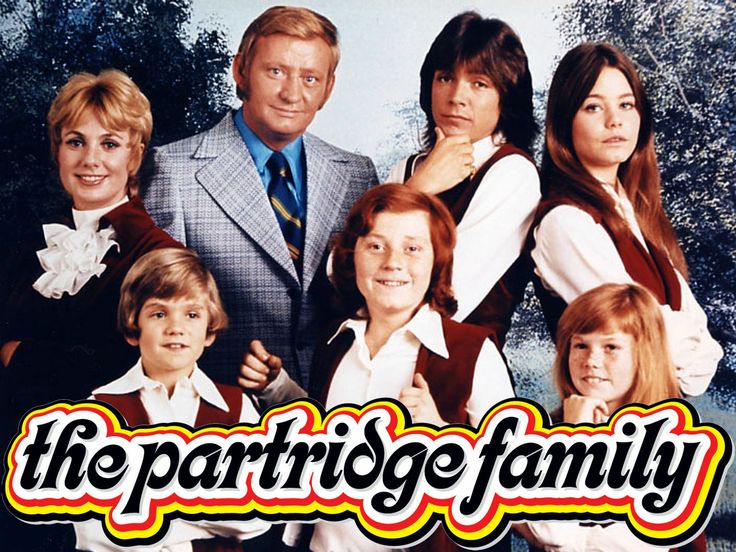
Storybook Love reminds us that The Partridge Family were not only makers of bright television-era hits, but also keepers of a softer, dreamier kind of romance that still glows with quiet charm.
Storybook Love is one of those Partridge Family recordings that feels even sweeter with time. It did not arrive as one of the group’s major standalone chart singles, so it did not earn a separate, headline-making Billboard Hot 100 peak of its own. That matters, because it immediately tells us what kind of song this is: not a giant radio event, not a song pushed to the front of every conversation, but a gentle album-era treasure living just beyond the spotlight. And sometimes those are the songs that age most beautifully. They are discovered more personally, remembered more privately, and loved for reasons that have little to do with chart numbers.
Still, chart context helps place it in history. The Partridge Family were hardly a minor act when songs like Storybook Love appeared in their catalog. By then, the group had already become a true pop phenomenon through the success of I Think I Love You, which reached No. 1 on the Billboard Hot 100 in 1970, followed by more major hits including Doesn’t Somebody Want to Be Wanted and I’ll Meet You Halfway. So when a song like Storybook Love comes along, it belongs to a period when the group’s sound was already woven into everyday life. Even a lesser-known track carried the glow of a familiar voice, a familiar mood, and a familiar world.
That voice, of course, was largely the voice of David Cassidy, whose presence gave The Partridge Family records their emotional center. The television series made the group a household name, but the records had to do real musical work on their own. That is one of the lasting fascinations of this whole story. Behind the bright colors, the family-bus image, and the sitcom charm was a carefully made pop sound, usually built by top session musicians and shaped for maximum melodic warmth. Storybook Love shows that craftsmanship in a different light. It is not trying to overwhelm the listener. It simply opens the door and lets feeling walk in.
The title itself tells you almost everything about the song’s emotional world. Storybook Love lives inside the language of innocence, longing, and idealized romance. Yet what makes it memorable is that it does not feel entirely childish or make-believe. Like many of the best early-1970s pop songs, it balances brightness with a trace of wistfulness. It understands the appeal of love as a dream, but it also hints that the dream matters precisely because real life can feel so hurried, so noisy, and so uncertain. In that sense, the song is not merely cute. It is comforting. It offers a picture of affection that feels clean-hearted, tender, and beautifully unguarded.
Musically, this is part of what The Partridge Family could do so well when they were not chasing the punch of a breakout hit. The melody has a smooth, inviting flow. The arrangement carries the polished pop character listeners expect from the group, but the emotional emphasis is softer than on the big chart singles. There is a lightness in the rhythm, a sweetness in the harmonies, and a gentle sincerity in the vocal approach. David Cassidy had a gift for making earnest material sound alive rather than overly precious, and that quality matters here. He sings this kind of song with just enough warmth to keep it believable.
There is also something important about where Storybook Love sits in the larger identity of The Partridge Family. For many listeners, the group is remembered through the most obvious landmarks: television nostalgia, bubblegum pop energy, and the enormous early hits. But songs like this broaden the picture. They show that the catalog also had room for mood, delicacy, and emotional shading. That is often the hidden reward of going back to an act long after the loudest praise has settled. You hear not just the songs that everyone already knows, but the songs that helped create a fuller emotional atmosphere around the group.
And that may be why Storybook Love lingers. It captures a very specific kind of romantic imagination that was central to so much pop music of the era: hopeful without being grand, sentimental without becoming foolish, and melodic in a way that feels handmade for memory. It belongs to a time when a song could be modest and still be meaningful, when a tune did not need spectacle to stay with you. In today’s terms, it might be called a deep cut. But that phrase sometimes feels too technical for a song this warm. This is not just a deep cut. It is a reminder.
It reminds us that the heart of The Partridge Family was never only in their biggest hits. It was also in the songs that sat quietly beside them, waiting for the right listener, the right afternoon, the right moment of recollection. Storybook Love is one of those songs. It may not have claimed a famous chart number of its own, but it carries something just as lasting: the soft glow of an era when pop music could still sound like a handwritten valentine.