
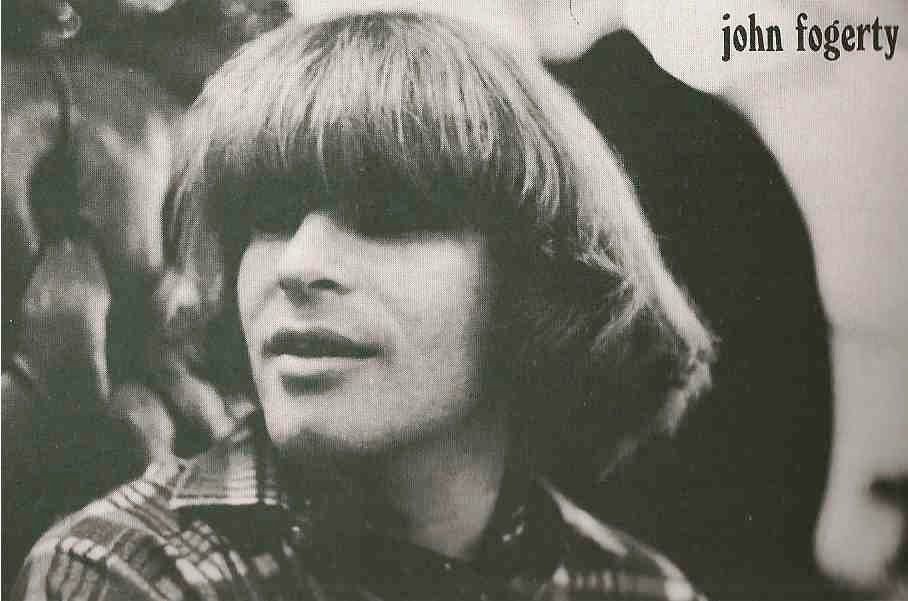
“Radar” is a wry, streetwise song about being tracked by love—when desire turns into pursuit, and freedom starts to feel like a narrow escape.
If you know John Fogerty mainly for the big, sunburnt anthems—songs that roll like highways and smell faintly of river water—“Radar” can catch you by surprise. It isn’t a protest chant or a history lesson. It’s something more intimate and mischievous: a short, tightly wound rocker that treats romance like a chase scene, where the heart doesn’t sigh so much as bolts. And the first fact worth putting right up front is this: “Radar” was released as the fourth track on Deja Vu All Over Again, Fogerty’s studio album issued on September 21, 2004.
On paper, “Radar” didn’t announce itself to the world as a big charting single. Its importance is embedded in the album’s arrival—an arrival that mattered because it ended a long gap between studio records. And the album’s chart “first impression” was strong: Deja Vu All Over Again debuted at No. 23 on the Billboard 200 in late September/early October 2004, as reported in Billboard’s chart coverage at the time. Internationally, the album’s reception was even more striking in places: it reached No. 1 in Sweden, No. 4 in Norway, and placed across several European charts. Those numbers tell a quiet story: even when the rock radio conversation was changing, there was still a deep appetite for Fogerty’s particular blend of grit, melody, and plainspoken nerve.
Now, the song itself. “Radar” runs about 3:07, and it has the feel of someone glancing over his shoulder—half amused, half genuinely concerned. The premise is simple and vivid: a woman is “looking for him,” and he senses that once she locks on, there’s no hiding. Fogerty turns modern surveillance into romantic metaphor—love as tracking signal, attraction as a beam that finds you no matter where you run. It’s funny in concept, but there’s an edge underneath: that uneasy feeling when you realize you’re not just wanted, you’re targeted. Not violence—just the emotional version of being cornered by inevitability.
One of the most touching details is tucked into the credits: Fogerty plays a lot himself here—guitars, lead vocals, background vocals, organ, percussion—and at the end there’s a child voice, credited to Kelsy Fogerty. That small human presence changes the aftertaste. It reminds you that Fogerty in the 2000s wasn’t only the mythic frontman; he was also a father, an older man with a life behind him and a life beside him. Even in a playful song like “Radar,” the world around him feels lived-in, domestic, real.
Placed inside the album, “Radar” also works as a palate cleanser. The title track “Deja Vu (All Over Again)” carries the album’s heavier political shadow; “Radar” slides in with a different kind of tension—personal rather than public, but still urgent in its own way. It’s the sound of a man who’s learned that trouble doesn’t always march in uniform. Sometimes it wears perfume. Sometimes it smiles.
And that’s why the song resonates, especially with listeners who’ve learned a thing or two about repetition. We don’t only repeat history on the news; we repeat it in our private lives—old patterns, old temptations, old dangers we recognize too late. “Radar” doesn’t moralize. It just paints the feeling: the moment you realize you’ve been spotted again, and your feet start moving before your mind finishes the sentence.
In the end, “Radar” is Fogerty doing what he has always done well: turning a plain word into a whole little movie. You can almost hear the engine start, the door slam, the shoreline approaching—escape as rhythm, fear as humor, memory as a compass that keeps pointing to the same complicated places.