
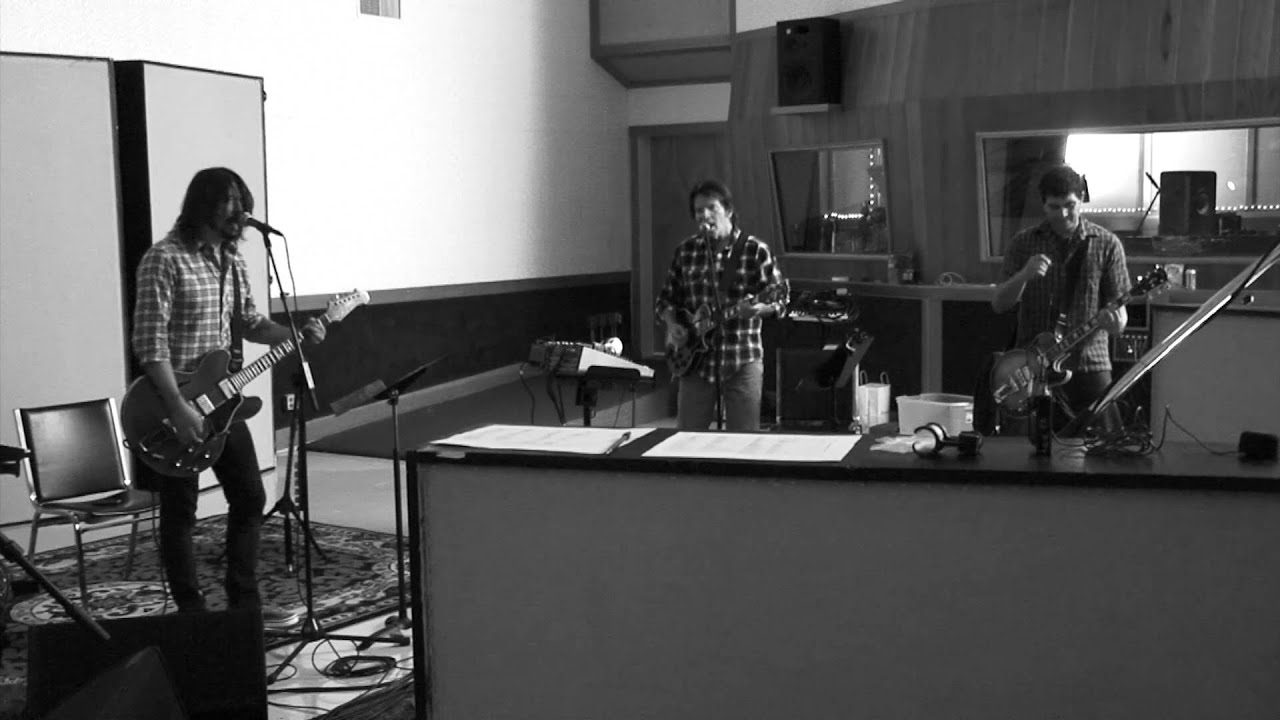
“Somewhere Listening (For My Name)” is John Fogerty’s gentle gospel assurance—faith as a quiet posture, standing still long enough to be called.
There’s a particular kind of comfort that doesn’t come from certainty, but from attention—from the decision to keep your ear turned toward hope, even when the world is loud. John Fogerty captured that feeling with “Somewhere Listening (For My Name)”, a small, glowing gospel number he recorded under the deliberately anonymous banner The Blue Ridge Rangers. The song arrived in April 1973, not as a headline-grabbing A-side, but as the B-side to “Hearts of Stone” on a 45 rpm single.
That single did make a measurable splash: on Billboard’s Hot 100, “Hearts of Stone” shows a debut at No. 84 (chart date March 31, 1973) and a peak at No. 37. But “Somewhere Listening (For My Name)” did not chart on its own—its role was different, almost symbolic. It was the quiet companion track, the one you discovered when you didn’t lift the needle too fast, when you let the record turn over and kept listening after the “main event.”
To understand why this matters, you have to picture Fogerty in 1973—freshly separated from the roaring public identity of Creedence Clearwater Revival, stepping into a project that was both homage and camouflage. The Blue Ridge Rangers was released in April 1973 on Fantasy Records, credited to “The Blue Ridge Rangers” with no mention of Fogerty on the cover—a purposeful attempt to put distance between the man and the myth. The album would go on to peak at No. 47 on the Billboard 200 (with chart-run documentation placing the peak in June 1973). And right there near the top of the track list sits “Somewhere Listening (For My Name)”—a song Fogerty delivers with the humility of a man choosing to disappear into the tradition.
Here’s the tender surprise: despite the “group” name, the Rangers were essentially Fogerty alone. The album is widely described as featuring Fogerty playing all the instruments—a one-man band building an entire world from muscle memory and instinct. For this particular single, background notes place the recording at Fantasy Studios in Berkeley, with engineering credited to Skip Shimmin and Russ Gary. The details read like studio trivia, but emotionally they land like something else: a solitary artist in a familiar room, putting his hands on every part of the sound, as if assembling a kind of shelter.
And what a shelter the song is. “Somewhere Listening (For My Name)” draws from the stream of traditional Black gospel—often known through variants of “When He Calls Me” / “I’ll Be Somewhere Listening”—a call-and-response idea built on readiness: when I’m called, I will answer. It’s not triumphant faith; it’s patient faith. Not the roar of a revival tent, but the steady breath of someone who has decided not to miss the moment—whenever it comes.
If you imagine it as a radio story, the scene almost writes itself. A highway at dusk. The dashboard lights soft. The past still humming behind you like an engine you’ve switched off but can’t quite stop hearing. Then this song comes on—short, plain, and strangely luminous—and you realize it isn’t trying to impress you. It’s trying to steady you. The lyric’s promise is modest: not “everything will be fine,” but “I will be listening.” That’s the human-sized miracle—showing up, staying open, refusing to let bitterness be the final word.
In the larger Fogerty narrative, that’s what makes “Somewhere Listening (For My Name)” so poignant. After the swamp-rock thunder and the public battles that would shadow his post-CCR years, here is a track that sounds like a man choosing softness on purpose. It doesn’t erase trouble; it places trouble in a wider sky. And in doing so, it leaves you with a quietly brave thought: you don’t always need answers right away—sometimes it’s enough to be ready, to be attentive, to be somewhere listening for the call that brings you back to yourself.
This song feels less like a performance and more like a confession whispered into eternity. The title phrase evokes a familiar gospel image—being “somewhere listening” when one’s name is called—a metaphor drawn from traditional African American spirituals. Fogerty, a lifelong student of roots music, reimagines that old image through his own weathered voice and plaintive guitar. His interpretation carries neither bombast nor ornament; instead, it moves with reverence, acknowledging the weight of years spent wrestling with faith, doubt, and redemption. For an artist whose career was marked by battles—legal struggles over his own songs, creative exile, the ghosts of Vietnam-era disillusionment—this composition feels like a personal reconciliation. It’s as if he has laid down every worldly burden to listen for a quieter truth.
Musically, “Somewhere Listening (For My Name)” is stripped to its elemental core: an acoustic frame, gentle gospel inflections, harmonies that rise like morning light through stained glass. The production is unhurried, allowing each note to breathe in sacred space. Fogerty’s voice—still imbued with that unmistakable rasp that once cut through transistor radios like rough-hewn oak—now trembles with age and tenderness. It is no longer the fiery preacher of “Fortunate Son” but rather a penitent man seeking solace in melody. The song’s simplicity is deceptive; beneath it lies a lifetime’s worth of reckoning with legacy, mortality, and grace.
In the closing moments of Deja Vu (All Over Again), Fogerty doesn’t offer resolution so much as surrender—a peaceful acceptance that some answers arrive only in silence. “Somewhere Listening (For My Name)” stands as one of his most quietly profound statements: a prayer disguised as song, sung not for applause but for remembrance. It reminds us that beyond every stage light and applause lies the eternal question every artist—and every soul—must face: when our names are called into the great unseen, will we be ready to answer?