
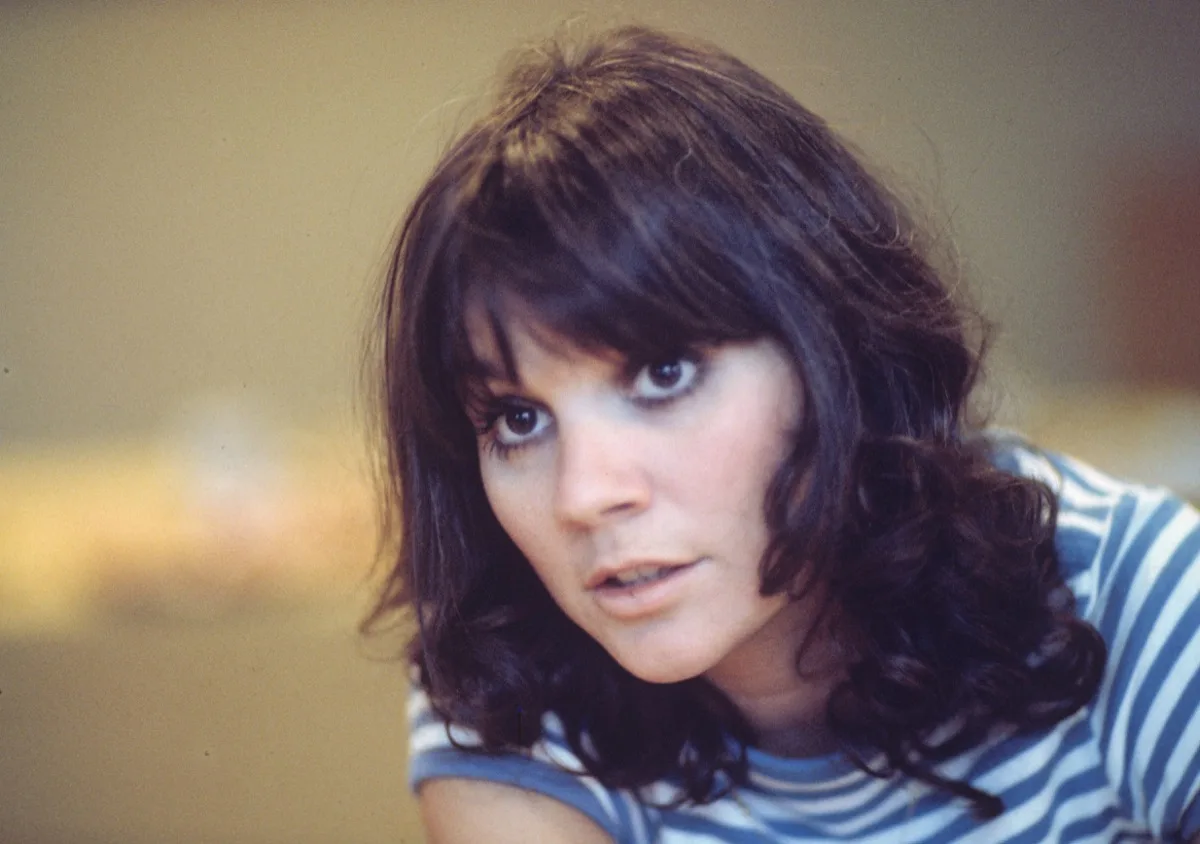
“Am I Blue” is loneliness given perfect manners—Linda Ronstadt singing heartbreak as if it’s dressed for evening, but trembling underneath the satin.
Linda Ronstadt recorded “Am I Blue?” for her album For Sentimental Reasons, released September 22, 1986 on Asylum Records—a record that peaked at No. 46 on the Billboard 200 and reached No. 3 on Billboard’s Top Jazz Albums chart. It was tracked over a long, careful stretch (July 10, 1985 – May 16, 1986), produced by Peter Asher, and built as the final chapter in Ronstadt’s celebrated standards “trilogy” with bandleader-arranger Nelson Riddle.
That context matters, because “Am I Blue?” isn’t a pop singer “trying on” an old tune. It’s Ronstadt, already one of the defining voices of her era, deliberately walking into the Great American Songbook and choosing restraint as her bravest instrument. On For Sentimental Reasons, she’s credited as Linda Ronstadt with Nelson Riddle & His Orchestra, and the album’s own history notes that Riddle died during the making of the disc—a fact that hangs in the air like a dimming theater light. On this particular track—track 7—the conducting credit shifts to Terry Woodson (Riddle conducted tracks 1–6 and 10–11). Even if you never read a single liner note, you can feel the album’s atmosphere: a world of velvet tempo, slow glances, and emotions that refuse to shout.
The song itself comes from another era entirely. “Am I Blue?” was written in 1929, with music by Harry Akst and lyrics by Grant Clarke, originally published by M. Witmark & Sons, and it became closely associated with Ethel Waters, including its appearance in the 1929 film On with the Show. SecondHandSongs documents Waters’ first recording date as May 14, 1929, with release that summer—placing the song right at the edge of the Jazz Age, when glamour and grief often shared the same cigarette smoke.
So when Ronstadt sings it in 1986, she’s bridging more than decades—she’s bridging worlds. The lyric’s central question (“Am I blue?”) sounds almost quaint, until you realize how sharp it is: it’s the mind interrogating the body after abandonment, trying to make sense of a morning that begins with absence. In a great standard, the language is simple because the pain is complicated; the song can’t afford fancy metaphors. It needs the kind of plain sentence you can say even when you’re shaking.
Ronstadt’s genius here is that she doesn’t “act” vintage. She doesn’t put on a costume of 1929 sorrow. Instead, she sings with that familiar Ronstadt clarity—direct tone, clean emotional line—and lets the arrangement provide the candlelight. For Sentimental Reasons is explicitly framed as jazz/big band/traditional pop, and on “Am I Blue?” you can hear why: the orchestra doesn’t compete with her; it cradles her, like a slow dance you keep dancing because stopping would mean facing the room alone.
There’s a particular kind of nostalgia in this performance—not the nostalgia of “better times,” but the nostalgia of late-night honesty. Ronstadt had spent the 1970s as a chart titan, then the 1980s proving she could reinvent herself without losing her core. By the time she arrived at this third standards album, the choice felt less like a detour and more like a revelation: she was always, at heart, an interpreter who trusted songs that had survived real life.
And “Am I Blue?” survives because it tells the truth people rarely admit out loud: sometimes you wake up and the world has already changed while you slept. The person is gone. The explanation is missing. And all you can do is take inventory of your own feelings—quietly, almost politely—because making a scene won’t bring anyone back. That’s the ache Ronstadt captures: dignity that doesn’t erase despair, composure that doesn’t cure the wound.
In the end, her “Am I Blue?” is not a performance designed to impress. It’s a performance designed to keep you company. It reminds you that heartbreak has always worn many faces—flapper-era glamour, post-war elegance, modern solitude—and yet it always asks the same question in the same small voice. Ronstadt answers that question the way only she can: beautifully, unmistakably, and with the kind of grown-up tenderness that lets sadness be seen… without letting it win.