
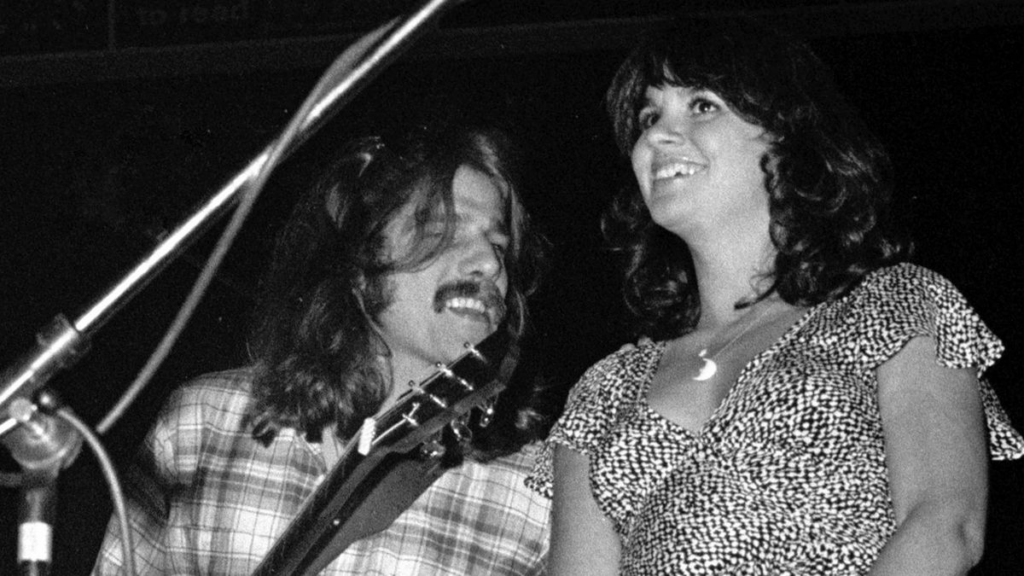
A “Heat Wave” you can see in the air—Linda Ronstadt turns a Motown classic into pure live electricity, proof that joy can be as serious as heartbreak.
Linda Ronstadt’s “Heat Wave” (Live at Balboa Stadium, 1975) feels less like a performance and more like a weather event—something that rolls in, lifts the crowd, and leaves the night permanently warmer in your memory. The date matters: September 27, 1975, San Diego. It was a stadium show shared with Eagles and Jackson Browne, and it was filmed with broadcast in mind—portions of that concert were later used on Saturday Night Live with Howard Cosell, which explains the extra snap in the presentation, the sense that the moment is being caught as much as it’s being played.
It’s also perfectly timed in her career. Just **twelve days earlier—September 15, 1975—**she had released the album Prisoner in Disguise, which would rise to No. 4 on the Billboard album chart and go Platinum. Around that same stretch, her studio recording of “Heat Wave” was catching fire on pop radio—eventually peaking at No. 5 on the Billboard Hot 100. So when she sings it at Balboa, she isn’t testing a new cover; she’s unleashing a song that’s already turning into a calling card.
That’s the public, factual frame. The emotional frame is something else entirely.
Because “Heat Wave” began life in 1963 as a Motown rocket—written by Holland–Dozier–Holland and made famous by Martha and the Vandellas, reaching No. 1 on the Hot R&B chart and No. 4 on the Hot 100. It’s a song built on that classic Motown trick: urgency that still sounds joyful, desire that still sounds like dancing. Ronstadt’s genius wasn’t “improving” it—she didn’t need to. Her genius was recognizing that the song’s heat could survive a full stylistic wardrobe change: from Detroit soul to West Coast rock, from tight studio punch to big-open-air roar.
And the Balboa performance is where you hear what her band had discovered on the road: “Heat Wave” works best when it’s played like the room might combust. The backstory is wonderfully unglamorous and very real—her musicians reportedly tossed it into the set after running out of material during repeated encores at a club show, and the crowd reaction convinced them it belonged there for good. That origin story matters because it reminds you how many “definitive” moments start as improvisation—someone shouting a key, someone trusting instinct, a singer stepping forward and daring the night to keep up.
So at Balboa Stadium, you don’t just hear a cover. You hear a woman in her prime discovering a particular kind of freedom: the freedom to sing something fast and bright without losing depth. Ronstadt is often praised—rightly—for the aching steadiness of her ballads, for the way she can make a single line feel like it’s been lived in for years. But “Heat Wave” shows the other side of her authority: rhythmic command, fearless attack, and that unmistakable vocal clarity that cuts through outdoor air like a beacon. In a stadium, that clarity becomes its own intimacy—because everyone hears the same note at the same instant, and for a moment the whole crowd shares one pulse.
Even the setting adds an extra layer of poignancy now. Balboa Stadium was a storied venue for major rock acts in that era, and the original stadium structure was later demolished and rebuilt smaller after earthquake-safety concerns in the late 1970s. So this 1975 “Heat Wave” carries a faint, unavoidable magic: it preserves a place—and a moment in American live music—before it changed shape forever.
In the end, what makes “Heat Wave” (Live at Balboa Stadium, 1975) so unforgettable is not simply that it’s exciting. It’s that it’s life-affirming in the most honest way. The lyric says love is like fire, like burning—yet the performance makes that metaphor feel larger than romance. It becomes a celebration of being fully awake, fully present, the kind of bright heat that reminds you the heart can still surge, even after it has known disappointment. And when the last shout fades into the stadium air, you’re left with that rare feeling only a great live recording can give: not just “she sang it well,” but for a few minutes, the world felt lighter—and you believed it.