
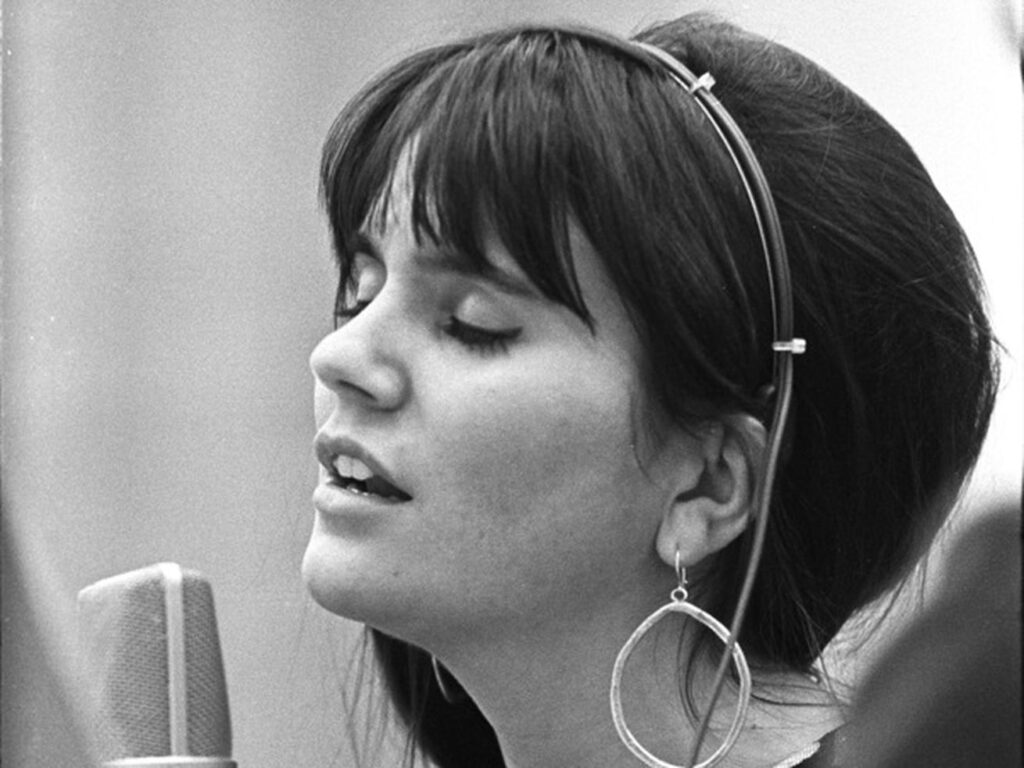
“I Can’t Let Go” is the sound of stubborn affection—bright on the surface, but bruised underneath, like a smile you practice so nobody sees your hands shaking.
Put the key facts on the table first, because they explain why this record feels so surprisingly sharp-edged for Linda Ronstadt. Her version of “I Can’t Let Go” was released in 1980 as the third single from her album Mad Love (released February 26, 1980), produced by Peter Asher. It entered the Billboard Hot 100 on the chart dated June 28, 1980 at No. 74, and later peaked at No. 31—a respectable Top 40 moment that arrived not through soft-rock comfort, but through a taut, almost restless pulse. On the Adult Contemporary chart it reached No. 48, and in Canada it hit No. 30. In the U.S., the single was backed with “Look Out for My Love.”
Those numbers tell only part of the story, though. The real story is tone. Mad Love was Ronstadt leaning into a tougher, more contemporary sound—her most explicit flirtation with new wave / power pop energy at the turn of the decade. And “I Can’t Let Go” fits that moment perfectly: it’s a love song that doesn’t sigh—it paces. It doesn’t dissolve—it grips.
What makes this choice even richer is the song’s long road before it reached Ronstadt. “I Can’t Let Go” was written by Chip Taylor and Al Gorgoni. Its first recording is widely associated with Evie Sands in 1965, a performance steeped in that mid-’60s blue-eyed soul ache—romance as a beautiful problem you can’t solve, only endure. A year later, The Hollies turned it into a major hit in the UK, peaking at No. 2 in 1966, giving the song a brisker, guitar-driven urgency. Ronstadt arrives last in this relay, and she doesn’t imitate either version. She takes the song’s basic confession—I can’t let go—and makes it feel like a modern compulsion, something happening in real time, in the nervous system, not just in the heart.
Listen to how she sings it: not as a dramatic collapse, but as a kind of disciplined unraveling. Ronstadt had always been able to “open the throat” and flood a room, but here she does something more interesting—she tightens the emotion. The performance has a clipped insistence, as if she’s trying to talk herself out of obsession and failing on every line. That’s the genius of the record: it sounds upbeat enough to play on the radio, yet emotionally it’s the opposite of easy listening. It’s the sound of someone who knows they should walk away… and cannot make their feet obey.
The meaning of “I Can’t Let Go” is simple, but not simplistic: it’s about the humiliating purity of attachment. Not the romanticized kind, where longing makes you poetic, but the ordinary kind that makes you irrational. The lyric doesn’t pretend the narrator is wise. It admits the truth most people hide: sometimes you don’t “choose” your feelings; you wake up inside them. And when Ronstadt sings it in 1980—when pop culture was dressing heartbreak in cooler colors—the confession becomes even more human. It’s a refusal to be stylish about pain.
There’s also a quiet irony in placing this song on Mad Love, an album built around reinvention. Reinvention is what you do when you’re strong. “I Can’t Let Go” is what happens when strength meets its limit. The sound may be brisk, even tough, but the core is vulnerable: the singer is stuck. That tension—between the forward-driving track and the backward-pulling emotion—is exactly why the record lasts. It captures a feeling many people recognize but rarely celebrate: the moment you realize you’re not as “over it” as you’ve been pretending.
So if you play “I Can’t Let Go” now, don’t treat it as a mere cover tucked into a famous catalog. Hear it as a portrait of Linda Ronstadt at a fascinating crossroads—an artist brave enough to modernize her sound, yet still devoted to the oldest theme in popular music: the heart’s refusal to behave. The beat moves forward, the guitars keep their bright posture… and the voice admits, quietly but clearly, that some goodbyes simply don’t happen on schedule.