
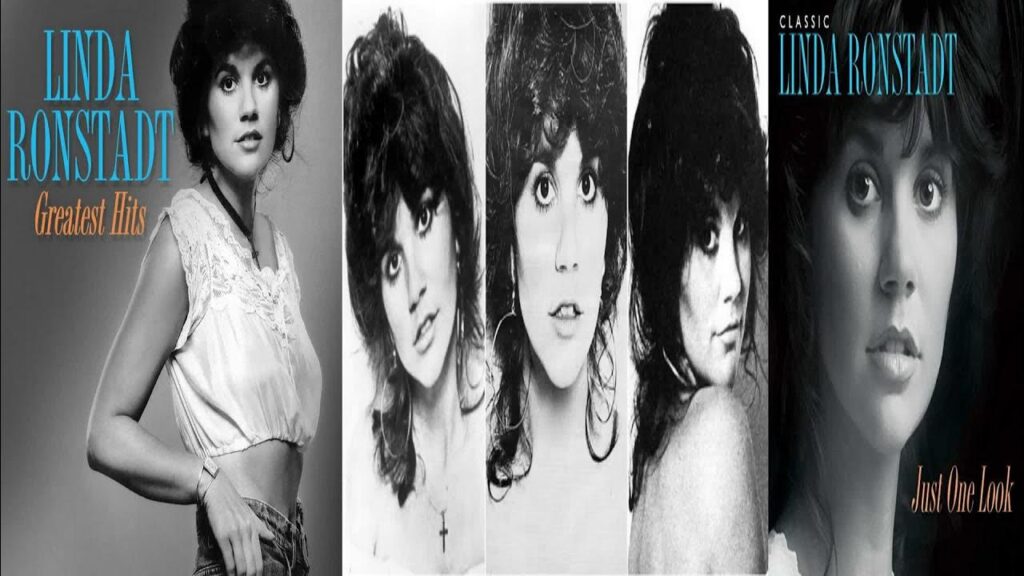
“Give One Heart” is Linda Ronstadt at her most quietly persuasive—asking for devotion without theatrics, as if love were a single, precious thing you can’t afford to spend twice.
The essential facts belong up front, because they explain why this deep-cut still feels so intimate. “Give One Heart” appears on Linda Ronstadt’s 1976 album Hasten Down the Wind (released August 9, 1976), produced by Peter Asher and recorded in March 1976 at The Sound Factory in Hollywood. On the Billboard 200, the album debuted at No. 49 and climbed to a peak of No. 3, a strong arrival that confirmed Ronstadt wasn’t merely collecting hits—she was building albums with emotional weight and a clear point of view. The record’s impact went beyond sales: Hasten Down the Wind won Ronstadt the Grammy for Best Pop Vocal Performance, Female (awarded in 1977), a recognition that mattered because it honored not a single moment, but the artistry of her voice across a whole sequence of songs.
Now for the song itself. “Give One Heart” was written by John Hall and Johanna Hall, and on Ronstadt’s album it runs a little over four minutes—long enough to feel like a conversation that keeps circling back to one brave request. Its lineage is telling: the song was first released by Orleans in 1975, before Ronstadt chose to bring it into her own world. That detail matters because Ronstadt, at her peak, had a special talent for “adopting” a song without erasing its past. She didn’t treat songwriting as a scavenger hunt; she treated it as a handoff—one set of hands passing a truth to another, trusting the next voice to carry it farther.
And Hasten Down the Wind was the perfect home for that kind of handoff. This album is often described as a slight turn away from the more familiar “country-rock” framing of her earlier mid-’70s classics, leaning instead into newer writers and a more reflective emotional palette. You can hear that intention in the track list: heartbreak that doesn’t pose, longing that doesn’t beg, songs that feel like they’ve lived a little before they reach the microphone. Placing “Give One Heart” on side two—after a brief “Rivers of Babylon” intro—makes it feel like a private chapter, a moment when the album stops dazzling and starts speaking softly.
The “story” of “Give One Heart” in Ronstadt’s career is less about tabloid lore and more about artistic instinct. In 1976, she had every reason to keep repeating what had already worked: the radio-ready roadhouse swagger, the big choruses, the easy victories. Instead, she and Peter Asher made a record that trusted nuance—one that could still give you hits, yes, but also insisted that the quieter songs counted. Ronstadt’s greatest strength was never just power; it was how she could sound powerful while remaining emotionally precise. On a song like “Give One Heart,” that precision is everything. The lyric’s central plea—give one heart—sounds simple until you realize what it implies: not a half-heart, not a borrowed heart, not a heart held back “just in case.” It’s a request for the kind of commitment that feels risky precisely because it’s honest.
What makes the track linger is how adult its emotional logic is. It doesn’t romanticize uncertainty; it names it, then asks for courage anyway. Ronstadt sings as if she understands that love isn’t proven by grand speeches, but by what you’re willing to place on the table when you have every reason to keep something hidden in your pocket. There’s a particular ache in that—because the older the heart gets, the more carefully it learns to protect itself. And yet, the song argues, protection is not the same as living.
Decades later, “Give One Heart” still feels like one of those album moments people stumble upon and then quietly keep for themselves. Not because it’s obscure, but because it’s personal—like a note folded into the back pages of a well-loved record sleeve. In a catalog filled with giants, this song’s power is its scale: it doesn’t try to be a monument. It tries to be true. And in Linda Ronstadt’s voice—steady, luminous, unafraid of tenderness—it becomes the kind of truth that stays with you long after the needle lifts.