
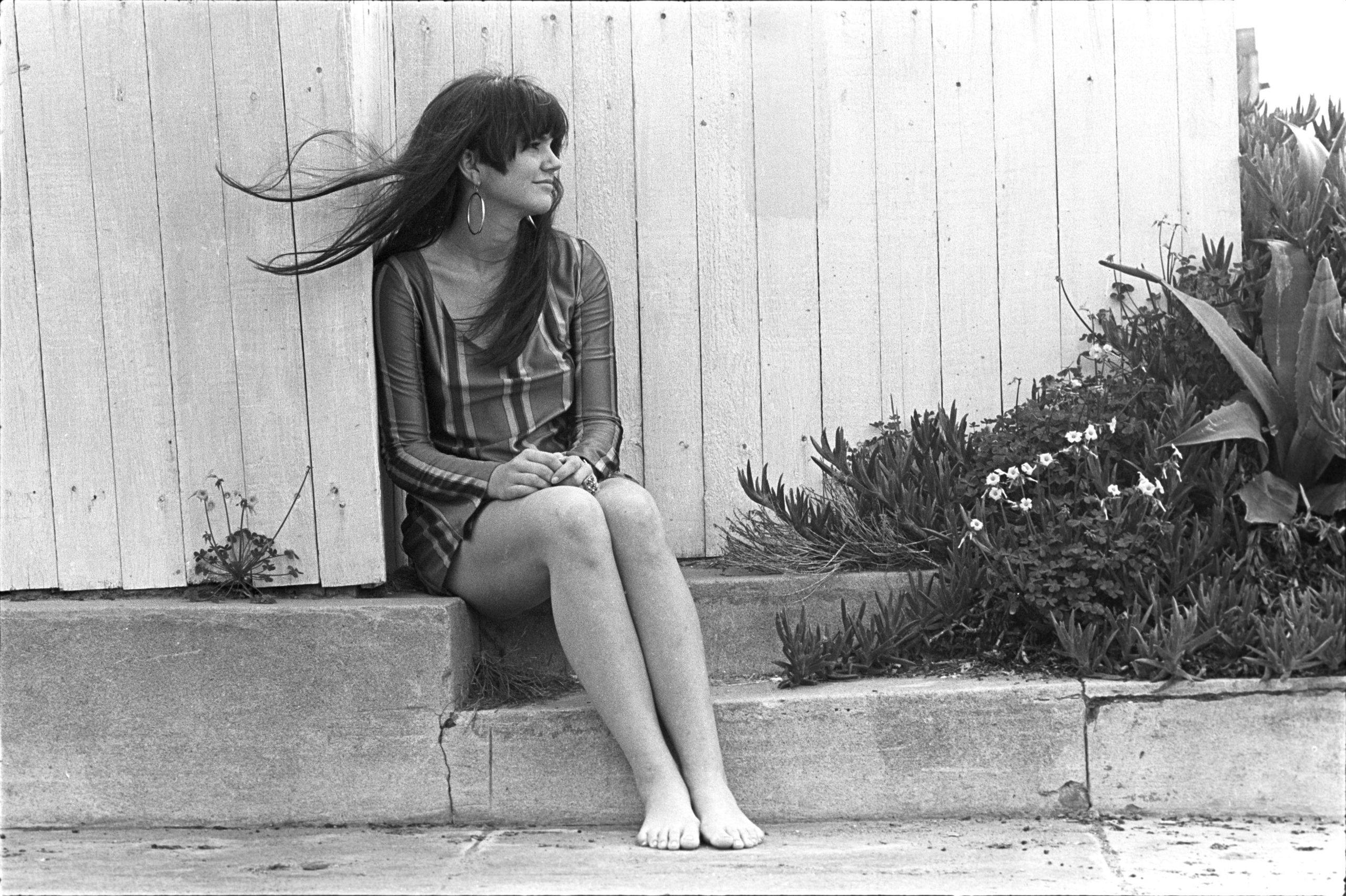
“It’s About Time” is Linda Ronstadt at the doorway of her own story—young, restless, and finally daring to admit that goodbye has a pattern, and love has a deadline.
In the spring of 1969, before the arena triumphs and the platinum certainty, Linda Ronstadt was still building her voice in public—one careful decision at a time. “It’s About Time” arrives from that tender, unguarded chapter on her first solo album credited solely to her, Hand Sown… Home Grown (released March 1969 on Capitol Records). It’s track 9, running 3:05, and it’s written by—importantly—her producer Chip Douglas. Douglas wasn’t just a name on the back cover; he was a shaper of direction, helping her fuse country instinct with a California edge at a moment when even Ronstadt recalled being told she was “too country” for rock radio and “too rock” for country radio.
This song was not released as a single, so it has no tidy “debut position” on the Hot 100 to quote. Its life is the older kind of life: album life—the kind you discover by staying with a record past the tracks that were meant to lead. And for context, Hand Sown… Home Grown predates her first real U.S. album-chart breakthrough; her albums discography notes that Silk Purse (1970) was her first to make U.S. chart positions, which implies this 1969 debut did not. That’s not a failure—it’s the sound of a future icon still walking up the hill before the view opens.
If you listen to “It’s About Time” like a late-night radio storyteller—soft voice, the dial glowing in the dark—it plays like a memory you didn’t realize you kept. The lyric begins with that familiar ache of hindsight: “It only seems like yesterday…” and suddenly you’re inside a scene where leaving isn’t dramatic anymore—it’s habitual. The goodbye comes “in the same old way,” not as a thunderclap but as routine, the way some hearts leave the room long before the body follows.
That’s the quiet cruelty at the center of the song: not betrayal, exactly, but repetition. Ronstadt sings as though she recognizes the pattern even as she’s still living inside it. And the title—“It’s About Time”—carries two meanings at once. On one hand, it sounds like hope finally standing up straight: it’s about time you came back, it’s about time you chose me. On the other, it sounds like the weary wisdom that comes after too many “I’ll call you tomorrow” promises: it’s about time I stop believing the same story.
The “behind the song” story is less about scandal and more about setting. Hand Sown… Home Grown is built from folk and country-rock selections—Dylan, Randy Newman, Fred Neil—because Ronstadt was searching for material sturdy enough to hold her. In that company, “It’s About Time” feels like a small original jewel: a producer-songwriter handing her something tailored to her voice, and her taking it seriously enough to make it feel autobiographical. The arrangement doesn’t need tricks; it needs truth. And Ronstadt, even this early, had that rare gift: she could sound strong without sounding hard, vulnerable without sounding helpless.
What lingers most is the emotional posture. “It’s About Time” isn’t a tantrum. It’s a turning point. It’s the moment the heart stops negotiating with someone else’s uncertainty and starts listening to its own clock. That’s why the song still resonates decades later, even for listeners who never owned the original Capitol pressing. It doesn’t depend on its era’s fashion; it depends on a human experience that never goes out of style: loving someone who can’t quite stay—and realizing, quietly, that your life is allowed to move forward.
So when Linda Ronstadt sings “It’s About Time,” hear it as an early self-portrait: the future superstar already present in the phrasing, but also a young woman drawing a boundary with the gentlest possible hand. Not bitter—just awake.