
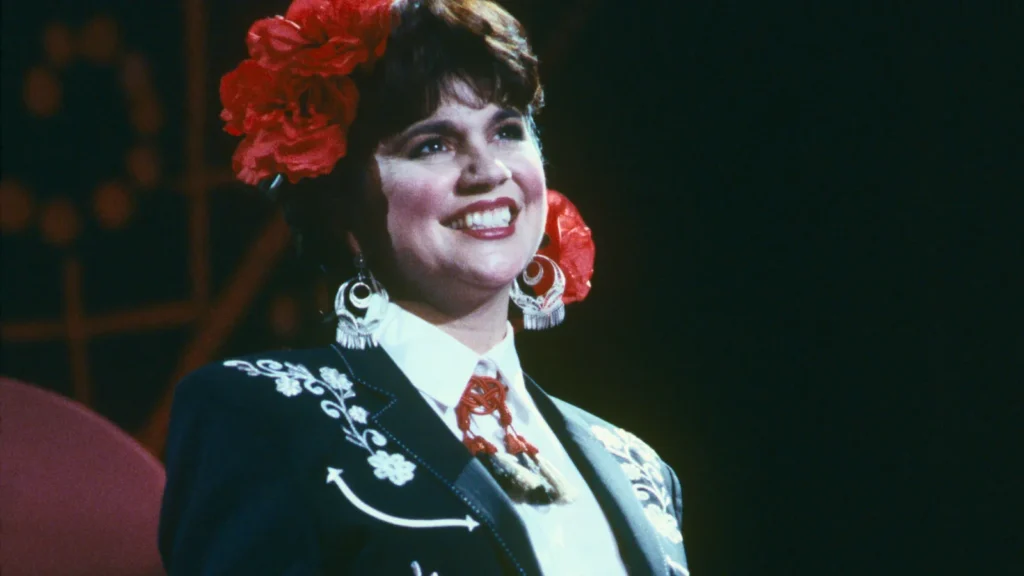
“Lose Again” is the ache of going back to the very love that undoes you—a tender confession that the heart can pull harder than reason, even when you already know the ending.
Linda Ronstadt opened her 1976 triumph Hasten Down the Wind with “Lose Again”—track 1, side one—as if she wanted the listener to understand, right away, that this record would not be about easy victories. The album was released on August 9, 1976, recorded in March 1976 at The Sound Factory in Hollywood, produced by Peter Asher—and it went on to become a major commercial and artistic peak, reaching No. 3 on the Billboard 200 and earning Ronstadt the Grammy Award for Best Pop Vocal Performance, Female (1977). In the U.S., the album was certified Platinum by the RIAA.
Then, months later, that quiet, wounded opener stepped out on its own. “Lose Again” was issued as the third single from Hasten Down the Wind in May 1977, backed with Ronstadt’s Spanish-language “Lo Siento Mi Vida.” On the Billboard Hot 100, it debuted in June 1977 and spent five weeks on the chart, peaking at No. 76—one of her lowest Hot 100 peaks up to that point. It also reached No. 43 on Billboard’s Adult Contemporary chart. If you’re looking for a “big ranking moment,” the truth is it wasn’t one—at least not in the math of radio. Yet emotionally, it may be one of the most revealing things she ever chose to sing.
Because “Lose Again” is written by Karla Bonoff, and Bonoff wrote like someone who could describe the quiet wreckage of love without raising her voice. Ronstadt didn’t just admire Bonoff—she spotlit her, placing three Bonoff songs on Hasten Down the Wind (including “Lose Again,” “If He’s Ever Near,” and “Someone to Lay Down Beside Me”). That advocacy mattered: Bonoff’s own self-titled debut album would arrive in 1977, and it openly reflects how her compositions were already “known” through Ronstadt’s earlier recordings.
So what is “Lose Again” really about?
It’s about the humiliations we willingly repeat—how the mind can list every reason to leave, while the heart keeps leaning toward the same doorway. Bonoff later described the song in strikingly human terms: that feeling when “the heart calls, the mind obeys,” when you think you’re free, you think you’re done… and then someone pulls you back in. That’s the song’s bruise: not that love hurts, but that love can make you participate in your own hurt—eyes open, still hoping the next time will be different.
Ronstadt’s genius here is that she never performs the lyric as self-pity. She sings it with a kind of grown-up clarity—almost as if she’s watching herself from across the room, saddened but honest. That matters, because the title could invite melodrama. Instead, she makes “lose again” feel like a weary fact of life, the way you might say, quietly, that you’ve made the same mistake before and you can already feel it returning.
And the placement on the album is its own piece of storytelling. Hasten Down the Wind is often remembered for its big hits, but it begins with a private admission: I may look strong, but I’m not immune. It’s a daring way to start a record at the height of fame—especially for a singer who could have opened with swagger and certainty. Instead, Ronstadt opens with vulnerability, as if to say: success doesn’t cancel longing; it just gives longing a brighter spotlight.
There’s also something quietly poignant about the song’s modest single performance. No. 76 on the Hot 100 isn’t a crown—but it’s a kind of honesty. The deepest songs don’t always behave like hits. Sometimes they live where people actually live: in the spaces between decisions, in the late-night looping of thoughts you wish would stop.
In the end, “Lose Again” endures not because it conquered radio, but because it tells the truth with a steady hand. It understands that some love stories don’t end with a lesson learned—they end with a lesson repeated. And in Linda Ronstadt’s voice—clear, brave, and unprotected—that repetition doesn’t sound foolish. It sounds heartbreakingly, unmistakably human.