
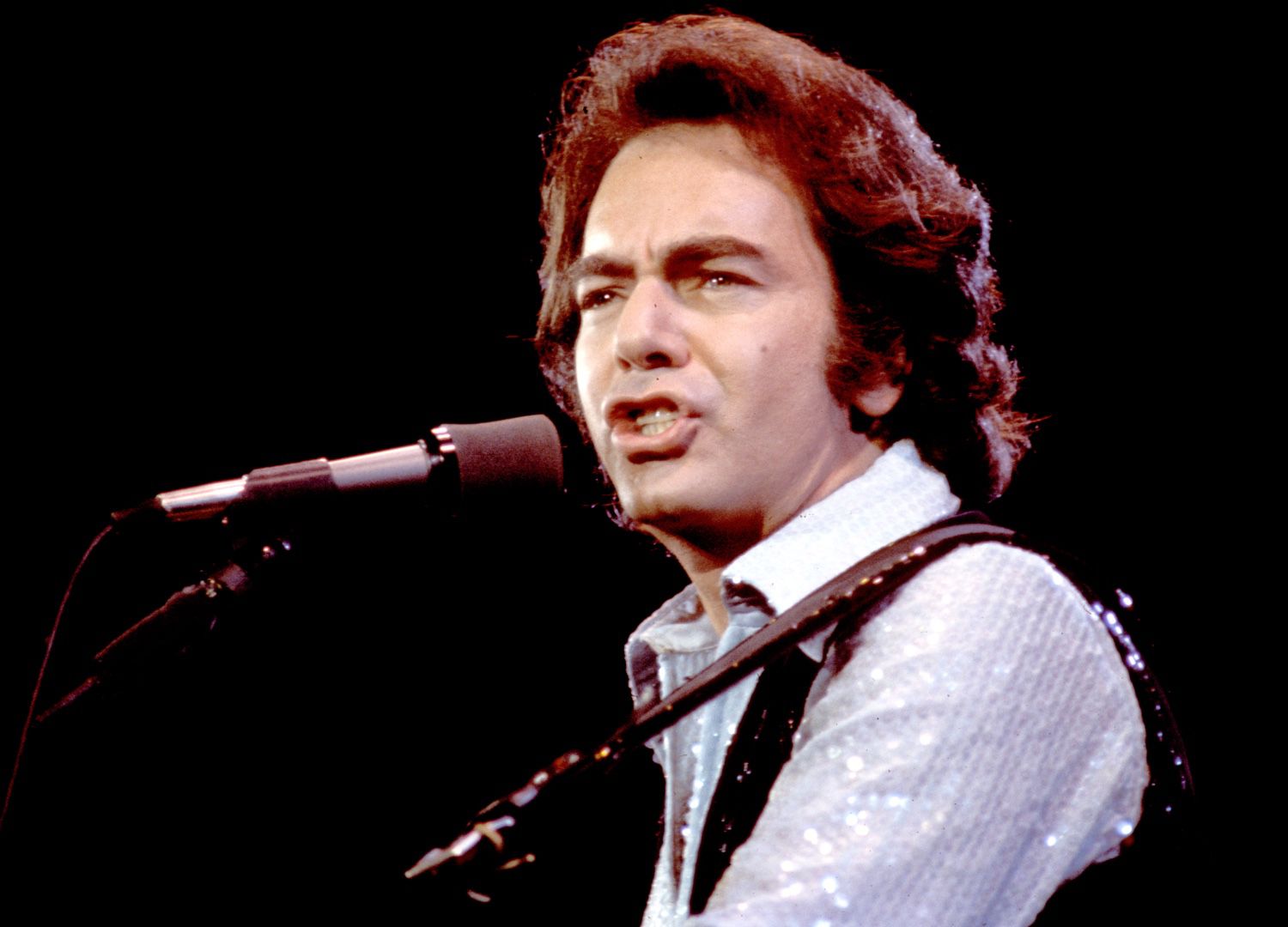
“Hanky Panky” is Neil Diamond at his loosest and most boyish—a quick burst of rock ’n’ roll mischief that reminds you how joy, in the right hands, can be its own kind of truth.
If most people picture Neil Diamond in his grand, heart-on-sleeve later years, “Hanky Panky” can feel like opening an old scrapbook and finding a candid photo: not posed, not polished, just alive. His recording first appeared on his Bang Records debut album The Feel of Neil Diamond, released August 12, 1966, produced by the legendary Brill Building pair Jeff Barry and Ellie Greenwich. On that album’s track list, “Hanky Panky” stands out because it’s one of the few songs Diamond didn’t write—its writers are Jeff Barry and Ellie Greenwich, the same hitmakers who were shaping the very sound of mid-’60s pop.
Just as important, for “ranking at release”: Diamond’s “Hanky Panky” was not a signature chart hit in the way “Cherry, Cherry” or “Solitary Man” were from that era. Its most visible chart footprint came indirectly, as a B-side on Bang singles. In 1968, the single “New Orleans” (with “Hanky Panky” as the B-side) reached No. 51 on the Billboard Hot 100. Later, Bang also issued “Do It” backed with “Hanky Panky,” and that release is listed as reaching No. 36 on the Hot 100 (again, with “Hanky Panky” riding along on the flip). So the honest story is this: “Hanky Panky” wasn’t the headliner—yet it kept finding its way into people’s hands, tucked behind other titles, like a secret grin on the reverse side of the record.
And then there’s the song’s own larger legend, which makes Diamond’s choice to cut it feel even more telling. “Hanky Panky” was written for Barry and Greenwich’s group the Raindrops, and it became a national phenomenon when Tommy James and the Shondells’ version surged to No. 1 on the Billboard Hot 100 in 1966. Diamond was recording right in the slipstream of that kind of pop electricity—when a two-minute hook could change a teenager’s whole week, when the radio felt like a shared room, and when “fun” wasn’t a guilty pleasure but a genuine cultural language.
So what does Neil Diamond do with it?
He doesn’t treat it like a perfect performance to be framed and admired. He treats it like a moment. His “Hanky Panky” has the spirit of an artist still close enough to the street-level thrill of rock ’n’ roll that he’s willing to sound a little reckless. That’s why the recording endures as a fascinating early portrait: before the anthems, before the orchestral swells, before the grown-up gravity—here is Diamond letting himself be playful, even slightly irreverent, inside a song that’s basically a dance floor joke turned into a chant.
The meaning, in that sense, isn’t complicated—and that’s the point. “Hanky Panky” is desire without philosophy, flirtation without consequence, youth without the need to justify itself. It’s the sound of a time when pop music often served as permission: permission to be silly, to be bold, to like what you like without building a sermon around it. And if you listen with a little life behind you, that simplicity can feel oddly moving. Because you realize how rare it is, later on, to be that unguarded—to let joy be the whole message.
In the end, “Hanky Panky” sits in Neil Diamond’s catalog like a bright button on an old jacket: small, maybe easy to overlook, but strangely essential. It reminds you that every “serious” artist once had a beginning where the main job was simply to catch fire—to get a rhythm going, to feel the room respond, to believe that a song could make the world lighter for two minutes. And sometimes, two minutes is more than enough.