
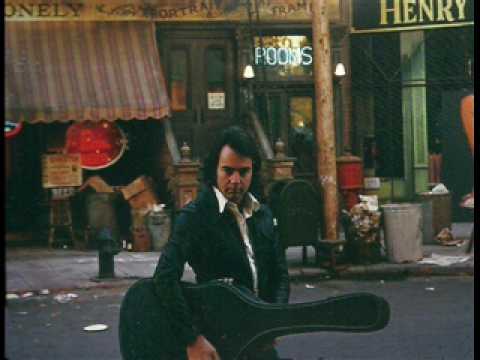
A Reflection on Survival and Solitude in the City’s Unforgiving Glow
When Neil Diamond released “Street Life” as part of his 1976 album Beautiful Noise, he was already a master craftsman of pop storytelling—an artist whose velvet-grit voice could evoke both grandeur and ache. The album, produced by Robbie Robertson of The Band, marked a fascinating fusion of Diamond’s theatrical songwriting with Robertson’s cinematic sensibility. While Beautiful Noise charted impressively—reaching the Top 10 on the Billboard 200—the song “Street Life”, though not issued as a single, stands as one of its most evocative portraits. It embodies the spirit of mid-1970s urban America: restless, lonely, and searching for something resembling grace amid neon and noise.
In “Street Life,” Diamond captures that uniquely urban paradox—the sense of being surrounded by people yet profoundly alone. The song belongs to the lineage of New York meditations that emerged during the decade when cities were both romanticized and feared: an age when Times Square shimmered with decadence and decay, when the night had its own soundtrack of ambition and despair. Diamond’s voice—world-weary yet deeply compassionate—becomes the guiding conscience through this nocturnal world. His tone is not one of judgment but recognition; he has walked those streets, after all, both literally and metaphorically.
Thematically, the song reflects Diamond’s lifelong preoccupation with the outsider—the dreamer navigating through environments that both seduce and betray. There is an undercurrent of empathy for those who move through the city’s pulse: lovers, loners, wanderers chasing a fleeting spark beneath dim streetlights. The instrumentation reinforces this mood beautifully. Robertson’s production swells with layered textures—soft brass sighs, muted percussion echoes, and a wistful string arrangement that seems to shimmer like pavement after rain. Beneath it all lies Diamond’s piano-driven core, steady and contemplative, grounding the listener in human emotion while the city around him flickers with uncertain promise.
What makes “Street Life” so enduring is its ability to transcend its literal imagery. It is not just about city streets—it is about any space where people confront their vulnerability in public view. In its melody lies a kind of melancholy majesty, a compassion for those who endure life’s noise without losing their inner rhythm. This emotional duality—grit softened by grace—is quintessentially Neil Diamond. He invites us to see beauty not despite hardship but because of it, to understand that even in anonymity there exists an unspoken dignity.
Nearly half a century later, “Street Life” remains a quiet triumph within Diamond’s catalog—a song that listens to the heartbeat of humanity at midnight and finds it still strong, still yearning.