
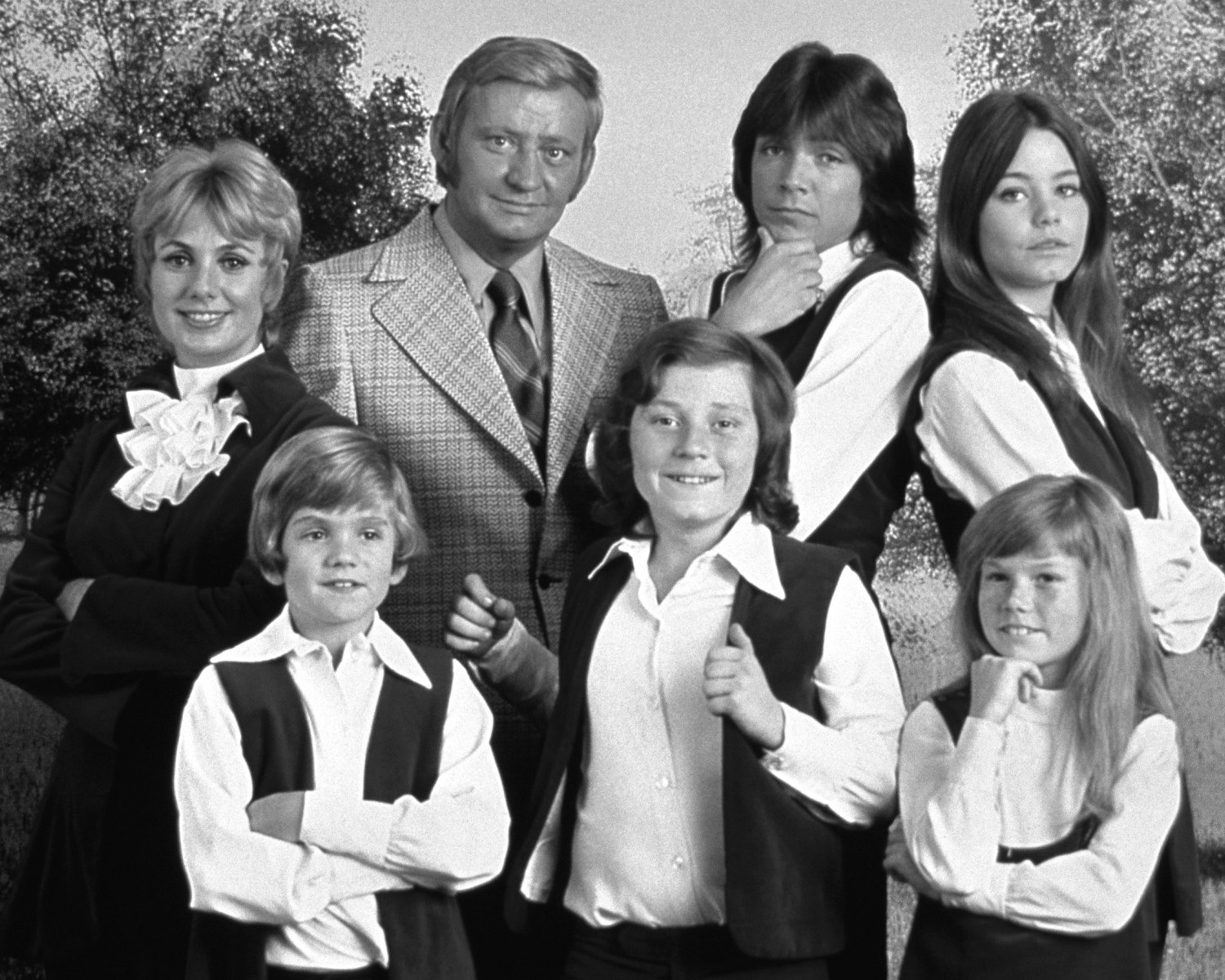
“Rainmaker” still lingers because it never fully explains itself. In the bright, carefully packaged world of The Partridge Family, this song feels like a passing shadow—strange, wistful, and just mysterious enough to keep drawing listeners back.
The real story behind “Rainmaker” is, in one sense, simpler than its aura suggests—and in another sense, more intriguing because of what we still do not know.
First, the plain facts. “Rainmaker” was not one of The Partridge Family’s major hit singles. It appeared as an album track on Sound Magazine, the group’s third studio album, released in August 1971. That album was a real success, reaching No. 9 on Billboard’s Top LPs chart, but the featured hit associated with it was “I Woke Up in Love This Morning,” not “Rainmaker.” In other words, the song did not enter pop history with the loud certainty of a chart smash. It survived in a quieter way—through memory, through repeat listening, through the fact that some fans kept hearing something unusual in it.
And that unusual quality begins with who wrote it. “Rainmaker” was credited to Wes Farrell, Jim Cretecos, and Mike Appel. That alone gives the song an interesting little shadow. Wes Farrell was central to the polished Partridge Family sound, of course, but Mike Appel would later become far better known for his association with Bruce Springsteen. So even before one hears the song, there is already a curious tension in the credits: a carefully manufactured TV-pop world touched, however briefly, by a writer who would later be linked to a much rougher, more searching kind of American rock storytelling. That does not prove some hidden grand meaning behind “Rainmaker,” but it does help explain why the song can feel a little more elusive than its setting might lead one to expect.
That, I think, is the real heart of the mystery.
Because there does not seem to be a widely documented, dramatic backstory attached to “Rainmaker”—no famous studio conflict, no major interview revelation, no well-preserved anecdote explaining exactly what inspired it or why it became so beloved to certain listeners. And paradoxically, that absence is part of what keeps the song alive. When a song comes without too much explanation, people lean closer. They project into it. They listen for clues. They wonder whether the title suggests salvation, illusion, emotional rescue, or simply a poetic image chosen because it sounded haunting and open-ended. The mystery is not built from scandal. It is built from silence.
That matters especially in the context of The Partridge Family. Most people approach that catalogue expecting buoyancy, charm, and bright, easy emotional cues. “Rainmaker” does not entirely behave that way. Even without turning dark, it carries a slightly dreamlike, unsettled quality that makes people ask, what exactly is this song trying to say? And that question has lasted longer than many more obvious tracks.
So the “real story” behind it is not that it hid some secret controversy. It is that “Rainmaker” was an album cut from a successful 1971 record, written by a team that included Wes Farrell and Mike Appel, and left behind just enough ambiguity to outlive its modest commercial profile. It was never over-explained, never pinned down too neatly, and that gave it a different kind of life.
In a strange way, that makes the song more interesting than if it had come with a perfectly tidy legend. A mystery that stays partly open often lasts longer than a story that is fully solved. “Rainmaker” still sparks interest because it feels like one of those moments when the glossy Partridge Family machine let in a small breeze from somewhere less certain, less obvious, and a little more poetic.
And perhaps that is why people still ask about it. Not because the answer is sensational, but because the song itself never stops sounding like it might be hiding one.