
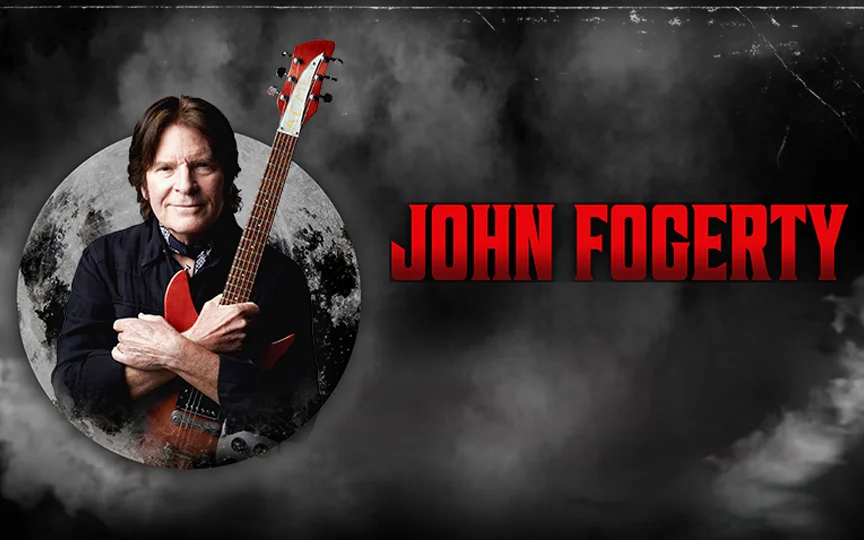
“When Will I Be Loved” becomes, in John Fogerty’s rendition, a warm old question asked with fresh humility—hope riding shotgun with heartbreak, still believing the road might finally lead to “yes.”
Some songs don’t age so much as they wait. “When Will I Be Loved” is one of those—written by Phil Everly and first made famous by The Everly Brothers in 1960, yet built from feelings that never learned how to retire: the sting of being let down, the stubborn ache of trying again, the small dignity of asking for love without pretending you don’t need it. In the U.S., the Everlys’ original debuted at No. 96 on the singles chart (June 4, 1960) and climbed to a Hot 100 peak of No. 8—a quick rise for a song that sounds like it was born already bruised.
When John Fogerty revisited it nearly half a century later, he didn’t treat it like a novelty or a retro wink. He treated it like a living thing—something that had once played through a car radio window and never quite stopped echoing. His version appears as the closing track on The Blue Ridge Rangers Rides Again (released September 1, 2009), where Fogerty lovingly reshapes a set of classic country-and-roots favorites with a campfire warmth and a craftsman’s touch.
And here’s the detail that makes this particular performance feel like a small event rather than “just” a cover: Fogerty’s “When Will I Be Loved” features Bruce Springsteen. On Fogerty’s own discography listing, the track is credited to John Fogerty, Bruce Springsteen—a pairing that feels almost symbolic: two road-tested American voices meeting inside a two-minute plea that has outlived every trend around it.
This version didn’t arrive as a big chart single moment; its “debut” story is the album’s debut. The Blue Ridge Rangers Rides Again entered the U.S. Billboard 200 at No. 24, which also stands as its documented U.S. peak—an impressive showing for an album of covers delivered with quiet conviction rather than pop spectacle. In the UK it peaked at No. 98 on the albums chart, a modest footprint—yet the record’s appeal was never about dominating a particular week. It was about inhabiting the long memory.
The story behind Fogerty making this record adds another layer of tenderness. According to the album’s recording notes, it was cut largely in a 10-day session in October 2008, with Fogerty producing and surrounding himself with players who could keep the sound earthy and immediate—music that feels like it was played for someone, not manufactured for a market. That’s exactly the right environment for “When Will I Be Loved”: a song whose power comes from directness. No clever plot twists—just the plain ache of realizing you gave your heart again… and you’re still waiting for it to be handled gently.
What changes when Fogerty sings it is the weather of the question. The Everlys’ original carries that young, tight-lipped resolve: the pain is fresh, the pride still standing guard. Fogerty, by contrast, sounds like a man who has watched time do what it always does—turning every certainty into something more complicated. His voice doesn’t ask “When will I be loved?” as if love is a prize he deserves. He asks it like a confession he can’t quite stop making: I’ve tried, I’ve learned, I’m still human enough to hope. And when Bruce Springsteen joins in, the song briefly becomes communal—two voices agreeing that longing isn’t childish; it’s simply proof the heart hasn’t been talked out of believing.
That’s the meaning that lingers after the last chord: “When Will I Be Loved” isn’t only about betrayal. It’s about endurance. It’s about the quiet courage of keeping your hands open in a world that teaches you to close them. Fogerty doesn’t modernize the song’s soul—he returns it to its simplest truth: sometimes the bravest thing you can do is keep asking for love in a voice that refuses to turn bitter. And somehow, in that steady, roots-lit performance, the old question doesn’t sound hopeless at all. It sounds like someone still willing to step back onto the road.