
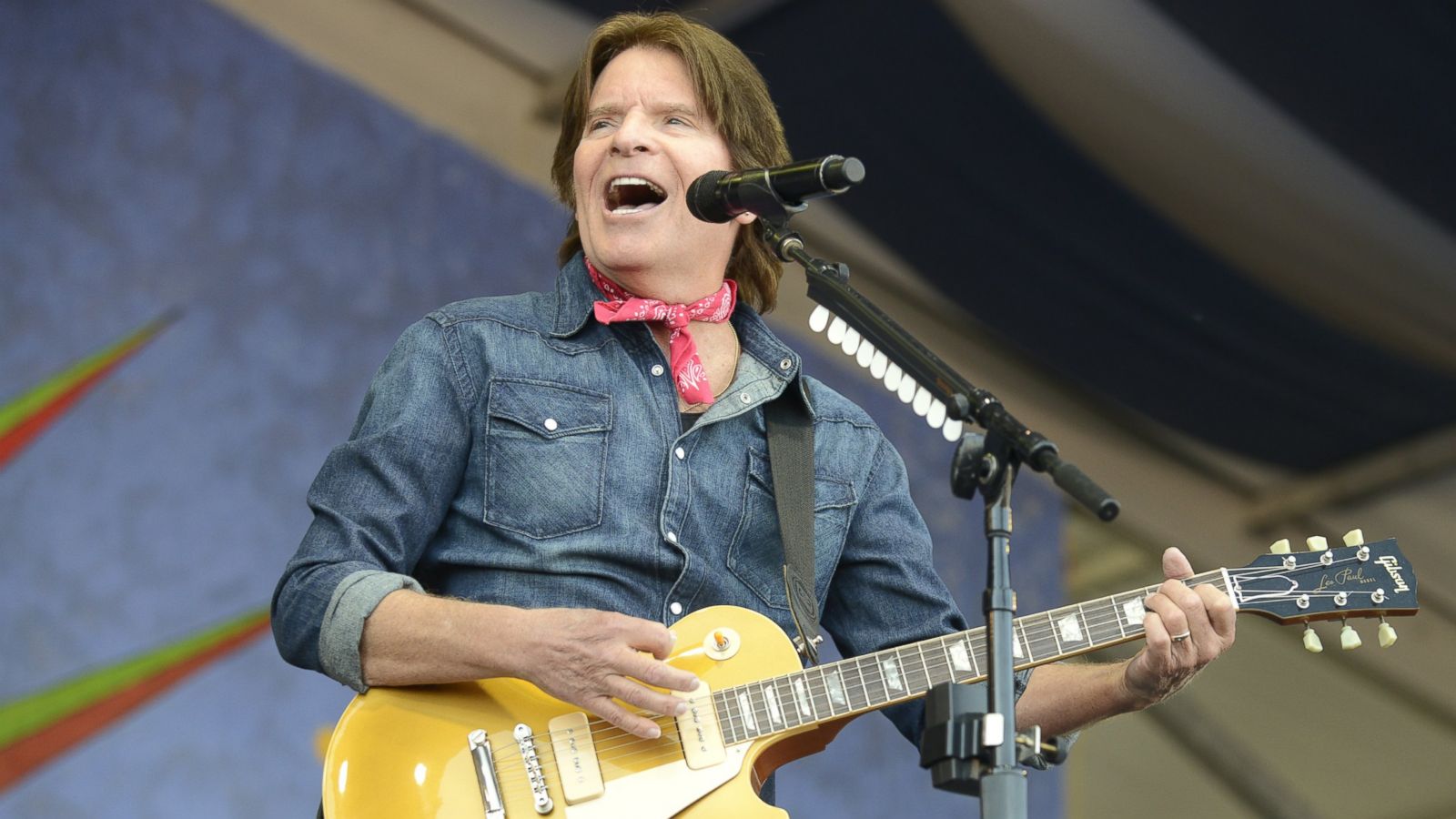
“Back Home Again” is the sound of the road finally loosening its grip—John Fogerty singing a homecoming not as a postcard, but as a need: the kind that grows quietly in a traveler’s bones.
John Fogerty released his version of “Back Home Again” in 2009 on The Blue Ridge Rangers Rides Again, where it sits as track 5 and runs 4:27. The album itself made an immediate, respectful splash: it entered the U.S. Billboard 200 at No. 24 (chart date September 19, 2009)—a strong opening for a late-career roots record built more on taste and sincerity than trend. In the UK it reached the albums chart too, peaking at No. 98 (first chart date November 7, 2009).
But the soul of the story begins long before 2009, in the gentle gravity of John Denver, who wrote and first made “Back Home Again” famous. Denver released it as a single in September 1974 from the album of the same name. The song rose to No. 5 on the Billboard Hot 100, and it did what only the most universal songs can do: it crossed borders, topping Adult Contemporary for two weeks and reaching No. 1 on the country chart as well. The album Back Home Again itself went all the way to No. 1 on the Billboard 200, a reminder that “coming home” is one of pop music’s oldest miracles—everybody understands it, even when “home” means something different for each listener.
So why does a songwriter as road-worn and river-dark as Fogerty choose this particular Denver hymn?
Because Fogerty has always been a traveler in his music, even when the songs never mention passports. Creedence records felt like motion—highways, currents, weather, the sense of an America rolling past the windshield. By 2009, with The Blue Ridge Rangers Rides Again, he wasn’t trying to recreate CCR’s storm. He was doing something quieter and, in its own way, braver: he was honoring the songs that raised him, the ones that sounded like front porches and long drives, the ones that don’t need youth to feel alive.
That album was recorded in an intense, almost old-school burst—a 10-day session at Village Recorders in Santa Monica, with Fogerty producing. It’s also a “sequel” in spirit to his 1973 project The Blue Ridge Rangers, a title that plays with the idea of a band identity—back then, Fogerty essentially was the whole band; in 2009, he’s surrounded by players and a lived-in sense of community. The track list is a guided tour through American songcraft—John Prine, Ricky Nelson, Buck Owens, the Everlys—ending with a duet with Bruce Springsteen. Inside that warm room, “Back Home Again” becomes something more than a cover: it becomes a confession from one road veteran to another.
And here’s the tender twist: Denver’s original is famously rich in domestic detail—small images that make the big emotion believable. It doesn’t mythologize home as a flag; it humanizes it as a table, a touch, the familiar quiet you don’t appreciate until you’ve been away too long. Fogerty doesn’t need to rewrite that meaning. He simply changes the temperature of it. Where Denver often felt like sunlight through kitchen curtains, Fogerty feels like dusk settling after the drive—still warm, but seasoned. The longing isn’t theatrical. It’s practical. It sounds like someone who knows that “home” isn’t only a place you return to; it’s the part of you that finally stops bracing for the next mile.
That’s the deeper emotional story behind Fogerty singing Denver: two very different voices meeting at the same truth. The road can be glorious, yes—but it is also a kind of slow hunger. And when the song reaches for that word, again, it doesn’t feel like repetition. It feels like relief.
In the end, “Back Home Again” as performed by John Fogerty is not nostalgia as decoration. It’s nostalgia as wisdom. It reminds you—softly, insistently—that the greatest luxury isn’t fame, speed, or distance traveled. It’s walking back into the place where your name is spoken with no agenda… and realizing you don’t have to be anyone else to be welcome.