
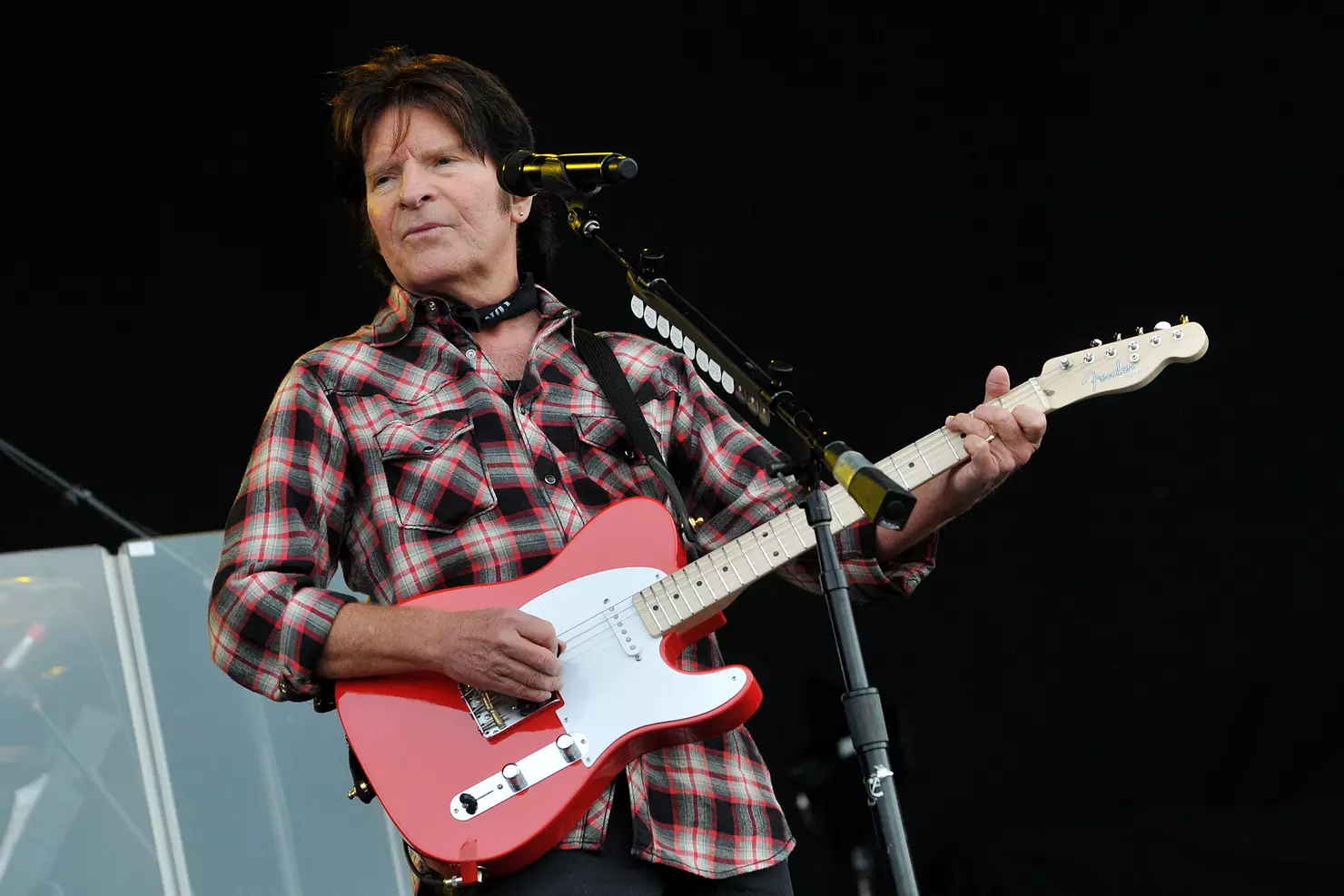
“Sweet Hitch-Hiker” is John Fogerty’s last great open-road grin with Creedence Clearwater Revival—a three-minute burst of motion that hides the ache of a band already coming apart.
In the summer of 1971, while American radio was filling with singer-songwriter introspection and soft-rock confessionals, “Sweet Hitch-Hiker” came barreling in like a car window rolled all the way down. It was released as a Fantasy Records single in July 1971, written by John Fogerty, and backed with “Door to Door.” But what makes it more than “another CCR hit” is where it sits in time: this was the group’s ninth and final US Top 10 single, a last bright flare from a band whose internal weather was turning colder by the week.
Its chart arrival tells that story in numbers. On July 17, 1971, “Sweet Hitch-Hiker” entered the Billboard Hot 100 at No. 68—a strong debut for a band that had made chart entry feel routine. The record then climbed quickly, peaking at No. 6 in the United States. Across the Atlantic, it reached No. 36 in the UK (as shown in the Official Charts listings for its chart run). And in Canada, it hit No. 1 on the RPM 100 Singles chart—proof that the CCR engine still had torque even as the band’s unity was thinning.
Yet the most haunting “ranking” attached to “Sweet Hitch-Hiker” isn’t a position on a chart. It’s the quiet fact that it came from the final stretch. The song was later included on CCR’s last studio album, Mardi Gras, released on April 11, 1972—an album recorded after Tom Fogerty’s departure and widely remembered as a document of strain: shared songwriting duties, frayed relationships, and a group that disbanded later in 1972. In retrospect, “Sweet Hitch-Hiker” feels like the band taking one more fast drive together before the map tears.
That’s the story behind its electricity: it’s a road song that doesn’t know it’s a goodbye.
Musically, “Sweet Hitch-Hiker” is built from CCR’s most dependable materials—boogie pulse, tough rhythm guitar, that forward-leaning momentum that makes you tap the steering wheel even if you’re sitting still. Official credits list it as produced by Stu Cook, Doug Clifford, and John Fogerty—a telling detail, because by this stage CCR’s internal roles had shifted and hardened. The record’s sound is all muscle and sunlight, but it doesn’t feel carefree. It feels determined—like the band is insisting on joy because the alternative is admitting the room has changed.
And then there’s the lyric idea itself: the romantic myth of the American highway—chance encounter, quick connection, the little fantasy that life might become simpler if you just keep moving. It’s not a grand love story. It’s a flash of longing in motion. That’s why the “hitch-hiker” image works so well: someone appearing out of nowhere, slipping into your day, asking nothing but a ride—then disappearing again before you can turn it into permanence. Even when the song sounds playful, it carries the adult truth that some pleasures are brief by design.
For John Fogerty, that theme lands with extra resonance. By 1971, CCR were already a legend-in-progress, but legends come with a cost: repetition, expectation, pressure to stay frozen in the shape that sells. “Sweet Hitch-Hiker” answers that pressure with velocity. It doesn’t overthink. It doesn’t moralize. It simply moves. And in that movement you can hear a kind of refusal—refusal to slow down long enough to look the ending in the eye.
That may be why the song still feels so good decades later. It’s not only the groove; it’s the emotional trick it pulls. “Sweet Hitch-Hiker” lets you taste freedom without pretending freedom is forever. It’s sunlight with the knowledge—somewhere in the back of the mind—that clouds are forming. Even the historical footnote matters: this was CCR’s last US Top 10 hit, and uDiscover notes it rose quickly and spent two weeks at No. 6. When you know that, the chorus carries a different weight. You’re not just hearing a band having fun. You’re hearing the last time the machine sounded effortless.
So if you put “Sweet Hitch-Hiker” on today, don’t be surprised if it stirs something that isn’t strictly “happy.” Great road songs often do that. They remind you of the version of yourself that believed the next mile might fix everything—before you learned that the road is wonderful, but it can’t make time stop. In three minutes, John Fogerty gives you the feeling of speed, air, and possibility—then leaves you with the faintest shadow underneath: the sense that every ride, no matter how sweet, eventually has to let you out.