
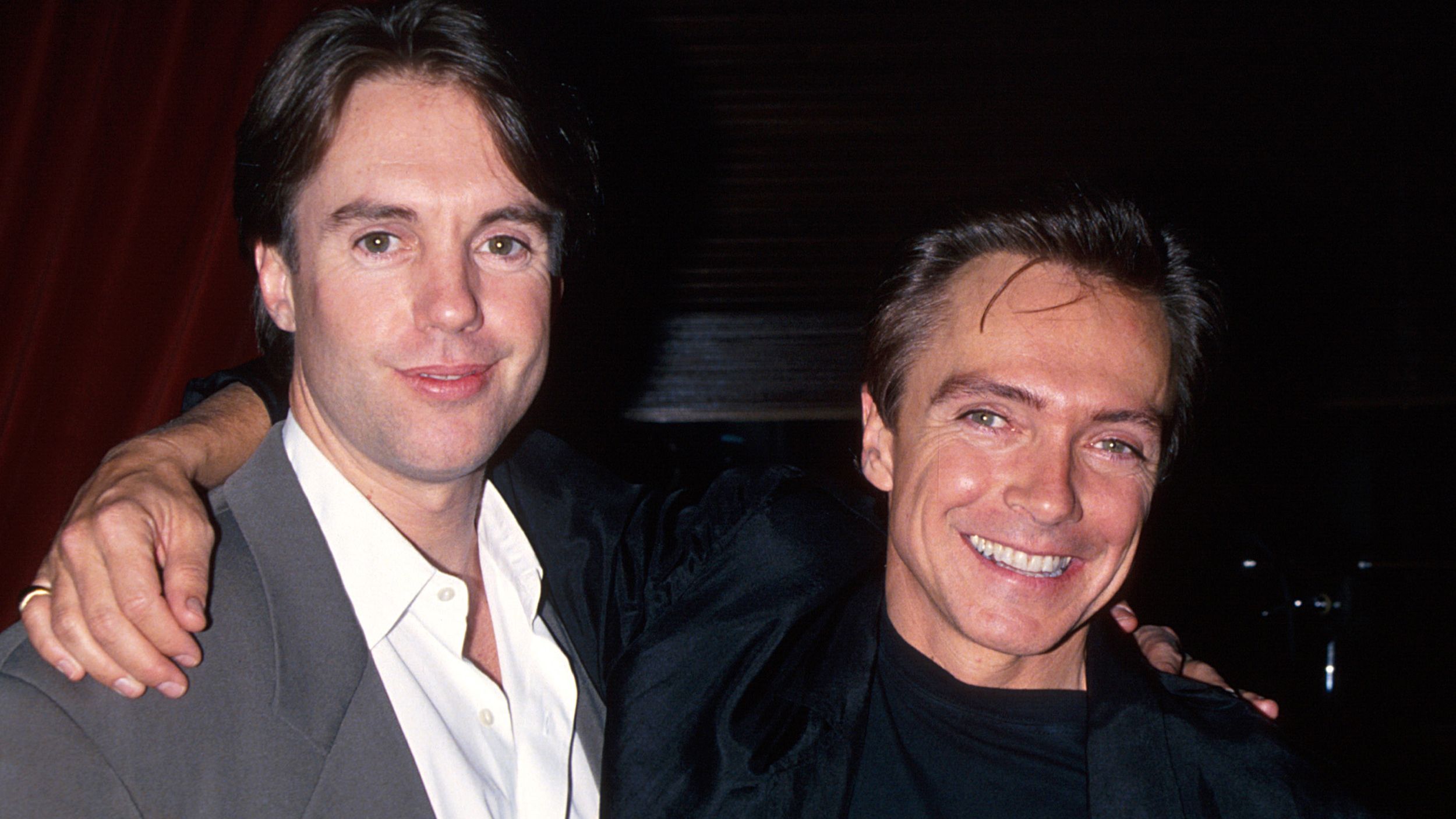
“New York City Life” is David Cassidy writing himself back into the picture—an adult postcard from the crossroads between the boy he was, the man he became, and the city that never really stopped calling.
For anyone who still thinks of David Cassidy only in bright television color—teen-idol grin, studio-polished pop, the easy shorthand of a decade—“New York City Life” lands like a quiet correction. It isn’t a cover, and it isn’t nostalgia packaged for sale. It’s Cassidy writing—his own words, his own memory—placed prominently as track 2 on A Touch of Blue (released in the UK on November 3, 2003), running 3:16.
And because you asked for the “ranking at launch”: the chart footprint belongs to the album that carried the song into the world. A Touch of Blue entered the Official UK Albums Chart with a first chart date of 15 November 2003, debuting (and peaking) at No. 61, then slipping to No. 92 the following week—two brief weeks on paper, but often that’s all it takes for a song to become a private companion.
What makes “New York City Life” especially poignant inside A Touch of Blue is its position as the album’s lone “I wrote this” signature amid a set largely built from carefully chosen classics and standards. Even fan and catalogue notes highlight that contrast—this one is Cassidy’s own, sitting beside songs made famous by others, as if he’s stepping out from behind interpretation to speak in his natural voice.
The backstory is quietly revealing. In an April 10, 2003 press item reproduced in Cassidy’s “In Print” archive, he’s described as hoping to finally record a mid-’90s tune he wrote in Ridgefield called “New York City Life,” adding that Sue—Sue Shifrin, his longtime collaborator and wife—thought it might be the best thing he’d written. Another compilation of his quotes repeats the spirit of that moment even more personally: Cassidy himself frames “New York City Life” as a song about “my life and my past and my present… and my potential future.” That’s not the language of a man trying to recreate yesterday. That’s the language of someone trying to make peace with time.
So what does the song mean—what does it do?
It treats New York less like a skyline and more like an inner geography: a place you can leave physically yet still carry under your skin. The title sounds simple, almost documentary—“New York City Life”—but the emotional implication is sharper: a life defined by motion, crowds, ambition, nights that don’t end when you want them to, and the strange loneliness you can feel even when you’re surrounded by millions. Cassidy’s own lyric fragments, circulated widely with the track, open on a note of disbelief—an almost cinematic contrast between coasts, between the calm promise of “elsewhere” and the gritty magnetism of the city that formed him.
What’s moving here is not only the subject, but the timing. 2003 Cassidy is older, weathered in the way voices become weathered—not weaker, but more honest about what they’ve survived. A Touch of Blue itself is often described as a late-career album of love, loss, and longing, and that emotional frame suits “New York City Life” perfectly: the song isn’t trying to win a room; it’s trying to tell the truth in a steady tone.
There’s a bittersweet artistry in placing it near the album’s start, too. By track 2, you’re still “arriving,” still stepping into the record—so Cassidy makes his personal statement early, before the listener can settle into the comfort of familiar covers. It’s as if he’s saying: yes, I can sing your favorites, but here is something that belongs to me. The rest of the album may be a lovingly curated gallery; “New York City Life” is the self-portrait hung in the front room.
Ultimately, “New York City Life” is about identity as a tug-of-war between places, between versions of the self. It understands that a city can be a first love: thrilling, demanding, exhausting, impossible to forget. And it hints at a deeper truth Cassidy knew well—fame itself can feel like a kind of metropolis: bright lights, constant noise, everyone thinking they know you, and the quiet wish to be seen as a whole person, not a headline.
That’s why the song lingers. Not because it conquered a chart, but because it carries the particular ache of looking back without becoming trapped there. In “New York City Life,” David Cassidy doesn’t romanticize the past—he measures it, holds it up to the present, and lets the listener hear what remains. And what remains, in the end, is beautifully human: a man still listening for the sound of his own footsteps in the city that taught him how to become himself.