
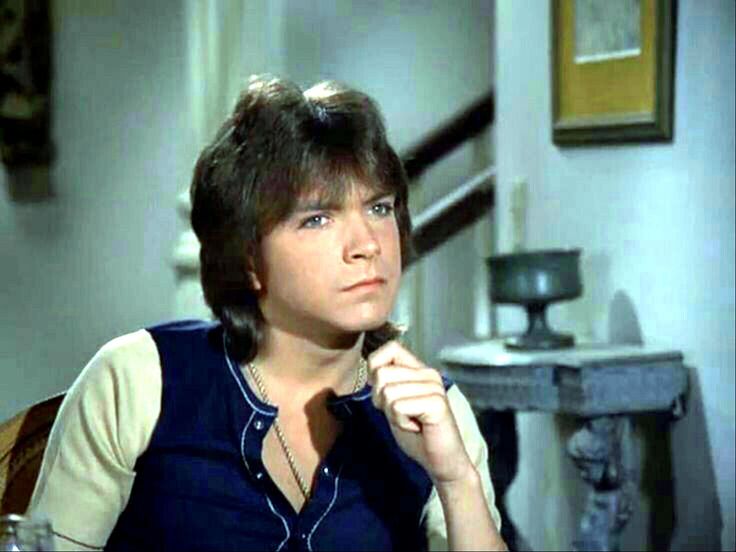
“Soul Kiss” is David Cassidy singing about rescue without spectacle—the idea that one truly intimate moment can steady you when everything else is coming undone.
In the long arc of David Cassidy’s career, “Soul Kiss” arrives not as a teenage daydream, but as an adult admission—tucked into the center of a record that feels like a late-night conversation carried all the way to its most honest sentences. The song appears as track 6 on his 1992 studio album Didn’t You Used to Be…, released in September 1992 on Scotti Bros. and recorded between February and June 1992 in Santa Monica, with Eric “E.T.” Thorngren producing. It runs 3:56, positioned carefully between “I’ll Never Stop Loving You” and “Tell Me True,” as if the album pauses there—right in the middle—so Cassidy can speak more quietly, more personally.
And importantly, this isn’t a borrowed standard or an easy nostalgia play. “Soul Kiss” was written by David Cassidy and Sue Shifrin, the creative partnership at the heart of the album—an album where every track is written or co-written by Shifrin, giving the whole record a unified, diary-like emotional logic. That context matters because it changes how you hear the song: not as a random cut, but as a chapter in one continuous story about love, fear, pride, and the ache of wanting something real enough to stand on.
As for chart “rankings at debut”: “Soul Kiss” itself was not released as a major charting single, and Didn’t You Used to Be… is commonly listed in discographies without major chart placements—meaning its impact is less about public numbers and more about private resonance. Which, in a way, fits the song’s entire thesis. A “soul kiss” isn’t a performance for the room; it’s something that changes you when nobody is watching.
The story inside the song begins in collapse. The official discography notes and lyric excerpts frame the narrator as someone staring straight at discouragement—life fraying, hopes cracked, the feeling of standing in the wreckage of what you thought you knew. But then the song turns—softly, almost against its own instincts—toward the possibility that intimacy can be more than romance. The “kiss” here isn’t described like a physical thrill; it’s described like relief. Like shelter. Like that rare human contact that doesn’t fix the world, yet somehow makes the world survivable again.
That’s what “Soul Kiss” is really about: the difference between affection and salvation. Many pop songs use a kiss as a spark; Cassidy uses it as a lifeline. And because this is early-’90s Cassidy—older, sharper around the edges, less interested in being “liked” than in being understood—the sentiment lands with a particular gravity. You can almost hear a man who’s learned that the hardest battles aren’t always dramatic; sometimes they’re quiet, internal, fought behind polite smiles. The song’s mood suggests someone who has tried being strong the loud way and found it exhausting—someone who now wants strength that feels gentle.
There’s also something poignant about where “Soul Kiss” sits within Didn’t You Used to Be…. The album’s track list reads like an emotional arc: rain, loneliness, old habits, the search for “somebody to love,” and then—right in the center—“Soul Kiss,” as though it’s the moment the narrator stops talking about love and finally touches its deeper meaning. Immediately afterward comes “Tell Me True,” a song title that sounds like the next morning—honesty demanded once the glow fades. That sequencing makes “Soul Kiss” feel like the night itself: intimate, vulnerable, half-prayer, half-confession.
In the end, David Cassidy doesn’t sell “Soul Kiss” as a fantasy. He sings it as a human need: the desire for connection that reaches past ego, past history, past the bruises we pretend don’t hurt anymore. The song’s tenderness is not naïve—it’s earned. And that’s why it lingers. Not because it shouted its way into the charts, but because it speaks to the private moments when the world feels too heavy, and one honest touch—one “Soul Kiss”—is enough to make you believe you can carry on.