
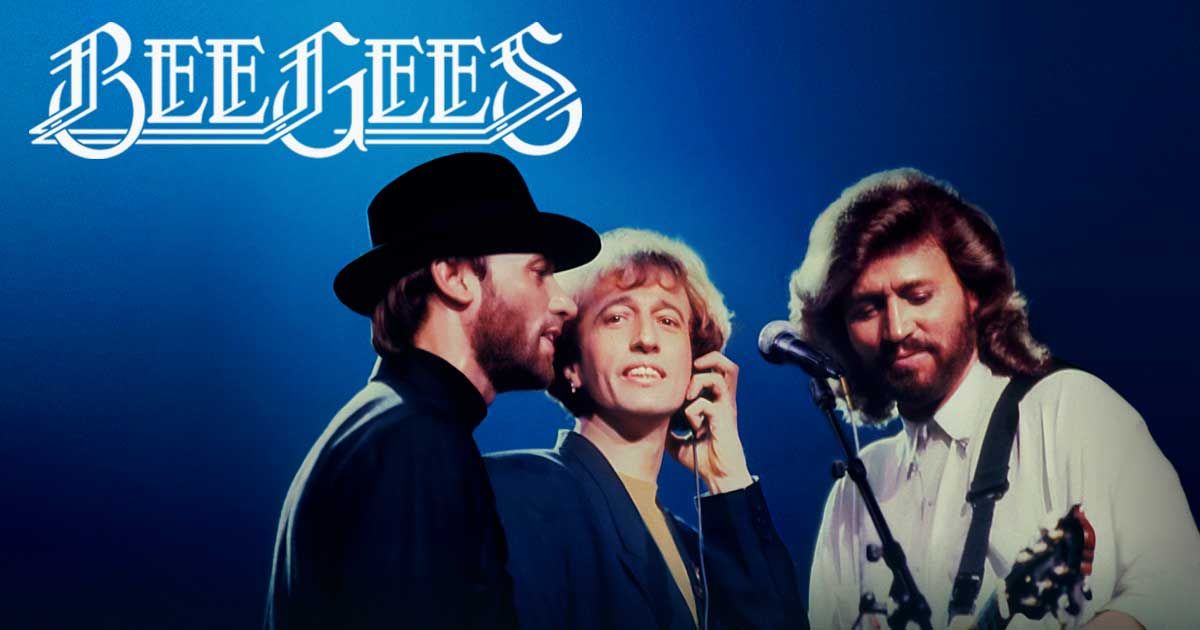
“Miracles Happen” is the Bee Gees choosing hope as an act of will—singing into the cold air and insisting that light can still arrive, if we keep reaching for it.
Set late in their career yet unmistakably “Gibb” in its emotional architecture, “Miracles Happen” appears as track 11 on the 1997 album Still Waters—the Bee Gees’ twenty-first and penultimate studio album, released 10 March 1997 in the UK (and 6 May 1997 in the U.S.). The song runs about 4:11 and is credited to Barry Gibb, Robin Gibb, and Maurice Gibb, with production on the track associated with Hugh Padgham.
Those facts matter because they frame the feeling: this is not the Bee Gees chasing a trend, but the Bee Gees returning to a timeless promise—one they deliver with the kind of conviction only artists with decades behind them can manage. And Still Waters itself arrived with real weight in the public world: it peaked at No. 2 in the UK and No. 11 in the U.S., a level of success that felt like a late-career vindication. (In the UK, Official Charts shows the album’s first chart date as 22 March 1997, hitting its peak position immediately.)
Yet “Miracles Happen” is not a headline single story. It’s more like a secret room near the end of the album—where the brothers stop performing “cool” and start performing belief.
The song’s backstory makes that belief even more poignant. “Miracles Happen” was originally written and recorded in 1994 to be the title song for a new film version of Miracle on 34th Street, and the Bee Gees delivered an arrangement with a boys’ choir and a large string section. Then, in a twist almost too perfect for the song’s theme, the filmmakers ultimately chose to use only old Christmas songs, leaving the Bee Gees’ newly crafted “miracle” unreleased in that form. Later, the brothers re-made the song for Still Waters—a reworking that, according to session chronicler Joseph Brennan, kept the choral idea while becoming a longer, winding Barry-style melody, though he also noted the production felt unusually heavy for Padgham.
That history—hope written for a Christmas miracle, shelved, then revived—sits inside the lyric like a heartbeat you can’t ignore.
Because “Miracles Happen” isn’t naïve optimism. It’s the kind of hope you arrive at only after you’ve watched plans fall apart and still chosen to believe anyway. The opening lines feel unsure, almost wary—like meeting someone you can’t quite read—then quickly become a pledge: don’t look down; I’ll be there. And from there, the chorus takes the song’s most powerful step: it doesn’t merely claim that miracles happen—it repeats the claim until it begins to sound like a vow you could live by. That repetition is not laziness. It’s ritual. In hard seasons, people repeat what they need to survive.
There’s a distinctly wintery imagery to the lyric—cold air, falling snow—matching the song’s origin in a Christmas-film brief, even as the final album version sits in a more contemporary 1997 sound world. And that contrast is part of the track’s emotional pull: the Bee Gees, once the kings of Saturday-night heat, now writing warmth into the cold. Not by denying the storm, but by offering a hand through it.
It also helps to remember what Still Waters represented. This was the Bee Gees working with multiple heavyweight producers across the album—Russ Titelman, David Foster, Hugh Padgham, Arif Mardin, among others—yet still sounding like themselves, still building songs on that uniquely Gibb combination of elegance and ache. By the time “Miracles Happen” arrives, you’ve already traveled through late-’90s polish and grown-up romance; then, suddenly, the song lifts its eyes upward. Choir voices (real or implied in spirit) make the track feel communal, as if the brothers aren’t just singing about faith, but inviting you into it—like a crowded room humming along to something everyone secretly needs.
And that is the song’s meaning at its deepest: “Miracles Happen” is not about magic. It’s about persistence. About keeping your grip when the world tries to loosen it. About staying present—don’t let go—when fear wants you to disappear. The Bee Gees always understood romance as a kind of weather system, but here they turn that same sensitivity toward something broader and more elemental: the simple human need to believe the story isn’t finished yet.
So when you play “Miracles Happen” now, it doesn’t feel like a late-career footnote. It feels like a message folded carefully and carried across time: from 1994’s abandoned movie tie-in, into 1997’s renewed artistic confidence, and onward into whatever winter your own life happens to be living through. And the message is steady, almost stubborn in its gentleness—spoken in the language the Bee Gees always trusted most: harmony, memory, and the quiet insistence that if we just try… miracles happen.