
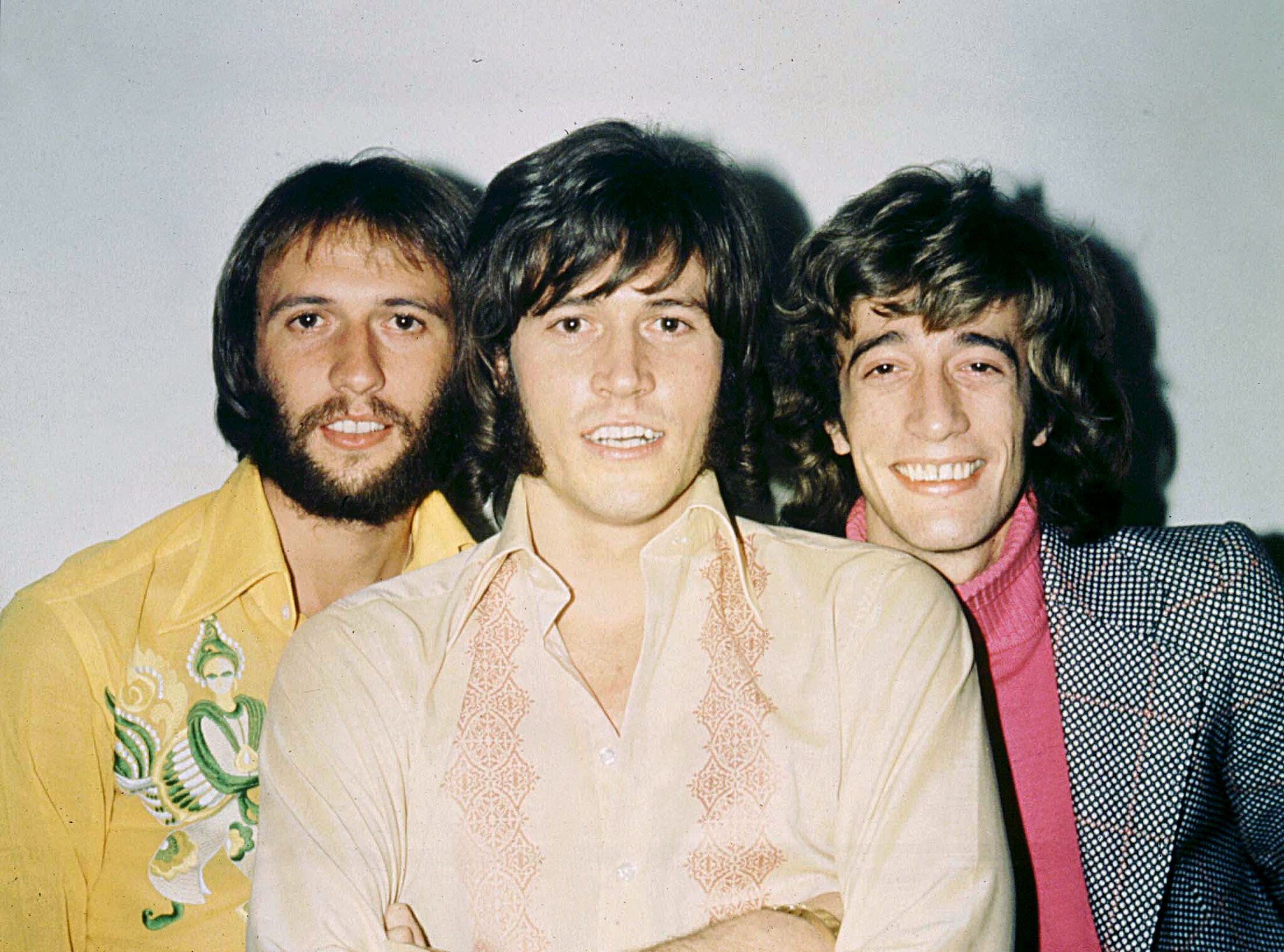
“Stop (Think Again)” is the Bee Gees’ late-night plea for clarity—love seen through smoke and neon, where desire keeps moving but conscience taps the shoulder and asks you to slow down.
The most important truth about “Stop (Think Again)” is that it isn’t a hit single designed to burst through the radio door. It’s an album piece, and it behaves like one—longer, moodier, more patient than the Bee Gees’ chart-toppers. The song appears on Bee Gees’ 1979 album Spirits Having Flown (Side Two), with a running time of about 6:37, credited to Barry Gibb, Robin Gibb, and Maurice Gibb.
That placement matters. Spirits Having Flown arrived at the crest of their post-Saturday Night Fever imperial phase—an album that didn’t just sell, but felt like a continuation of flight: sleek, assured, and unafraid of grand emotional gestures. It became their only UK No. 1 studio album and also topped charts in multiple countries, a reminder of how enormous their reach still was in 1979. Yet “Stop (Think Again)” doesn’t chase the bright, immediate drama of “Tragedy” or the pristine uplift of “Too Much Heaven.” It chooses something darker and more intimate: the slow churn of a relationship that knows it’s dangerous and still can’t quite let go.
Musically, the track is one of the album’s most luxuriously adult moments—what you might call “Philadelphia-soul adjacent,” but with that unmistakable Gibb signature: layered harmonies that feel like architecture, and a groove that doesn’t hurry because it doesn’t need to. Modern album notes still describe it in that sensual, slow-jam language, pointing to its luminous soul feel within the record’s broader funk and pop sweep. And there’s a fascinating little piece of connective tissue inside the sessions: the Chicago horn players who appear on “Too Much Heaven” are also noted as playing on “Stop (Think Again),” a cross-pollination that adds brass glow to the track’s smoky atmosphere.
But the real story behind “Stop (Think Again)” isn’t a studio anecdote so much as a psychological moment—a song built around the instant when passion and self-preservation collide. The title itself is the entire drama: stop, think again. It’s not a romantic declaration; it’s an intervention. It suggests someone has crossed a line—or is about to—and a wiser voice (inside the relationship, inside the singer, inside the listener) tries to pull the emergency brake. In the Bee Gees’ hands, that message doesn’t come out as moralizing. It comes out as seduction with a bruise underneath: the feeling of wanting something you know you shouldn’t want, and needing the strength to step back before the wanting turns into damage.
That’s why the song’s length feels essential rather than indulgent. At over six minutes, it has time to linger in the fog. Shorter pop songs often present temptation like a snapshot; “Stop (Think Again)” presents it like a room you’re stuck in with someone you can’t stop looking at. The groove keeps rolling—steady as a heartbeat—while the harmonies bloom and fade like thoughts you keep repeating at 2 a.m. The Bee Gees were masters of turning harmony into feeling, and here the stacked voices don’t merely decorate the track; they create the sensation of being surrounded by your own emotions—desire, doubt, memory, the faint hope that you can still choose differently.
And that’s the deeper meaning: “Stop (Think Again)” is about the rare courage of reconsideration. It’s about the moment you realize love can be intoxicating and still be wrong for you—wrong for your peace, wrong for your future, wrong for the person you’re trying to become. Some songs glamorize the fall. This one, quietly, tries to prevent it. Not with cold logic, but with a tender warning—because the Bee Gees understand that the hardest time to be wise is when you’re most alive.
In the end, “Stop (Think Again)” remains one of those Bee Gees tracks that rewards anyone willing to go beyond the headlines. It lives in the deep part of Spirits Having Flown—a record famous for its massive singles—yet it offers something the singles often can’t: the slow, haunting realism of a heart arguing with itself. And if it still lands today, it’s because time hasn’t changed the central problem it sings about: how often we keep walking toward what hurts us… and how quietly miraculous it is, when we finally stop, and think again.