
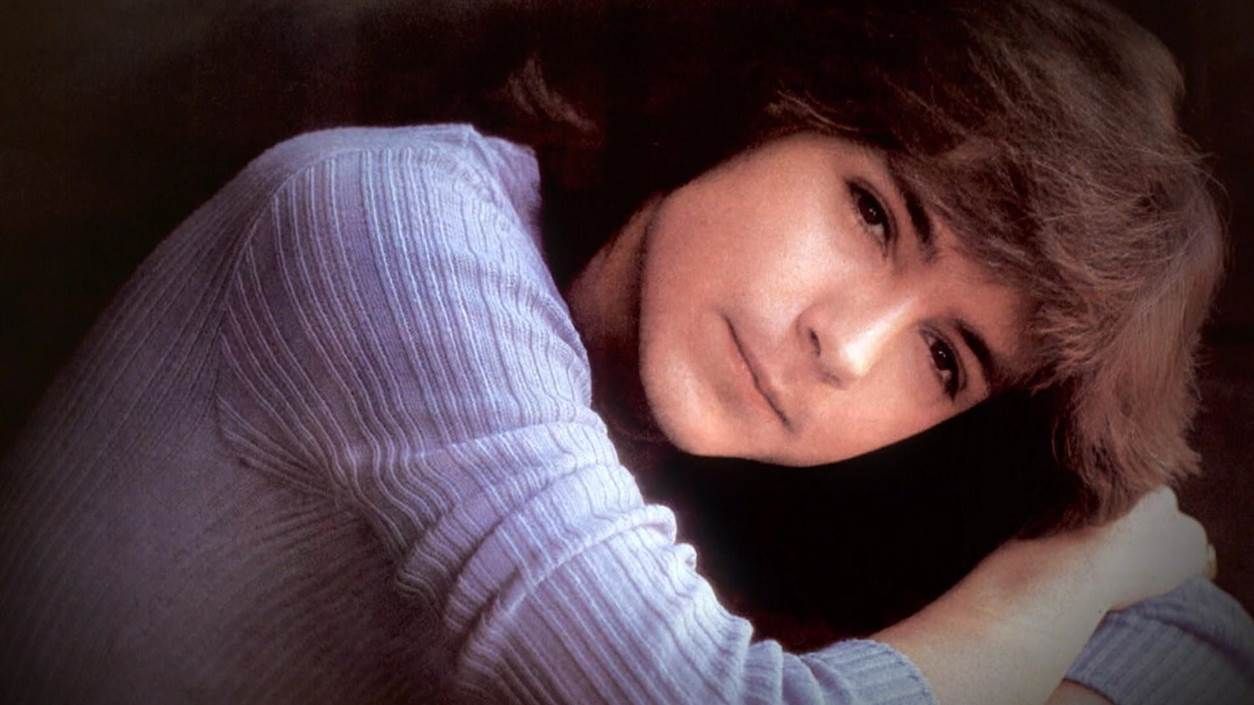
“Sooner or Later” becomes a sly, torchlit confession in David Cassidy’s hands—proof that behind the famous smile lived a performer who could savor adult nuance, danger, and wit.
David Cassidy’s “Sooner or Later (From ‘Dick Tracy’)” is best understood as a moment captured—one night, one stage, one song that carries a long shadow. His performance was recorded live at the UCLA / James A. Doolittle Theatre in Hollywood on March 8, 1996, as part of Sondheim: A Celebration, a S.T.A.G.E. benefit concert (an HIV/AIDS fundraiser) presented across March 8–10, 1996. The recording was issued on the live compilation Sondheim: A Celebration (1996 S.T.A.G.E. Benefit Concert / Live) (released in 1996), where Cassidy is specifically credited for singing “Sooner Or Later.”
Because this is a live benefit-track on a compilation rather than a stand-alone commercial single, there isn’t a reliable “debut chart position” for Cassidy’s recording in the way pop singles are tracked. What is indisputable—what gives the song its immediate gravity—is the song’s original stature: “Sooner Or Later (I Always Get My Man)” won the Academy Award for Best Original Song at the 63rd Academy Awards (1991), credited to Stephen Sondheim, for the film Dick Tracy.
That Oscar matters, not as a trophy name-drop, but because it explains why the song carries such a delicious kind of power. Sondheim wrote it to sound like it drifted out of a smoky nightclub in another era—an elegant trap disguised as a lullaby. In the film, it was performed by Madonna as Breathless Mahoney, and at the Oscars she famously performed it onstage in 1991. The song itself is a masterpiece of controlled confidence: the singer doesn’t beg, doesn’t bargain—she predicts. Desire is treated like inevitability, and the lyric’s charm is that it smiles while it sharpens the knife.
So why does it feel so haunting when David Cassidy sings it?
Because Cassidy’s public image for so long was built on being wanted—idolized, chased, mythologized—while this song is about the psychology of the chase itself. When he steps into “Sooner or Later,” he isn’t reenacting teen-pop innocence. He’s inhabiting a grown-up character who understands leverage: attraction as strategy, seduction as theatre. In the context of Sondheim: A Celebration, that’s precisely the point. This concert wasn’t asking “Can you sing?” It was asking, quietly but firmly: Can you act a song?
And Cassidy could.
The performance sits inside a larger evening devoted to Sondheim’s world—sharp-tongued, emotionally intelligent, and unafraid of ambiguity. The concert’s documented program places “Sooner or Later” among other Sondheim gems performed live over that March 8–10 run at the Doolittle, with Cassidy named for the number. Even the surrounding details feel telling: on the same release, the Cassidy family presence is part of the atmosphere—David, Patrick, and Shaun Cassidy appear together elsewhere in the concert—yet David’s solo turn on “Sooner or Later” stands apart as something sleek and self-contained.
The deeper meaning, then, becomes almost autobiographical without ever being literal. “Sooner or Later” is a song about certainty worn like perfume—the kind of certainty that often hides fear underneath. It’s easy to hear the character’s confidence and miss the vulnerable truth: if you have to insist you “always get your man,” perhaps you’ve also known what it feels like when you don’t. In Cassidy’s voice, that tension can feel especially poignant. The bright surface—the polish, the showman timing—shares space with something more human: an awareness that desire isn’t only triumph. Sometimes it’s loneliness in evening clothes.
That’s why this recording endures as more than a curiosity. David Cassidy singing Stephen Sondheim isn’t a gimmick; it’s a window. A reminder that time gives certain voices new colors, and that a performer once trapped in a single cultural frame can, in the right song, step out of it completely. In “Sooner or Later,” Cassidy doesn’t chase the past. He slips into a different kind of spotlight—one lit not by screams, but by craft—and leaves behind something wonderfully mature: a smirk, a sigh, and the faint echo of a nightclub promise you can’t quite forget.