
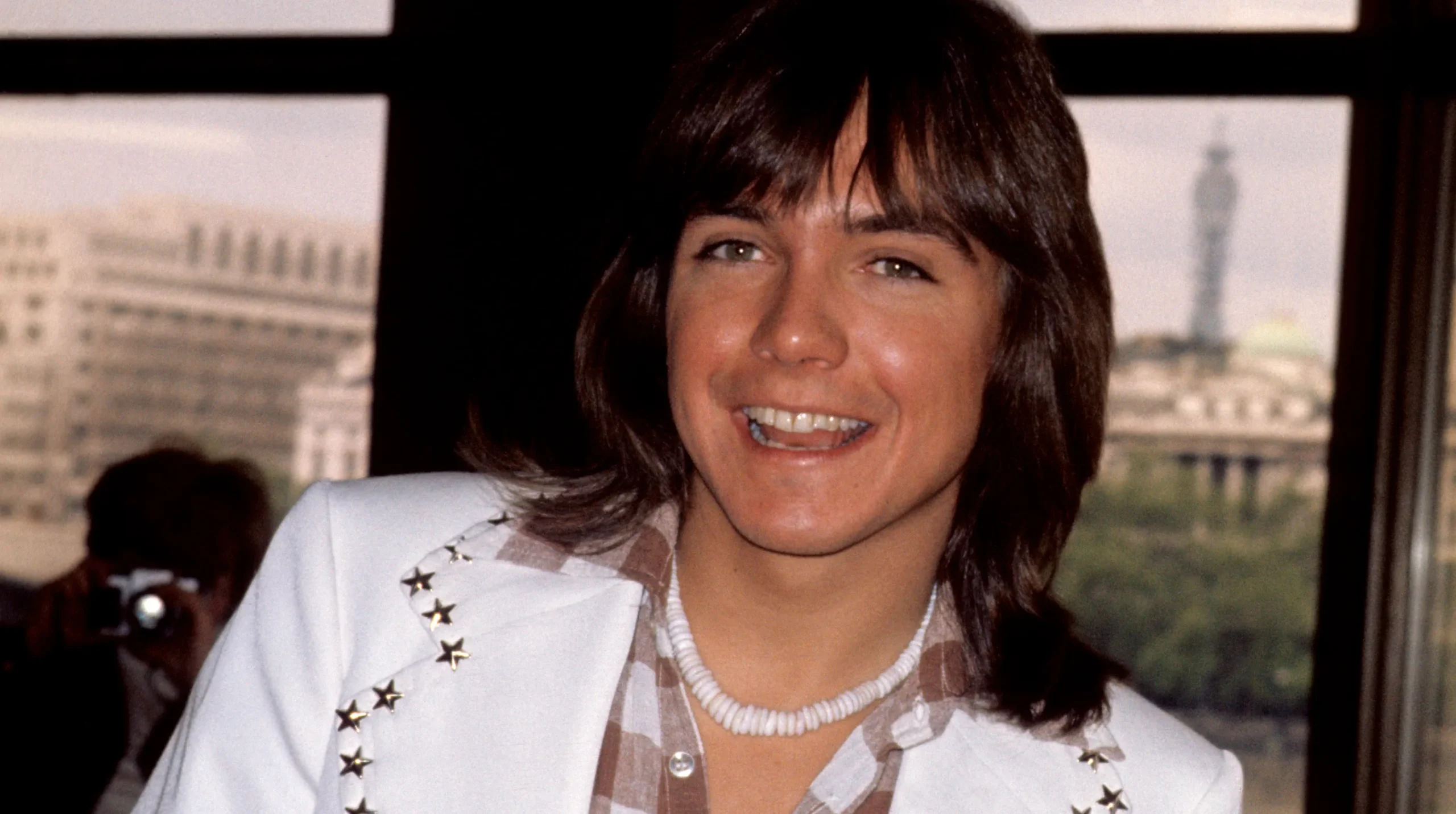
“Let Her Go” is David Cassidy choosing maturity over obsession—an aching reminder that love sometimes ends not with thunder, but with the slow, painful discipline of release.
By the time David Cassidy sang “Let Her Go,” the world already knew him through brighter, earlier snapshots—youthful fame, pop immediacy, the roar of a public life. But this song belongs to a later, quieter chapter, where the voice doesn’t try to chase the past. It tries to make peace with the present. “Let Her Go” appears as track 4 on Cassidy’s 1998 studio album Old Trick New Dog, released in September 1998 on his own Slamajama Records label. And there’s something deeply fitting about that album title: a man still capable of learning, still capable of changing his hands even if the deck looks familiar.
Important context sits right inside the album’s own description. Old Trick New Dog is a blend of new material and remakes tied to the old Partridge Family era, but it’s framed as a deliberately contemporary step for Cassidy at the time—his way of standing with one foot in memory and one foot in today. The record’s lead single, “No Bridge I Wouldn’t Cross,” even managed an Adult Contemporary impact in the U.S., a detail that hints at the album’s intent: not nostalgia as a museum, but nostalgia as a living room—still occupied, still warm.
Within that setting, “Let Her Go” feels like one of the album’s most human “new” statements. The songwriting credit places Cassidy not only as the singer but also as a co-creator: the album’s discography page credits “Let Her Go” to David Cassidy and Christopher Walker. That matters, because you can hear the difference between a role performed and a feeling admitted. Even without leaning on melodrama, the song’s very premise—I’ve just got to let her go—carries the exhausted honesty of someone arguing with himself in real time.
What makes “Let Her Go” linger is that it’s not a triumphant breakup song. It’s a song about the humiliating middle space, the part few people like to confess: when you know what the right decision is, yet your heart keeps turning back like a habit. The title phrase is almost a mantra, repeated not for emphasis but for survival. Not “I’m over it.” Not “I’m better off.” Just the bare, difficult truth: I have to stop reaching. I have to stop bargaining. I have to stop rehearsing the same ending.
And that is the emotional genius of Cassidy’s late-era approach here. He doesn’t sing like a boy trying to win love. He sings like a man trying to stop losing himself. The ache isn’t only romantic—it’s moral. The song suggests a private reckoning: the recognition that clinging can become a kind of selfishness, that longing can start to trespass, that love—if it ever meant anything—must eventually learn respect. “Let her go” becomes less a concession and more a small, stern act of care.
Placed among the album’s track list—between the familiar echoes (“I Think I Love You,” “I Woke Up In Love This Morning”) and other reflective pieces—“Let Her Go” functions like a dimly lit hallway connecting who Cassidy was to who he was becoming. It’s also poignant in retrospect: Old Trick New Dog is described as the last studio album Cassidy released before his death, which gives the song an unintended extra gravity, as if the act of letting go was part of a larger, lifelong practice—learning what to carry forward, and what to finally set down.
In the end, “Let Her Go” doesn’t promise that release is painless. It quietly insists the opposite: that letting go is work—repeated, imperfect, sometimes embarrassing work. But it also offers something gentler than hope: dignity. The dignity of admitting you’re not finished grieving. The dignity of choosing distance anyway. And the dignity—hard-won, softly sung—of realizing that sometimes the bravest love is the love that steps back, closes the door without slamming it, and walks away still caring.