
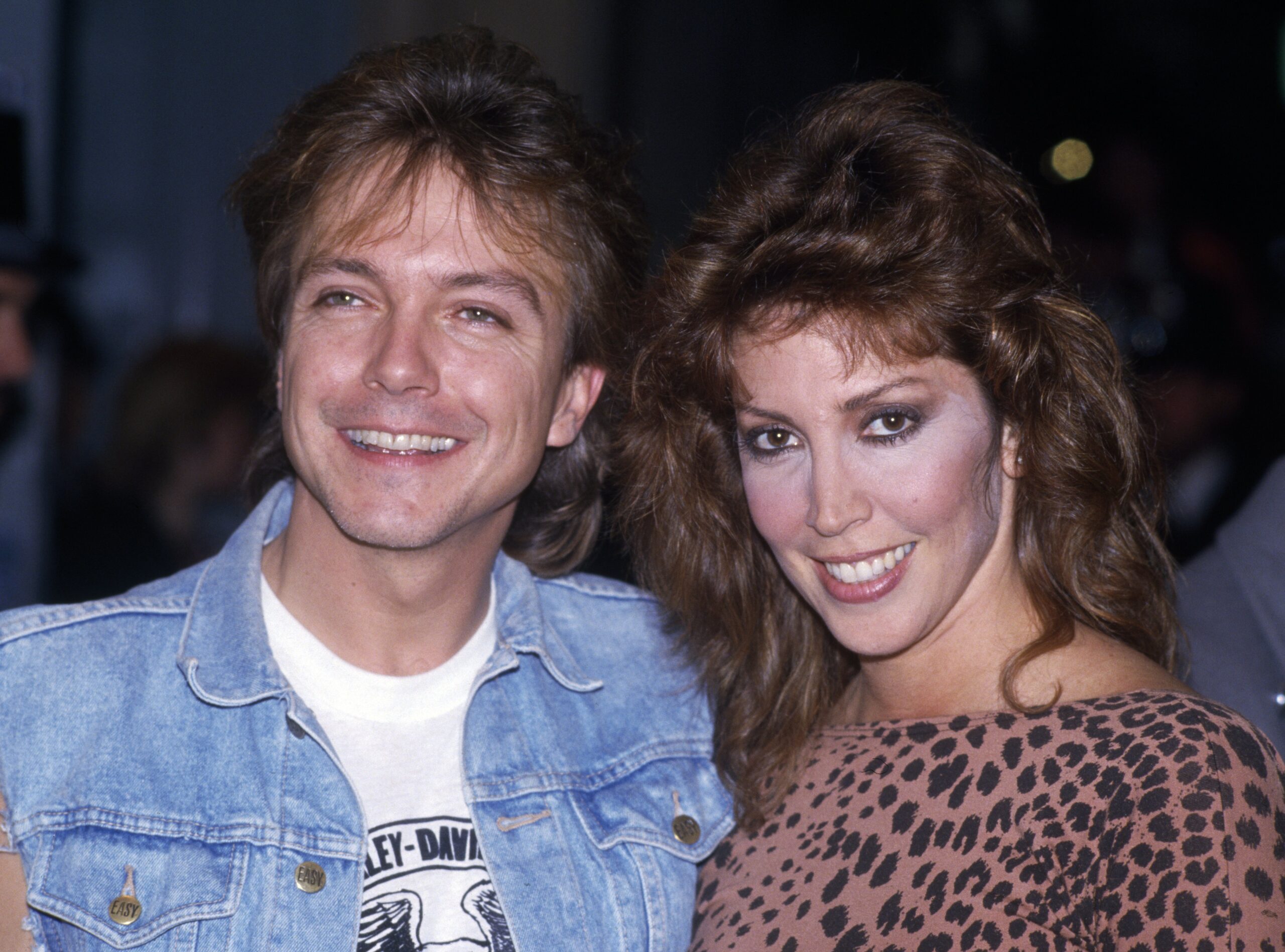
“Till We Meet Again” is David Cassidy’s quiet closing embrace—less a goodbye than a tender promise that love and memory can outlast the room’s final silence.
If you’re looking for the moment where David Cassidy stopped performing the idea of himself and simply stood as a man with a voice and a past, “Till We Meet Again” is one of the most revealing places to listen. The song was released on May 24, 2018 as the closing track of the EP Songs My Father Taught Me (label: Mixkitchen Musica), running 3:38—a small span of time that somehow feels larger than many full albums. And while “Till We Meet Again” itself was not issued as a chart single, the EP’s debut story still matters: within weeks of release it reached No. 1 on the Amazon Jazz Chart, No. 2 on the iTunes Jazz Chart, and No. 13 on the Billboard Jazz Albums chart—a remarkable late bloom for a project released after his passing.
Those rankings are more than statistics; they’re a portrait of listening-as-remembrance. Because this EP wasn’t framed as a comeback. It was framed as something far more personal: a tribute and a legacy piece, tied directly to the televised account of his final recording period. A&E’s two-hour Biography special “David Cassidy: The Last Session” premiered on June 11, 2018, with coverage emphasizing that it shows Cassidy in the studio during those final sessions—the same creative chapter that yielded Songs My Father Taught Me.
What makes “Till We Meet Again” especially poignant is that it is not simply a “standard” revived. The credits point to a more intimate, contemporary creation: on Apple Music, the song’s Composition & Lyrics are credited to Craig J. Snider, who also appears as pianist and producer, with John Adair on saxophone and Sam B. Fishkin credited as mixing engineer. In other words, this wasn’t Cassidy stepping into someone else’s well-worn lyric. It was Cassidy stepping into a new, purpose-built farewell—written and shaped by people close enough to understand what kind of goodbye he could actually sing.
And the “behind story” is not guesswork; it’s heartbreakingly explicit. In a message posted on his official site dated May 5, 2017, Cassidy wrote that he was about to go to Chicago to record in Craig’s “state of the art studio” to begin his tribute project—“Songs my father taught me”—paying homage to his father Jack Cassidy, whom he called “the most talented man I’ve ever known.” He also added, with disarming plainness, that he believed it would be his last recording, and insisted the sessions be captured live—“the only authentic way,” as he put it. That is the emotional doorway through which “Till We Meet Again” enters. You don’t hear it as a casual track at the end of an EP; you hear it as the final paragraph of a letter he’d been drafting in his head for years.
Listening in that light, the title becomes almost unbearably direct. “Till We Meet Again” isn’t a dramatic breakup phrase or a showbiz cliché here—it reads like a private vow. A vow to a father, perhaps. A vow to the parts of youth that never completely leave us. A vow to the audience he kept addressing even when the spotlight grew complicated. The song’s gentleness—piano, saxophone, space—feels intentionally unforced, as if the production itself is honoring the idea that this isn’t the time for fireworks. It’s the time for truth, spoken at a volume that doesn’t compete with memory.
There’s also a second, quieter meaning—one that arrives when you remember the timeline. Cassidy died on November 21, 2017, months before the EP’s release and the documentary premiere. That turns “Till We Meet Again” into something rare in pop culture: a posthumous track that doesn’t feel “left behind,” but left with intention. Not a rough demo swept out of a vault, but a shaped final gesture, made by someone who knew he was nearing the edge and still chose to sing.
So the song’s real power is not in novelty or virtuosity. It’s in its emotional posture: acceptance without coldness. Farewell without bitterness. The sense that if you cannot control the ending, you can still choose the tone of your last words. And in David Cassidy’s case, those last words—set to Craig J. Snider’s composition, framed by a soft sax line—sound like a hand held a moment longer than expected, and then released… not into emptiness, but into the hope of reunion, somewhere beyond the last note.