
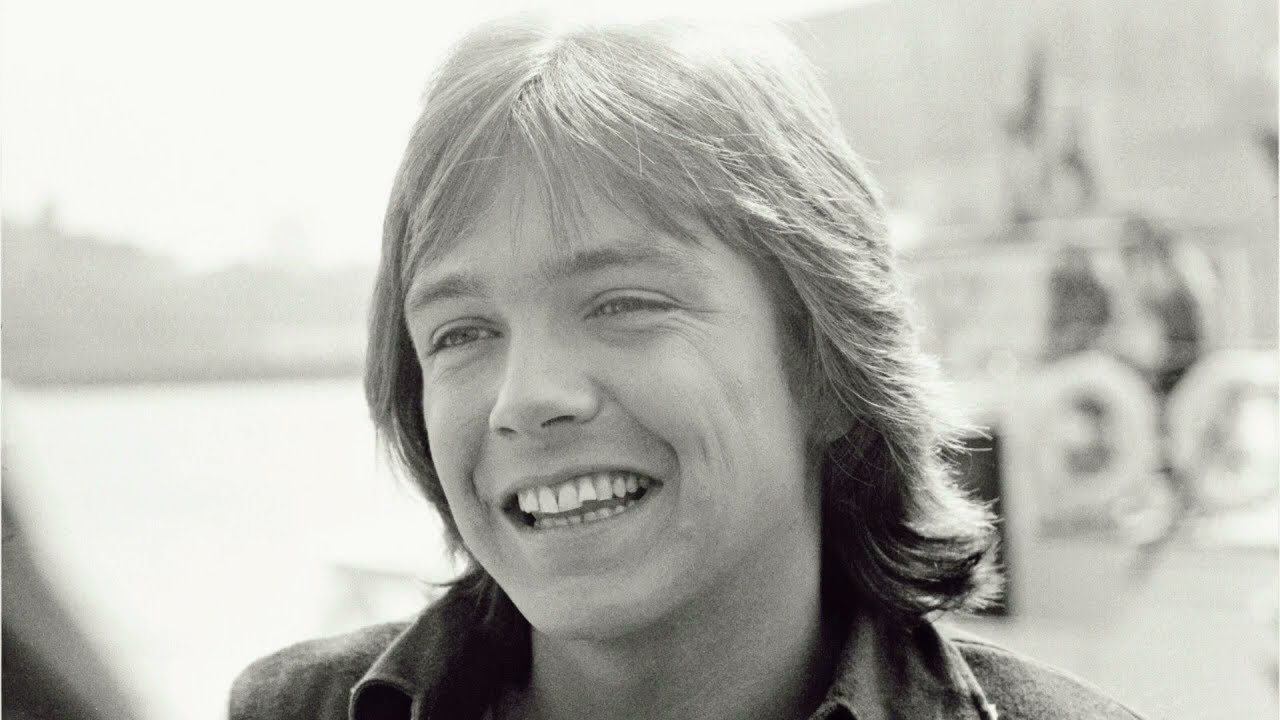
“Blue Christmas” is the sound of tinsel dimming—when the season keeps smiling, but the heart quietly remembers what isn’t there.
The most important thing to know about David Cassidy’s “Blue Christmas” is where it first landed for the public: not as a standalone pop single chasing weekly chart peaks, but as part of a holiday record that sat right inside many living rooms like a seasonal tradition. In November 1971, The The Partridge Family released A Partridge Family Christmas Card, a Christmas album that became the best-selling Christmas album in the United States that season and held No. 1 on Billboard’s special Christmas Albums sales chart for all four weeks the magazine published it in 1971. That’s the “chart story” that frames Cassidy’s performance: the song didn’t need a Hot 100 climb to be heard—this album was the way it traveled, house to house, year to year.
On that album, “Blue Christmas” was recorded on August 26, 1971—a detail that feels almost poignant when you think about it: a melancholy holiday standard cut in late summer, as if the studio was trying to bottle winter feelings before the world even cooled down. And even if you never checked the liner notes, you can hear the era in the performance—the early-’70s cleanliness, the gentle pop polish, the careful sense of “family TV warmth.” It’s sadness presented with good manners: a tear dabbed away before it reaches the collar.
The song itself has older, deeper roots than any one singer. Blue Christmas was written by Billy Hayes and Jay W. Johnson, first recorded by Doye O’Dell in 1948, and then popularized in 1949–1950 by several versions—including Ernest Tubb, whose recording reached No. 1 on Billboard’s country jukebox chart in early 1950. Later, of course, Elvis Presley would cement it in the popular imagination with his 1957 recording, turning the tune into a cornerstone of modern Christmas melancholy.
So what does Cassidy bring to a song with that kind of history? Not the swagger of rock-and-roll blues, and not the gravel of honky-tonk either. His reading leans toward something more private: the ache of realizing that the holiday lights can’t negotiate with absence. In the classic “Blue Christmas” lyric, the pain is simple—no twist, no clever escape hatch. That simplicity is precisely why it lasts. It describes a feeling people rarely announce at a party but many recognize the moment they’re alone with the kitchen clock: the strange loneliness that can arrive because everyone else is celebrating.
And Cassidy—especially in the early ’70s context—sings it with a kind of restrained sincerity that makes the sadness feel “safe” enough to admit. There’s a youthful softness in the timbre, a brightness that hasn’t fully darkened, which creates a tension the song thrives on: the voice sounds like it should be having a merry Christmas… and that contrast makes the “blue” feel sharper. It’s a gentle performance, but it doesn’t dilute the emotion. Instead, it frames sorrow the way many people actually live it during the holidays: quietly, politely, with the door still open for someone to come back in.
If you’ve also come across a later studio take of “Blue Christmas” credited directly to Cassidy on streaming services, that exists too—appearing as a track on “David Cassidy Christmas – EP” (widely listed on streaming as a 2016 release, though some storefront metadata reflects earlier catalog dating). But for most listeners, the defining emotional setting remains 1971: that moment when television pop culture and holiday tradition overlapped, and a familiar face offered a sad Christmas song not as drama, but as companionship.
In the end, “Blue Christmas” endures because it tells the truth the season can’t always afford to say out loud: joy is real, but so is longing—and sometimes the most human thing we can do is let a song hold the ache for us, briefly, tenderly, until we’re ready to rejoin the room.