
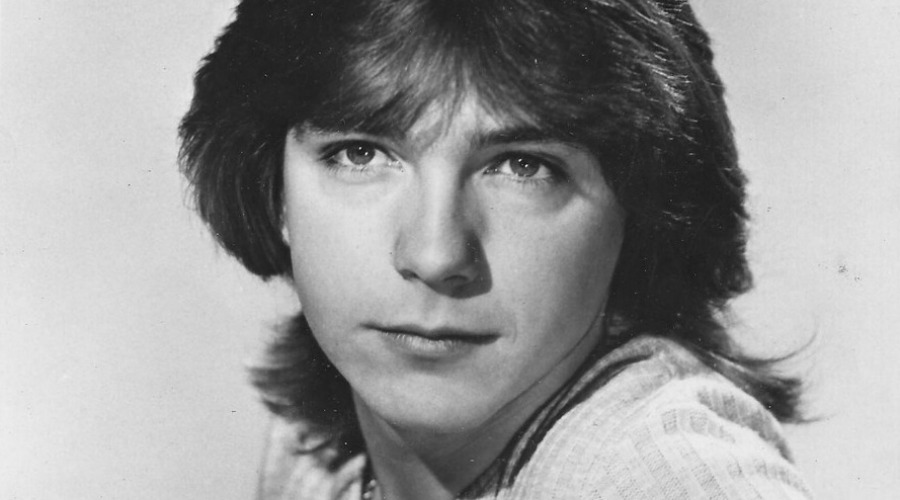
“Living a Lie” is David Cassidy staring at adulthood’s quiet masks—when love turns into performance, and the hardest truth is admitting you’ve both been pretending.
What makes “Living a Lie” linger isn’t that it arrived with a chart headline—it didn’t. The song wasn’t released as a major single, and it carries no debut position on the Hot 100 to pin to a date. Instead, it lives where a lot of the most honest music lives: inside a complicated chapter of a career, almost half-hidden, waiting for listeners who recognize the sound of someone telling the truth under their breath.
“Living a Lie” appears on David Cassidy’s RCA-era album Gettin’ It in the Street, released in Germany and Japan in November 1976—a record that, famously, was not officially released in the U.S. at the time, with American copies only surfacing later (many as cut-outs) around July 1979. That strange release story matters, because it explains why songs like this can feel like “lost pages” from Cassidy’s life: they were recorded with intent, but they didn’t get the normal chance to become part of the public conversation.
On the album, “Living a Lie” is placed on Side Two (often listed as track 8 overall), and it’s co-written by David Cassidy and Gerry Beckley of America—with Cassidy also co-producing the album alongside Beckley. In other words, this isn’t the work of a manufactured moment. It’s Cassidy trying to author his own adulthood, in the company of another songwriter known for melodic clarity and emotional understatement. The recording commonly runs about 3:48.
And then—there’s the lyric, which doesn’t knock on the door so much as step inside and sit down. From the opening lines, the song paints the face of someone who has “aged,” someone now playing “all those games that grownups play”—games meant to avoid the silence, to avoid “empty spaces.” That’s the kind of writing that doesn’t try to be clever; it tries to be accurate. It suggests a relationship where both people have become skilled at acting normal: smiling at the right times, speaking in safe sentences, pretending the room isn’t cold. The song’s sting is that it doesn’t blame only one person. It describes two adults trapped on what it calls a “tightrope,” each “knowing there’s no hope.”
What I find quietly devastating is how “Living a Lie” frames dishonesty not as cruelty, but as fear. The “lie” isn’t merely infidelity or betrayal; it’s the daily performance of being okay. It’s the moment you realize that the relationship isn’t breaking because someone shouted—it’s breaking because nobody says the real thing anymore. The chorus lands with a weary kind of clarity: “livin’ a lie… sayin’ goodbye.” In those two phrases, Cassidy turns emotional avoidance into an ending you can almost hear approaching down the hallway.
This is also why the song feels so fitting in the world of Gettin’ It in the Street. That album is part of Cassidy’s mid-’70s push to be taken seriously beyond the teen-idol era—writing songs, co-producing, surrounding himself with credible musicianship, even as the commercial machinery around him grew less reliable. When the industry story gets messy, the best songs often get sharper, because they’re no longer trying to please a crowd—they’re trying to tell the truth to the person in the mirror.
So the meaning of “Living a Lie” isn’t simply “a breakup song.” It’s a song about the emotional cost of pretending—about how adults sometimes choose comfort over honesty until comfort itself becomes unbearable. It’s also, in a tender way, a song about dignity: recognizing that if love has turned into acting, the kindest thing left may be to stop the show.
In the end, David Cassidy doesn’t sing “Living a Lie” like a headline. He sings it like a confession that came too late and still needed to be said. And for anyone who’s ever sat at a kitchen table in the quiet after an argument that never happened—because nobody dared to start it—this song understands something painful and true: sometimes the loudest breakups are the silent ones, and the lie you live becomes the goodbye you never wanted to speak.