
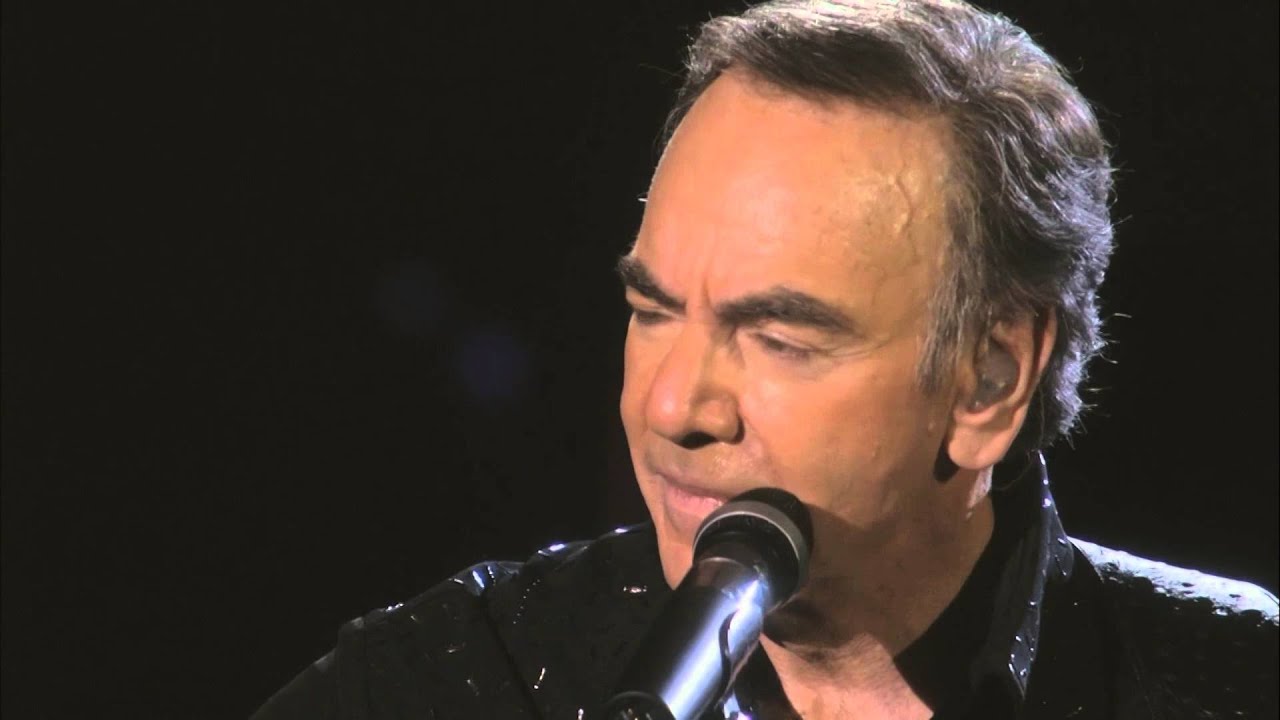
“Be (Introduction of Jonathan)” is less a “song” than a gentle summons—an invitation to step beyond fear and become, quietly and completely, who you were meant to be.
In the autumn of 1973, “Be (Introduction Of Jonathan)” arrived carrying an unusual kind of ambition: not merely to entertain, but to elevate. It opens Jonathan Livingston Seagull—Neil Diamond’s soundtrack to the film adaptation of Jonathan Livingston Seagull—and on streaming track lists it’s often labeled exactly as you wrote it: “Be (Introduction Of Jonathan)”, a long, unfolding piece (about 6:34) that behaves like a prologue, a prayer, and a first flight all at once.
The project itself was released on October 19, 1973, produced by Tom Catalano, with orchestral arranging and conducting credited to Lee Holdridge—names that matter because this score is built on space: wide chords, patient crescendos, and the feeling of open air under the melody. And the public responded in a way that’s easy to forget if you only know the era for radio singles: the soundtrack album climbed to No. 2 on the Billboard 200, while also reaching No. 35 in the U.K. It even won the 1974 Grammy Awards for Best Original Score Written for a Motion Picture or a Television Special—a formal recognition that Diamond had written something closer to a modern hymn cycle than a standard pop album.
Yet “Be” wasn’t locked away as “album-only.” It was issued as a single with “Flight of the Gull” as its B-side, and it charted with a modest but telling dignity: No. 34 on the U.S. pop chart, No. 11 on U.S. Adult Contemporary, No. 27 in Canada, No. 29 in Australia, and No. 6 in New Zealand. Those numbers don’t suggest a smash; they suggest something arguably rarer—a substantial piece of music that listeners made room for anyway, even amid the quick-turnover noise of early-’70s radio.
The story behind it begins with Richard Bach’s novella, first published in 1970: an allegorical fable about a seagull who refuses the small life he’s been assigned, chasing freedom, discipline, and self-realization through the pure act of learning to fly. Diamond’s “Be” functions like the moment the horizon first widens—when the main character’s longing becomes more than restlessness and turns into purpose.
What’s so moving about “Be (Introduction Of Jonathan)” is its restraint. Diamond doesn’t rush to the chorus the way pop habit demands. He lets the music walk—slowly, thoughtfully—like someone stepping into a new life with reverence rather than certainty. The lyric, sparse and luminous, circles around identity: not what you own, not what you’ve lost, not what you’ve been called by others, but what you are beneath all of that. In a sense, the title is the whole philosophy: be—not “become famous,” not “be forgiven,” not “be understood,” but simply be. The verb is humble, yet it’s the hardest command many of us will ever try to obey.
And because it’s an “introduction,” the song carries that particular emotional flavor of beginnings: the hush before the first attempt, the private vow made before anyone can applaud or laugh. You can almost feel the film’s sky inside the arrangement—wide and unjudging—while the voice at the center sounds like someone speaking to the truest self, the one that gets ignored when life becomes crowded.
That’s why “Be” still resonates long after its chart week has faded. It isn’t nostalgia in the shallow sense. It’s nostalgia as recognition—the sudden memory of a time when you believed you could change your life by changing your courage. “Be (Introduction Of Jonathan)” doesn’t promise that flight will be easy. It promises something more consoling: that the desire to rise is already a kind of grace, and that the first honest step is simply to exist without apology—steady, awake, and unafraid to look at the open distance ahead.