
“Half Heaven, Half Heartache” is what it feels like to love with your arms open while your faith is already bruised—sweetness and sorrow sharing the same breath.
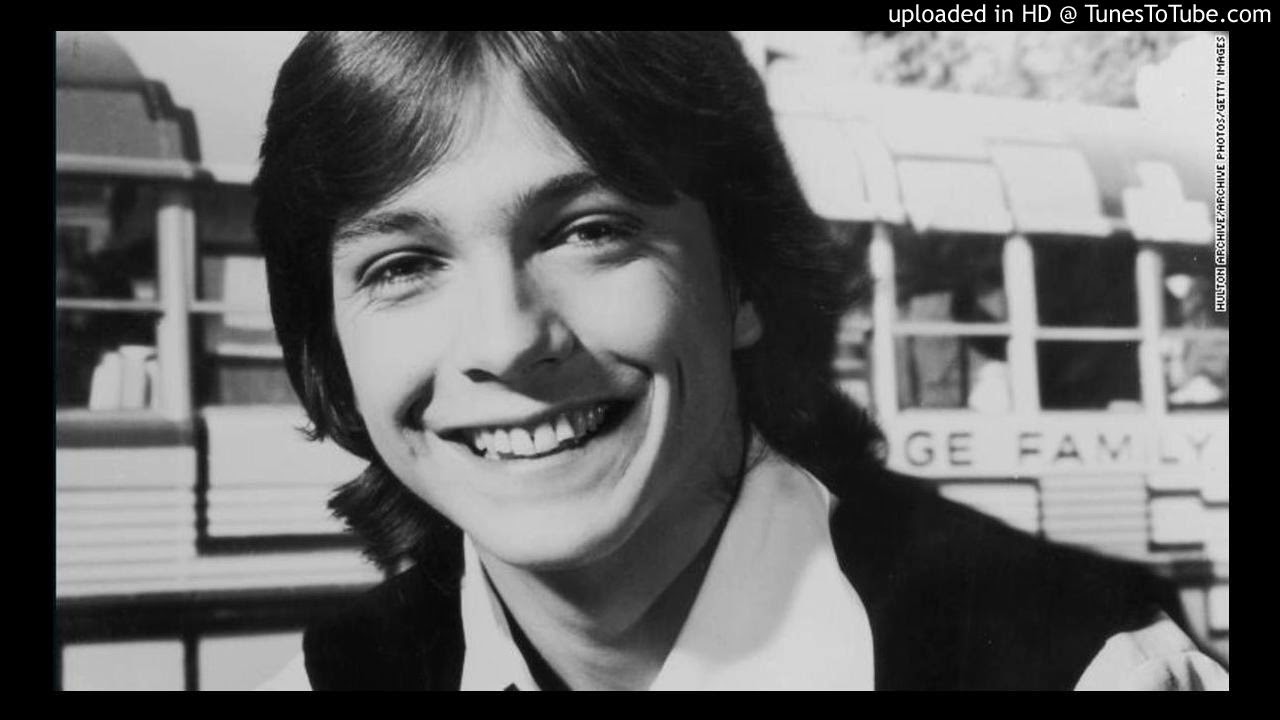
There are songs that don’t need clever poetry because they already carry a whole private movie in their title. “Half Heaven, Half Heartache” is one of those. It’s the sound of standing in a doorway you once called home—still warmed by memory, already chilled by what you’ve learned. When David Cassidy chose to record it decades after its first life on early-’60s radio, he wasn’t just picking a “classic.” He was picking a mood: that peculiar ache where tenderness survives, even when certainty does not.
The song’s original identity belongs to Gene Pitney, who released it as a 1962 single on Musicor Records, backed with “Tower-Tall,” and tied to his album Only Love Can Break a Heart. It didn’t merely “exist” in that era—it performed: the record spent 12 weeks on the Billboard Hot 100 and peaked at No. 12, while also reaching No. 5 on Billboard’s Middle-Road Singles chart. That chart story matters because it places the song right in the middle of pop’s most emotionally direct period—when orchestration could be lush, but the heartbreak was still said plainly, like a confession you didn’t rehearse.
Its writers—Aaron Schroeder, Wally Gold, and George Goehring—come from the Brill Building tradition of crafting melodies that feel inevitable, like they’ve always been waiting for your life to catch up to them. “Half heaven” is the touch, the closeness, the illusion of being chosen. “Half heartache” is the small, relentless fact that the other half of the story belongs to someone else. Even without quoting the lyric, the premise is crystal clear: you can hold a person and still feel them slipping away in the same moment.
Cassidy’s version entered the world through his compilation Classic Songs on Curb Records—a release whose catalog history is a little “two-dated,” as many ’90s compilations were. Apple Music metadata lists the album date as February 27, 1996, with a ℗ 1998 copyright line. Fan discography notes often describe the CD edition as a 1998 Curb release, and “Half Heaven, Half Heartache” appears as the second track in that sequence. Either way, the point is not a single’s chart sprint—there’s no major chart peak attached to Cassidy’s recording in standard listings—but the quiet intention of a singer returning to songs that shaped him, and re-inhabiting them with the weather of lived experience.
And that’s where the performance becomes emotionally specific. In Gene Pitney’s era, the song’s drama is almost cinematic—heartbreak in widescreen, the kind you can hear in the way early-’60s pop leaned into grandeur without apology. Cassidy, by contrast, sings from the far side of youth’s certainty. The title phrase—half heaven, half heartache—lands less like teenage torment and more like adult recognition: the understanding that love can be genuine even when it’s imperfectly returned; that affection can be real even when it’s shared with a ghost you can’t compete with.
What makes the song endure is its refusal to “solve” the feeling. It doesn’t give you a clean ending—no moral victory, no tidy farewell. It simply tells the truth that so many people carry quietly: sometimes the hardest heartbreak isn’t losing love outright; it’s receiving enough love to keep hoping, but not enough to feel safe. That’s the particular cruelty of the “half.” It keeps the door open just wide enough for imagination to walk through.
So when you play “Half Heaven, Half Heartache” in Cassidy’s voice, you’re not just listening to a cover. You’re listening to time itself do what it always does—take a story that once sounded like youthful melodrama and let it mature into something more haunting: a soft, steady reminder that the sweetest moments can still leave bruises… and that the heart, stubborn as ever, often chooses to keep loving anyway.