
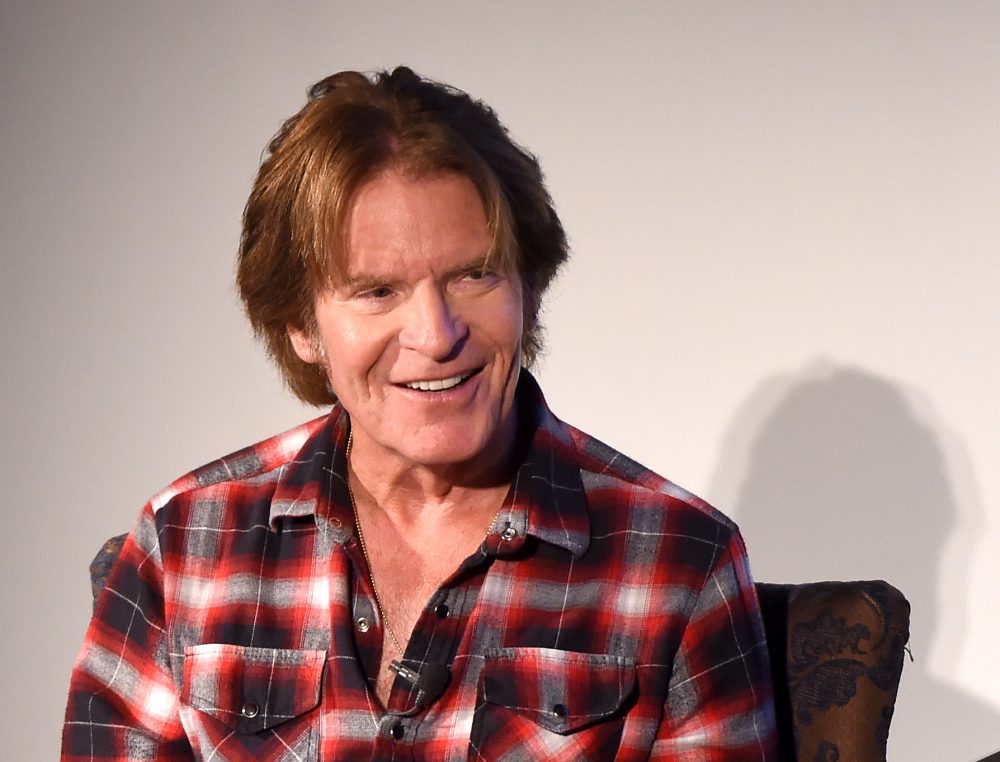
“Hey Tonight” is the sound of the porch light flicking on—one bright, urgent invitation to step out of your worries and let the night carry you for a while.
In the winter of 1970–71, when American radio still moved by the pulse of 45s and jukeboxes, “Hey Tonight” arrived like a brisk knock on the door: quick, loud, and impossible to ignore. Credited to Creedence Clearwater Revival Creedence Clearwater Revival and written (and produced) by John Fogerty, the song was issued in January 1971 as part of a double A-side single with “Have You Ever Seen the Rain” Have You Ever Seen the Rain—both drawn from the album Pendulum Pendulum.
On the U.S. charts, that pairing climbed to a peak of No. 8 on the Billboard Hot 100 Billboard Hot 100, with Billboard listing the record as “Have You Ever Seen the Rain/Hey Tonight.”
Those are the numbers—clean and official—but the feeling of “Hey Tonight” is something else entirely. It’s a small fire of a record: 2 minutes and change of kinetic reassurance. Where “Have You Ever Seen the Rain” looks up at the sky and wonders what the weather inside a life really means, “Hey Tonight” looks you in the eye and says: Don’t stay home with your thoughts. Come with me. Right now. That contrast is part of why the single worked so well. Two songs, one record—one a reflective cloudburst, the other a bright engine turning over.
Pendulum, released on December 9, 1970, was already a statement: a band at the height of its craft, tightening its grip on groove and clarity while the world around them was changing fast. And in the middle of that album’s variety—its brass, its soul edges, its widening palette—“Hey Tonight” feels like the last pure shot of CCR’s youthful velocity. Not “youth” in age, necessarily, but in attitude: the belief that a song can still be a vehicle, and the chorus is still a destination.
There’s also a bittersweet truth hovering around the track when you hear it with time in your ears. By early 1971, CCR were still putting hits on the radio—but the era of endless forward motion was beginning to feel strained for the band, and the “good times” weren’t as uncomplicated as the roar of the guitars might suggest. Even if “Hey Tonight” never turns openly sorrowful, it carries that familiar human contradiction: sometimes the happiest invitation is also a way of outrunning the heaviness waiting at home. A “hey, come on” can be romance, yes—but it can also be self-preservation, a refusal to let the night end in silence.
Musically, the song’s magic is how little it wastes. The rhythm section snaps into place like a well-practiced dance step; the guitar tone bites without getting messy; and Fogerty’s vocal is pure forward thrust—half command, half grin. It’s rock & roll as a kind of practical optimism: not the claim that everything is fine, but the insistence that you can still move, still laugh, still go out anyway.
And that’s why the song has endured so beautifully in the John Fogerty live canon—still popping up decades later as a jolt of electricity in sets built around memory and celebration. It doesn’t require explanation. It doesn’t ask for your backstory. It simply offers the oldest bargain music ever made: Give me three minutes, and I’ll give you momentum.
When you return to “Hey Tonight” now, it can feel like opening an old drawer and finding a ticket stub that still holds the warmth of the hand that once carried it. The world has changed, the night streets have different lights, and the years have added their quiet weight—but that first shout of “hey!” still lands the same way. A reminder that sometimes the heart doesn’t need a lecture. Sometimes it just needs a door to open, a band to count it off, and the courage—just for tonight—to step back into the music.