
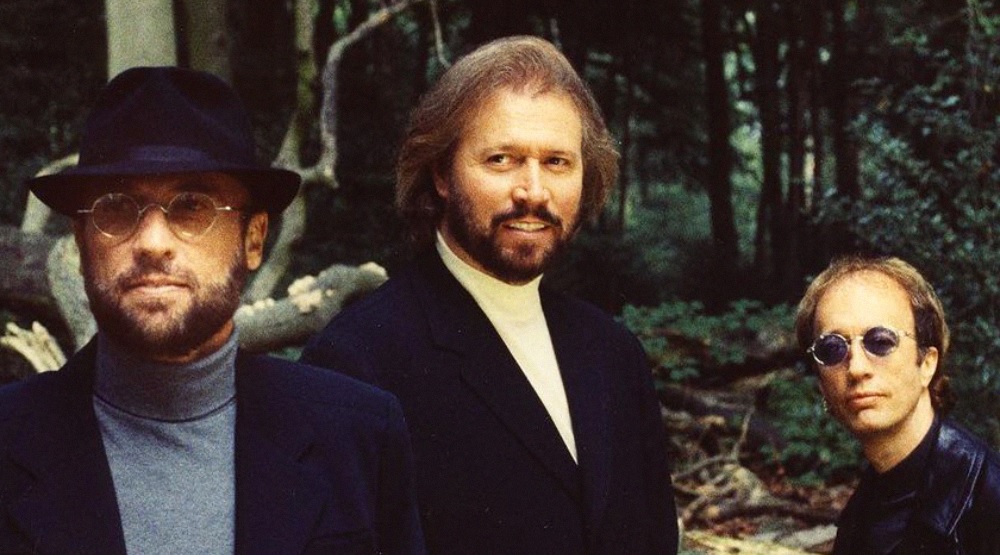
“To Be or Not to Be” is the Bee Gees at their most tender and youthful—an early crossroads song where a teenage heart rehearses the hardest decision of all: to stay, to leave, or to keep living in the question.
Before the world knew the Bee Gees as stadium harmonists or disco royalty, “To Be or Not to Be” belonged to a quieter, earlier life—an Australian chapter where the brothers were still shaping their identity song by song, studio hour by studio hour. The track comes from their debut album The Bee Gees Sing and Play 14 Barry Gibb Songs, credited to Barry Gibb and the Bee Gees, released in November 1965 on the Australian Leedon label. This is crucial context, because the album wasn’t assembled as a single-minded “concept” the way later Bee Gees records would be; it was largely built from earlier singles and sessions, reflecting how quickly young artists had to grow up in public—learning to sound certain while still figuring out what they believed.
Here’s the most precise “behind the curtain” detail that matters: only five new songs were recorded specifically for the album, and “To Be or Not to Be” was one of those five. That fact gives the song a special emotional placement. It isn’t merely archival padding. It’s part of the album’s fresh handwriting—a moment when the group had to decide what kind of writers they wanted to be, and what kind of feelings they were brave enough to put on tape.
The song was written by Barry Gibb—still astonishingly young at the time—yet already drawn to themes that feel older than youth: doubt, consequence, the quiet mathematics of love and pride. And the title itself carries a clever, slightly haunted echo of Shakespeare’s famous line, not as a literary flex, but as a perfect shorthand for emotional paralysis: that state where the heart can’t decide whether hope is courage or foolishness.
If you’re looking for a chart “debut position,” the honest answer is that “To Be or Not to Be” doesn’t have a documented singles-chart peak because it was not rolled out as a major standalone hit single in the way later Bee Gees releases would be. Its life is album-born: discovered by listeners who stayed with the record, who let Side One run long enough to stumble upon this small, questioning jewel.
What makes “To Be or Not to Be” so moving—especially when heard with decades of Bee Gees history behind it—is its scale. It’s not trying to conquer radio. It’s trying to name a feeling that can’t be solved with volume. You can sense the early Bee Gees’ instinct for melody: that gift for making uncertainty sound beautiful, for turning indecision into something you can sing along to without realizing you’re singing about pain.
The meaning lands like a private confession. “To be” becomes more than existence—it becomes the act of choosing the relationship, choosing vulnerability, choosing the hard work of staying open. “Not to be” isn’t simply leaving; it’s the temptation to shut down, to step away from the ache, to preserve dignity by refusing to hope. And in between those poles, the song lives in that most human place: the pause. The breath held too long. The long stare at the phone that doesn’t ring. The memory of a voice that still sounds like home even when the story is breaking.
There’s also something quietly prophetic here. Even at the beginning, the Bee Gees were drawn to emotional complexity—love not as a simple celebration, but as a moral weather system with shifting winds. In later decades they would build global choruses out of heartbreak, guilt, yearning, and longing. But “To Be or Not to Be” shows the seed of it: three brothers learning that a song can be a shelter for indecision, a place where you’re allowed to not have the answer yet.
So when you play “To Be or Not to Be” today, you’re not only listening to an early Bee Gees track. You’re listening to the sound of beginnings: a young songwriter discovering that the hardest questions are the ones we return to all our lives—and that sometimes the bravest thing a person can do is simply keep singing through the uncertainty, until the heart finally chooses its next step.