
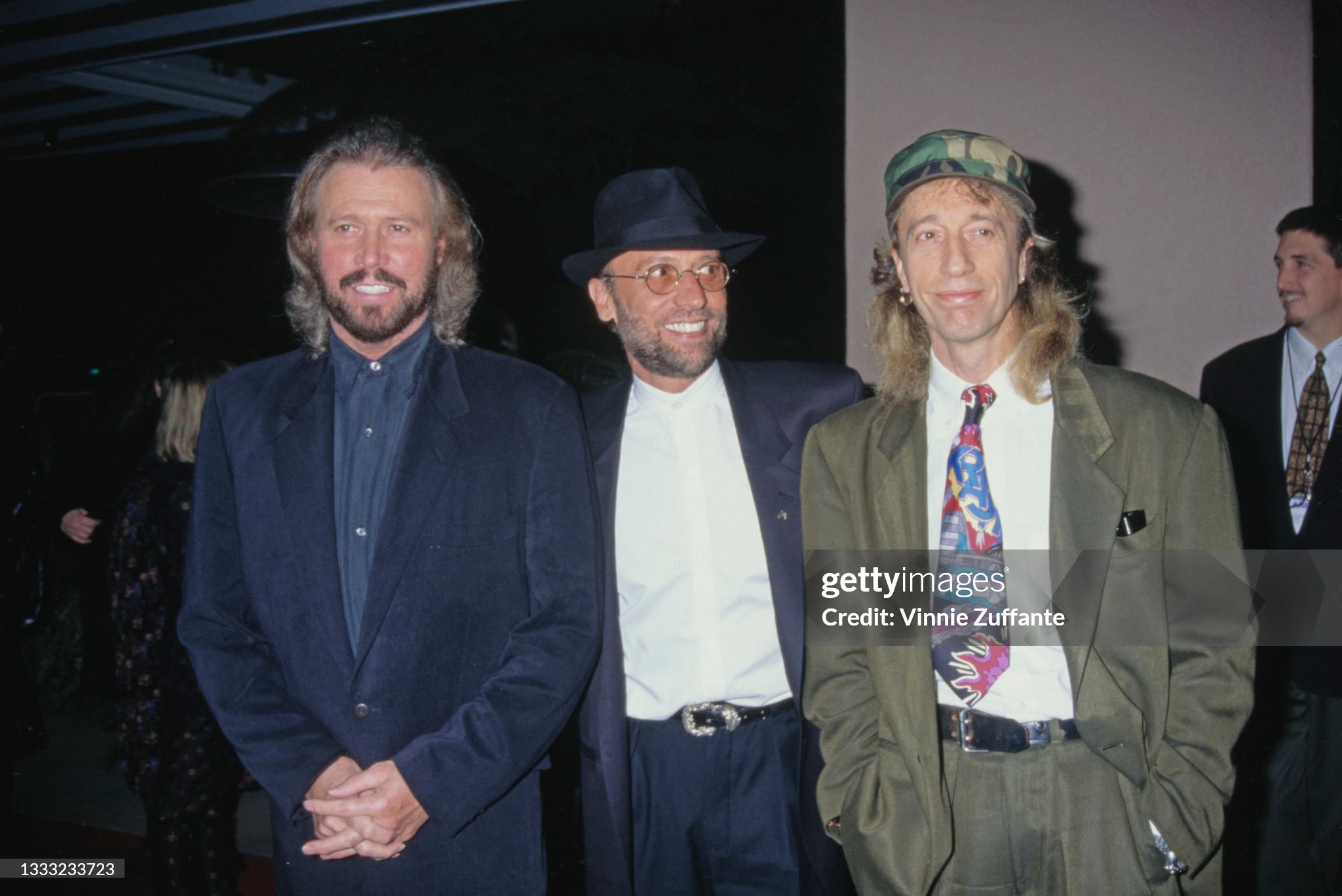
“Could It Be” is the Bee Gees at the very beginning—three brothers in Australia, testing how far a pop dream can travel on a two-minute heartbeat and a hopeful question.
The most important context belongs right here at the top. “Could It Be” was written by Barry Gibb, recorded around July 1964 at Festival Studio, Sydney, and first released in August 1964 as the B-side to “Claustrophobia.” It did not register a notable chart debut (the Australian chart columns for that single are shown as “—” in major discography listings), which is another way of saying: this song’s early life was more local than legendary. Then, in November 1965, it was gathered into the group’s Australian debut LP, The Bee Gees Sing and Play 14 Barry Gibb Songs, appearing as track 7 on Side One, running about 2:03, with Barry on lead vocal.
And yet—what a tender little artifact it is.
When people say “the Bee Gees,” many minds leap straight to the satin glide of the late 1970s: the falsetto skyline, the mirror-ball pulse, the immaculate chorus architecture. “Could It Be” comes from a different room entirely—smaller, younger, more immediate. It belongs to that pre-international period when the brothers were still carving out their identity in Australia, releasing singles in quick succession, learning what a studio could do for their harmonies and what an audience would do with their melodies. The later myth of the Bee Gees is polished marble; “Could It Be” is the pencil sketch where you can still see the hand moving.
One of the most revealing details is how the song was built to sound of its time. Joseph Brennan notes that “Claustrophobia” and “Could It Be” were conceived as a pair of “Beatlesque” recordings, backed by a tight beat group Barry specifically requested—musicians the Bee Gees had met doing shows. That’s the kind of detail you can almost hear: the youthful confidence of saying, Let’s make it snap like the records we love. Not imitation for its own sake, but apprenticeship—young writers trying on the modern suit, checking the seams, and discovering that it fits because the voice inside it is already distinct.
Then there’s the album context, which adds its own quiet poignancy. The Bee Gees Sing and Play 14 Barry Gibb Songs is described as a compilation-like debut, gathering many of their earlier Australian singles from the prior two years—explaining why the record shifts styles from track to track. On that same page, the album notes point out that early tracks like “Peace of Mind,” “Claustrophobia,” and “Could It Be” sit in the 1964 beat vein, before later cuts lean more folkward into 1965. In other words, “Could It Be” isn’t just a song; it’s a timestamp—one pinned to the exact moment when pop was changing clothes, when guitars and harmonies were becoming a new kind of youthful language.
And if you listen with an older ear, the title itself—“Could It Be”—feels almost prophetic. The Bee Gees’ whole career, in hindsight, is a long series of “could it be” moments: could three brothers from the Isle of Man, raised between places, become a global songwriting engine? Could they survive fashion, backlash, reinvention, time? This early recording asks the question in miniature, in the tender scale of teenage certainty. Brennan’s page even preserves the practical specifics—mono, 2:03, Barry leading, the supporting players listed by name—like a label on a museum display. Yet the sound is not a museum piece. It’s alive with the restless energy of youth: that bright, slightly breathless feeling that the future is close enough to touch if you just sing hard enough.
So “meaning,” here, isn’t an abstract symbol. The meaning of “Could It Be” is that it captures the Bee Gees before the world called them the Bee Gees—when they were still earning the right to be inevitable. It’s the romance of beginnings: not because everything is easy, but because everything is still possible. And sometimes, that’s the most moving kind of song—not the one that arrives already crowned, but the one that still sounds like a door opening.