
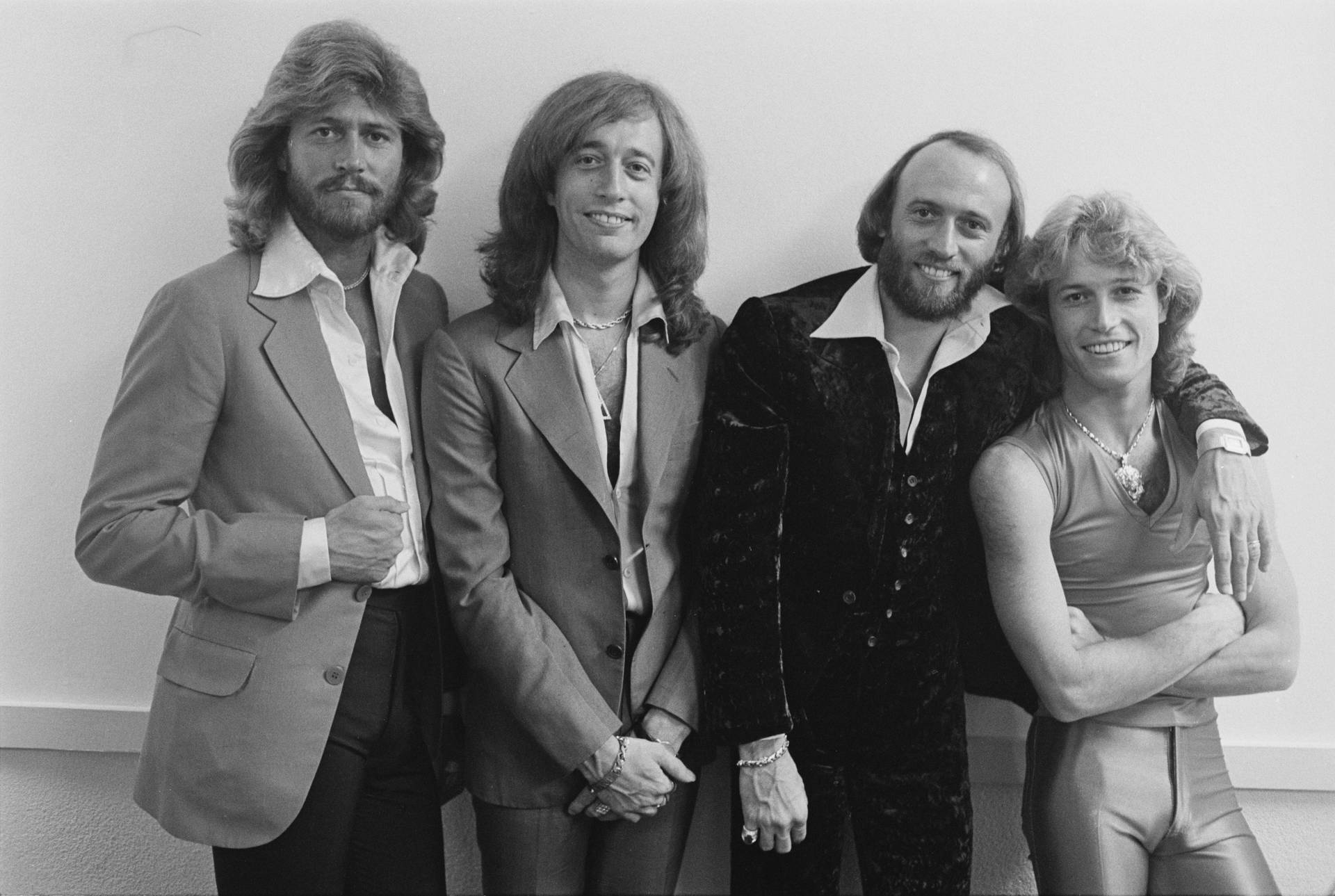
“My Lover’s Prayer” is the Bee Gees’ late-night kind of devotion—part plea, part confession—where love is spoken as if it might be the last honest thing left in the room.
There’s a special, hush-toned magic to late-career Bee Gees: the feeling that the brothers were no longer trying to prove they could write hits (they already had), but trying instead to tell the truth with melody—grown-up truth, the kind that arrives after you’ve learned what longing really costs. “My Lover’s Prayer” belongs squarely to that chapter. It appears on the album Still Waters (released March 10, 1997 in the UK and May 6, 1997 in the U.S.), a record often seen as a genuine 1990s resurgence for the group.
The essential facts are clean and important. “My Lover’s Prayer” is credited to Barry Gibb, Robin Gibb, and Maurice Gibb as writers, and it was released as an album track on Still Waters. The recording is typically dated to the album’s creation period (with sources describing it as recorded in 1996, and the wider album sessions spanning roughly late 1995 into 1996). Production credit for the track is commonly given to Russ Titelman, a name that quietly signals “classic, careful craft” rather than trend-chasing gloss.
Now—about “position in the rankings at launch,” the part you always want stated plainly: “My Lover’s Prayer” was not released as a headline Bee Gees single in 1997, so it didn’t receive a primary chart peak under the Bee Gees’ name the way “Alone” did from the same album campaign. Instead, it lived in that more intimate space: the album cut you find when you stop looking for the radio chorus and start listening for the heart. (You can see it reflected in catalog documentation that treats it as an “album cut,” rather than a singled-out A-side.)
Yet the song does have a striking chart-adjacent afterlife—one of those twists that feels almost fated. In 2003, Robin Gibb re-recorded “My Lover’s Prayer” as a duet with Alistair Griffin, released as a double A-side with Griffin’s “Bring It On,” and that single reached No. 5 on the UK Singles Chart. It’s a remarkable footnote: a 1997 album track returning years later to find the mainstream air again, like a letter that finally reaches the right address.
So what’s the story behind the song—the emotional story, the one that makes people come back?
The title says everything before a single verse even begins: a prayer is what you speak when ordinary language isn’t strong enough. A lover’s prayer isn’t a poem written to impress; it’s a plea whispered when pride has already left the room. In the Bee Gees’ world—especially in the 1990s—love often carries an undertow of memory. Not the shiny first-sight kind, but the kind shaped by years, by mistakes you don’t brag about, by tenderness that has survived disappointment and still insists on being tender.
And then there are the voices. Sources that document personnel list Barry and Robin both as lead vocalists on the track—two emotional temperatures in one song: Barry’s steadier, warmly grounded delivery beside Robin’s unmistakable ache, that tremble that can make a simple line sound like it’s being said through a lifetime. When those two share a song like this, it doesn’t feel like “dueling leads.” It feels like the same love story told by two parts of the human mind: the part that wants to be brave, and the part that can’t stop feeling.
Placed on Still Waters, “My Lover’s Prayer” also gains meaning by contrast. The album itself performed powerfully across markets (including major peaks such as No. 2 in the UK and No. 11 in the U.S.), proof that the Bee Gees still mattered to a vast audience in 1997. But this track doesn’t feel like it’s trying to “help” the album. It feels like it’s trying to tell the truth—the kind of truth you save for the late hour when the room is quiet and you’re finally alone with what you want.
That’s the deeper meaning of “My Lover’s Prayer”: it’s love as vulnerability, love without the armor. It reminds you that sometimes the most romantic thing isn’t the grand gesture—it’s the willingness to admit you still care, still hope, still ask. A prayer, after all, is an act of surrender: you acknowledge there are outcomes you can’t control, but you speak anyway. And when the Bee Gees speak in that register—soft, earnest, unguarded—you don’t just hear nostalgia. You hear a band that understood the oldest secret in pop music: the heart doesn’t retire.