
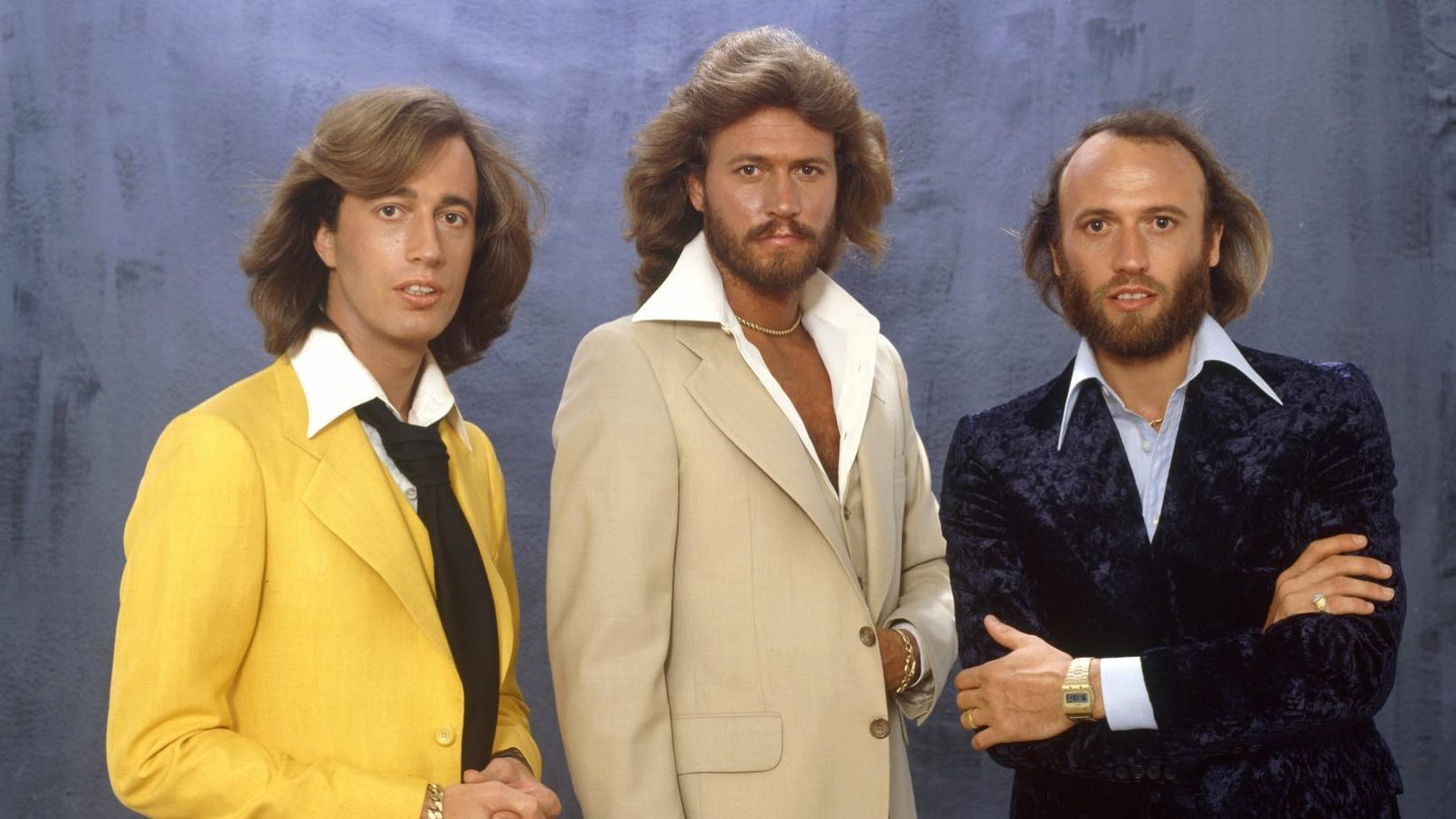
“Omega Man” is the Bee Gees’ late-career existential soul-searching—Maurice Gibb stepping into the lead, sounding weary, lucid, and strangely hopeful, as if the “last man standing” still believes in a better way.
If you want the most important coordinates first: “Omega Man” is a Bee Gees album track from Size Isn’t Everything, released in the UK on September 13, 1993 (US release followed on November 2, 1993). It’s listed as track 4 on the album’s standard track order, and—crucially—it is one of the songs where Maurice Gibb takes the lead vocal (the album credits specifically note him as lead on track 4). The song was written by Barry Gibb, Robin Gibb, and Maurice Gibb, like the rest of the album’s core material.
Because it wasn’t released as a stand-alone single, “Omega Man” doesn’t have a debut chart position of its own. Its “ranking story” is the album’s story: Size Isn’t Everything peaked at No. 23 in the UK and No. 153 on the U.S. Billboard 200. Those numbers look modest next to the Bee Gees’ imperial years—but they hide a deeper truth: by 1993, the Bee Gees weren’t chasing trends so much as they were outlasting them, making records for listeners who still valued melody, craft, and emotional clarity.
And “Omega Man” is exactly that: craft with a pulse, and a mind that’s awake.
The title alone carries a weight that only grows heavier with time. “Omega” is the last letter—the end point, the final chapter. In pop music, that word could easily turn theatrical, even silly. But here it feels personal: the narrator isn’t boasting about being the final word; he sounds like someone who has lived long enough to know that endings are rarely dramatic—they are quiet, cumulative, and sometimes lonely. There’s a line in the lyric that sits like a thesis—“mine is a better way”—and the beauty of it is that it doesn’t arrive as a sermon. It arrives as a hard-won conclusion.
This is where Maurice matters. The Bee Gees’ mythology often places Barry in the spotlight and Robin in the shadows of melancholy, but Maurice’s best leads have a different gravity: a grounded, human steadiness, as if he’s less interested in impressing you than in telling you what he’s learned. On Size Isn’t Everything, he’s explicitly credited with lead vocals on “Omega Man” (and another track), and you can feel why the band made that choice. “Omega Man” needs a voice that can carry resignation without collapsing into it—someone who can sound bruised and still stand upright. Maurice does that naturally.
The “behind the song” context deepens the listening, too. The album is often described as the brothers shifting away from the more overtly contemporary dance textures of their previous record and aiming for a return toward their classic strengths. In that light, “Omega Man” feels like a late-night room on the record: the place you arrive after the brighter lights, when the party conversation thins out and the real thoughts finally speak. It doesn’t try to compete with youth; it tries to tell the truth to adulthood.
And the truth it tells is familiar: people can be “pulled into a scheme,” circumstances can change, the same scene can repeat with different faces—and still, the heart keeps asking what remains worth believing. The song’s emotional center isn’t rage. It’s discernment—the moment you stop being impressed by noise and start longing for something clean: integrity, steadiness, a love that doesn’t keep rewriting the rules.
That’s why “Omega Man” endures as one of those Bee Gees deep cuts that grows more affecting with age. It isn’t trying to be the big statement of 1993. It’s trying to be the honest one. And in Maurice’s lead, you hear a quiet dignity that feels almost like a signature on the page: the Bee Gees, decades into their journey, still able to turn private unease into a melody that holds you—gently, stubbornly—until the last note fades.