
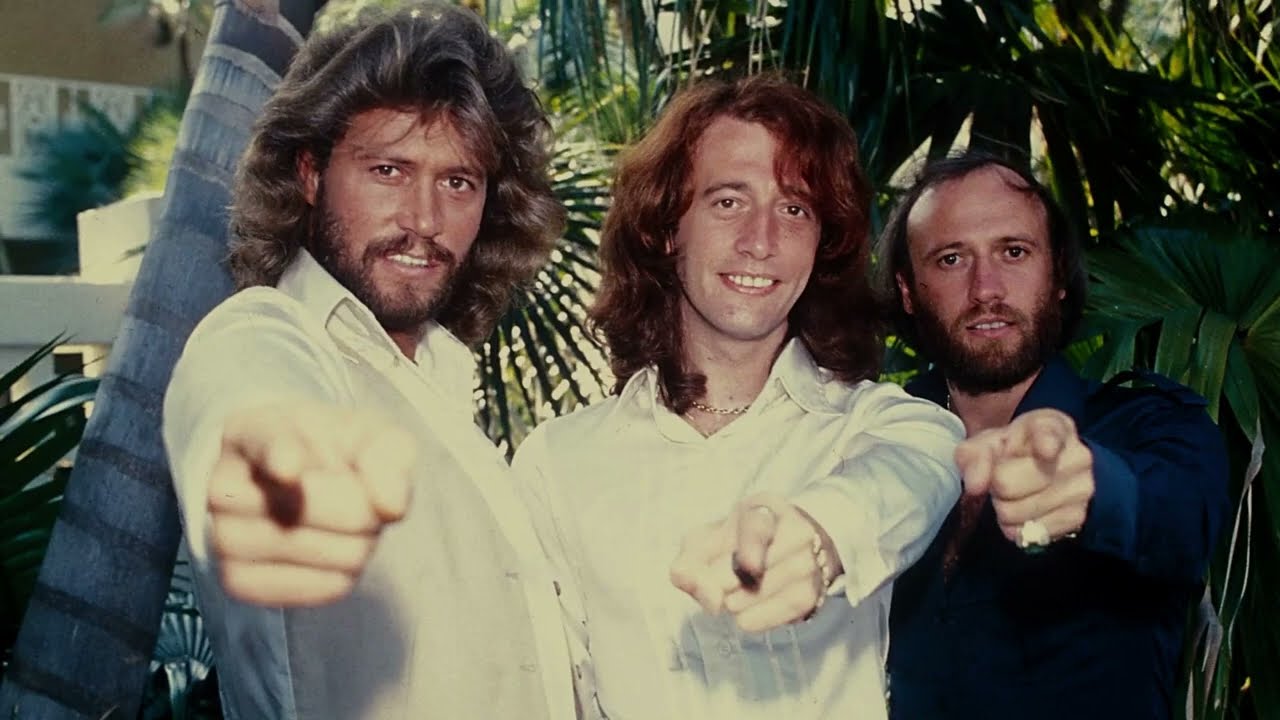
“Alone Again” is loneliness set to melody—Robin Gibb’s calm, aching reminder that sometimes the hardest goodbyes happen long before anyone actually leaves.
“Alone Again” sits quietly—but very deliberately—inside the Bee Gees’ 1970 reunion chapter. It was released on the album 2 Years On in November 1970, and it’s one of those deep cuts that doesn’t shout for attention, yet somehow follows you out of the room. The song is credited solely to Robin Gibb, and it’s Robin who takes the lead vocal, unguarded and unmistakably human. On the record, it appears on Side Two (track 2 in the standard listing), tucked right after the big, radio-friendly storm of “Lonely Days.” That placement matters: after the dramatic pleading of a hit single, “Alone Again” feels like what’s left when the door closes and the performance ends—just the self, the silence, and the truth you can’t dress up.
Because if “Lonely Days” is the public face of heartbreak, “Alone Again” is the private aftermath.
It also carries a story behind it—one written into the band’s timeline, whether the listener knows it or not. 2 Years On was the album that marked Robin Gibb’s return to the group after a split that followed Odessa. When a voice leaves a family harmony and then comes back, the music doesn’t simply resume where it left off; it resumes with bruises, with memory, with unspoken negotiations. In that light, “Alone Again” can feel less like a generic lament and more like a diary page turned into a song: a man re-entering a familiar world, yet still haunted by the lonely echo of separation.
Factually, the charts tell you this era was not a commercial void at all. 2 Years On reached No. 32 on the US Billboard 200, and it also charted in places like Australia and Canada. The album’s major chart footprint came via “Lonely Days,” released as the first single (with a listed release date of 6 November 1970), a song that surged to No. 3 on the Billboard Hot 100. “Alone Again,” by contrast, wasn’t positioned as the headline single—so it doesn’t come with the same neat “peak position” story. Its power is the slower kind: the track you discover years later, then wonder how it stayed hidden from you.
Musically, “Alone Again” belongs to that early-’70s Bee Gees sound where the drama isn’t built from volume, but from precision—melody lines that seem to sigh rather than soar, and a vocal performance that leans into vulnerability instead of decoration. Robin’s voice here isn’t trying to win an argument with the world. It’s simply admitting a condition: the loneliness that returns, the loneliness you recognize by its footsteps. Even the title phrase—“Alone Again”—carries a particular sting. Not “alone,” but alone again: as if solitude is not a one-time tragedy, but a cycle, a familiar season that keeps coming back no matter how sincerely you swear it won’t.
And there’s an emotional elegance in how Robin Gibb delivers that idea. He doesn’t rush the listener toward catharsis. He lets the feeling settle. In doing so, he captures something that many heartbreak songs avoid: the ordinariness of being left with yourself. Not the cinematic moment of separation, but the slow realization that the chair across from you stays empty, day after day, until emptiness starts to feel like furniture.
One more small but important clarification—because the titles can easily blur over a long musical lifetime: “Alone Again” (1970) is not the Bee Gees’ later worldwide hit “Alone” from 1997. Different era, different mood, different purpose. “Alone Again” belongs to the reunion seams of 2 Years On, where the group is re-forming and the emotions still sound freshly handled.
In the end, “Alone Again” is a song for anyone who knows that loneliness isn’t always a dramatic collapse. Sometimes it’s simply the quiet return of a feeling you thought you’d outgrown—soft, persistent, and unmistakably yours. And in that hush, the Bee Gees—through Robin Gibb—offer something rarer than comfort: recognition.