
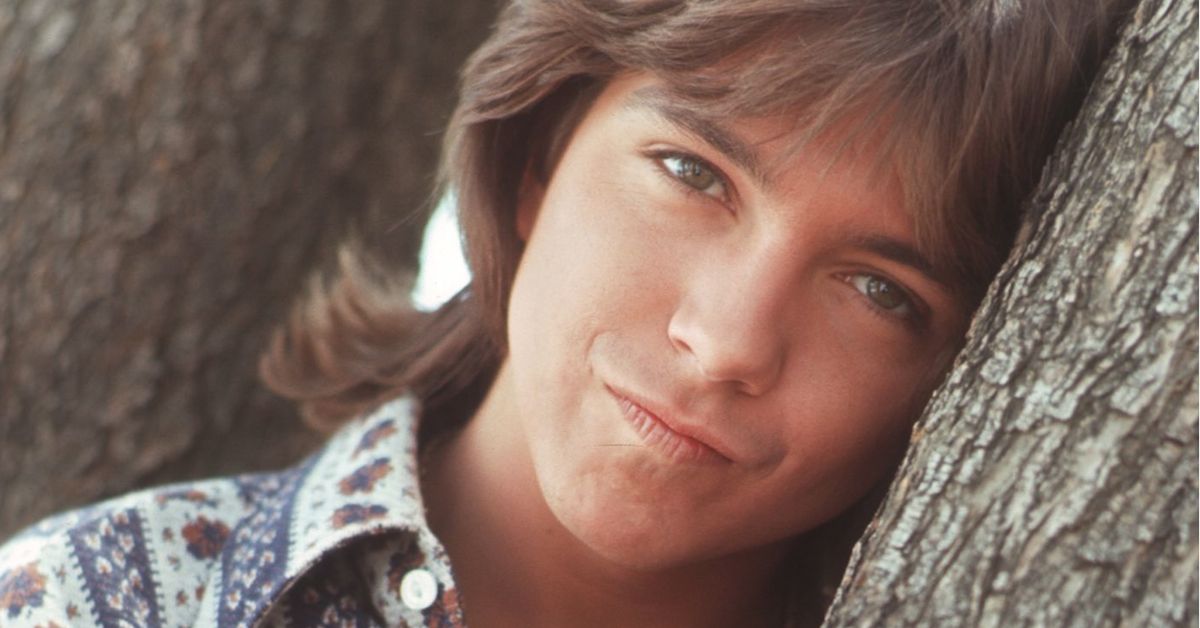
“Half Past Your Bedtime” is David Cassidy at his most intimate—an after-hours lullaby where tenderness replaces applause, and love sounds like someone staying.
In the long arc of David Cassidy’s career, “Half Past Your Bedtime” feels like the kind of track you don’t stumble upon so much as you arrive at—usually later, when you’ve learned that the sweetest songs are often the ones that never fought for the spotlight. It sits as the closing track on his 1976 album Home Is Where the Heart Is (released March 1976), recorded at Caribou Ranch in Nederland, Colorado, and produced by David Cassidy with Bruce Johnston.
That context matters, because Caribou Ranch has a reputation in the imagination: mountain air, wooden rooms, performances that breathe. And on “Half Past Your Bedtime,” you can almost hear that atmosphere—music that doesn’t rush, a vocal that leans in rather than reaching out. The song’s writing credits—David Cassidy, Gerry Beckley, and Ricky Fataar—also hint at what you’re hearing: a meeting point between Cassidy’s pop instincts and the warm, West Coast singer-songwriter craft that Beckley (of America) and Fataar carried in their musical DNA.
It’s important to be precise about the “chart story,” too, because it explains why this song feels like a secret. “Half Past Your Bedtime” wasn’t pushed as an A-side hit; instead, it was used as the B-side to Cassidy’s 1976 single “Tomorrow” (his cover of the Paul and Linda McCartney song). In other words: you didn’t find it by accident on daytime radio—you found it because you kept listening, because you flipped the record over, because you were the kind of listener who wanted the quiet truth after the big tune had its say.
And if you were tracking Cassidy’s international reach in that period, “Tomorrow” had tangible chart life: it peaked at No. 10 in South Africa (Springbok chart). Meanwhile, Home Is Where the Heart Is itself is often described as critically well received yet not charting as an album in any country—a detail that, oddly enough, fits the emotional posture of “Half Past Your Bedtime.” This isn’t music built to chase a trend. It’s music built to hold a moment.
Now—let’s talk about what the song does, the way an old radio storyteller would at the soft edge of midnight.
“Half Past Your Bedtime” is essentially a lullaby for grown-ups: not childish, not coy, but protective. It’s the sound of someone drawing a small circle of safety in the room—arms around you, worries outside the door, the world reduced to a heartbeat and a whisper. The title alone carries a gentle mischief: it suggests rules being broken, but only for something tender. Half past bedtime is when you’re not supposed to still be awake… which means whatever happens now feels private, chosen, almost sacred.
What makes Cassidy’s performance so affecting is the way he avoids grandstanding. He’d already proven he could sell a chorus, could play to a crowd, could embody the bright, public version of romance. Here, he does the opposite: he sings as if he’s trying not to wake anyone. The melody moves like slow breathing. The sentiment—so simple it could be dismissed by someone in a hurry—becomes powerful precisely because it refuses to dress itself up.
And there’s a deeper, quieter meaning that sneaks in if you let it: “Half Past Your Bedtime” is about staying. In pop music, love often announces itself by leaving—running off, breaking away, chasing the next horizon. But this song makes its case in the opposite direction. It’s devotion expressed as presence: I’m here, I’m not going anywhere tonight, let the dark do its worst and I’ll still be holding you. In that sense, it’s less a “romance” song than a “shelter” song.
It also sits at a telling point on Home Is Where the Heart Is—an album shaped by collaborators and backing singers that underline Cassidy’s seriousness as a musician in this era (the record includes notable guest voices like Carl Wilson, among others). Ending that album with “Half Past Your Bedtime” feels like a deliberate choice: after the performances, after the craft, after the reach toward the outside world, he closes the door and leaves you with something close enough to touch.
So if you play it now, don’t play it like a rarity. Play it like a scene: lamp light, low volume, the day finally done. David Cassidy isn’t asking you to cheer—he’s asking you to listen. And if you do, you’ll hear what makes “Half Past Your Bedtime” last: not chart thunder, not spectacle—just the enduring hush of someone loving you well, when no one else is watching.