
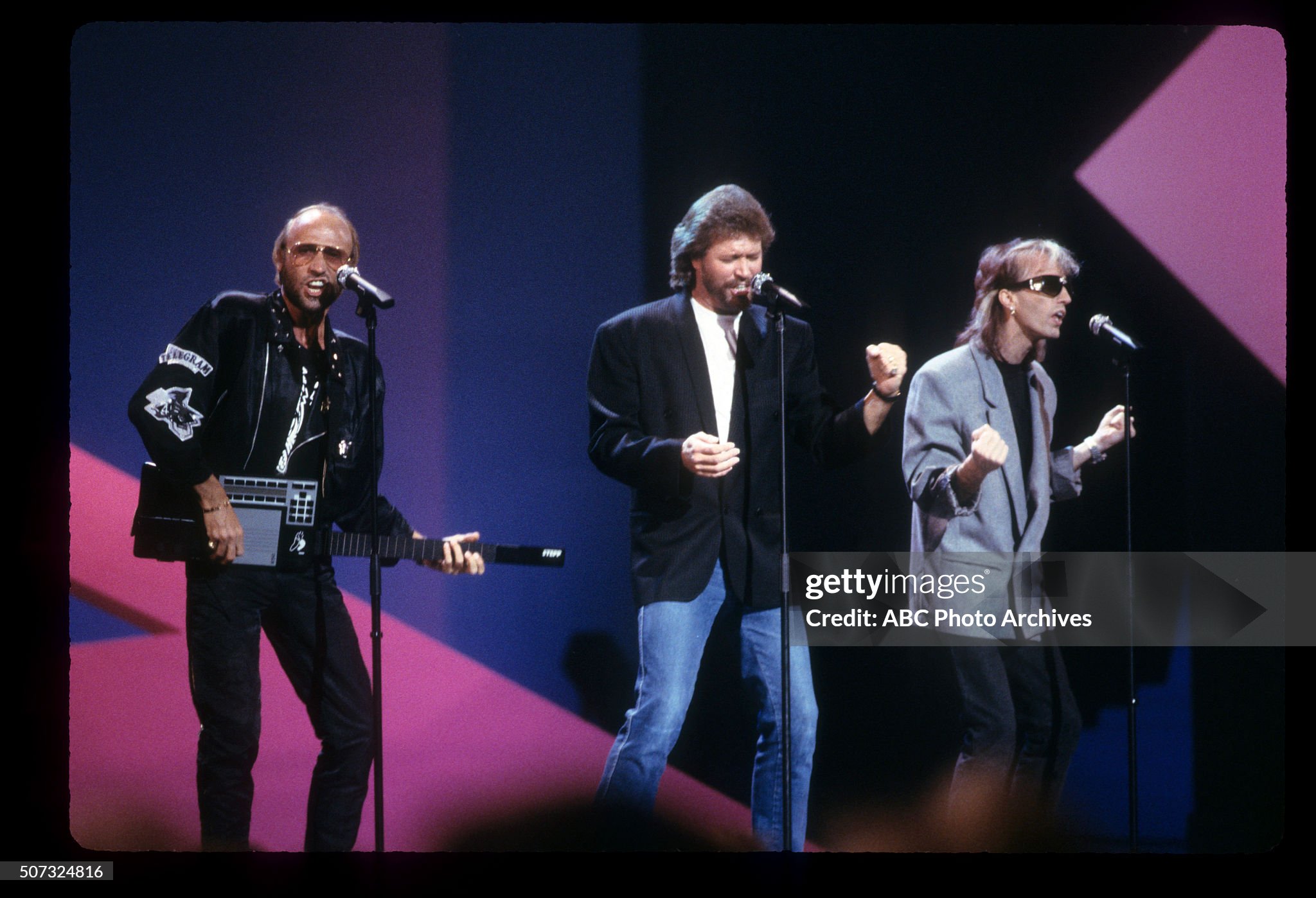
“You Win Again” was the Bee Gees comeback hit that made the industry pay attention because it didn’t sound like nostalgia — it sounded like survival, reinvention, and three brothers stepping back into the room as if they had never really left it.
When the Bee Gees released “You Win Again” on September 7, 1987, they were not simply returning with another single. They were reasserting themselves after several years in which their own chart presence had dimmed, even though their songwriting influence had never disappeared. The song was the lead single from E.S.P., their seventeenth studio album, and it became a major European smash: No. 1 in the UK, Ireland, Switzerland, Germany, Austria, Denmark, and Norway, while also reaching the top tier in several other markets. In Britain, it was especially significant — the single reached No. 1 on October 17, 1987, stayed there for four weeks, and made the Bee Gees the first group to score UK No. 1 singles in the 1960s, 1970s, and 1980s. That alone was enough to make the industry look up again.
Those are the headline facts, but the deeper reason “You Win Again” mattered so much is that it did not feel like a sentimental reunion with the past. It felt current. The Bee Gees had spent the early 1980s in a more complicated position commercially: still famous, still formidable as writers and producers, but no longer dominating radio themselves the way they had at the height of the Saturday Night Fever era. Then came this record — hard-edged, modern, rhythmically distinctive, and impossible to mistake for anyone else. It did not ask for affection because of what they had once been. It demanded attention because of how sharp they still were.
Part of that force came from the song’s construction. “You Win Again” was written by Barry, Robin, and Maurice Gibb, and the record was produced by the brothers with Arif Mardin and Brian Tench. Maurice later described how the famous opening rhythmic pattern — the stomping “jabba-doomba, jabba-doomba” feel — came out of garage-demo experimentation, and he insisted on keeping it because it gave the record an instant identity. That instinct was exactly right. The introduction announces the song before the melody has even fully taken hold. It sounds like a signature, a warning, and a comeback all at once.
That is why the single hit so hard. It was not just well written — though it certainly was. It was recognizable in the way only the best comeback records are: immediate, confident, and impossible to confuse with a pale imitation of former glory. The rhythm is taut, the atmosphere darkly polished, and the vocal arrangement carries the Bee Gees’ unmistakable blend of emotional urgency and technical control. There is a bitterness in the lyric too, which helps. “You Win Again” is not a warm embrace of romance. It is a song about surrendering, once more, to a force that keeps defeating you. That undertow of hurt gives the sleek production real emotional bite.
And the industry noticed because the numbers were impossible to ignore. In the UK, the single’s climb was dramatic — entering at No. 87 before surging all the way to No. 1 in just a few weeks. It finished No. 4 on the UK year-end singles chart for 1987. The song also earned the Gibb brothers the Ivor Novello Award for Best Song Musically and Lyrically. Those are not merely decorative achievements. They show that the comeback was not only commercial, but respected. “You Win Again” did not just sell. It reestablished authority.
There is also something poignant in the contrast between Europe and America. In the United States, “You Win Again” only reached No. 75 on the Billboard Hot 100, a surprisingly modest result for such a strong single. That uneven reception is part of what makes the song’s story so revealing. In Europe, the Bee Gees were heard as triumphant returnees. In America, the old disco backlash still seemed to cast a shadow over how radio received them. Yet that very contrast only sharpens the song’s legacy. It proves the comeback was real even if one market lagged behind in recognizing it.
So why did “You Win Again” make the whole industry pay attention? Because it answered the question every comeback artist eventually faces: Do they still matter now, or only then? The Bee Gees answered with a record that sounded absolutely present-tense. It was not built on memory. It was built on craft, confidence, and the strange brotherly intuition that had always powered their best work. “You Win Again” reminded everyone that the Bee Gees were not just survivors of an era. They were still makers of events. And once that opening rhythm hit the radio, the message was unmistakable: they were back, they were still dangerous, and the song business had to listen again.