
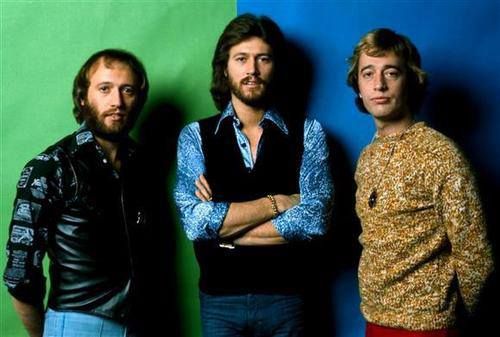
The Pulse of a New Era: When the Bee Gees Found Their Groove in the Machinery of Modern Life
When “Jive Talkin’” emerged in 1975 as the lead single from the Bee Gees’ album Main Course, it marked nothing less than a resurrection. After several years adrift following their late-’60s reign as pop balladeers, this track stormed to the top of the Billboard Hot 100, reestablishing the Gibb brothers as architects of contemporary sound rather than nostalgic relics. It was their first U.S. number one since 1971’s “How Can You Mend a Broken Heart,” and it set the stage for one of the most dramatic stylistic reinventions in popular music history. With its syncopated rhythm, synthesizer textures, and streetwise swagger, “Jive Talkin’” heralded not only the Bee Gees’ own rebirth but also the dawn of disco as a cultural force that would soon define the second half of the decade.
The story begins with an ordinary commute that became mythic. As legend has it, the rhythm of “Jive Talkin’” was inspired by the sound of Barry Gibb’s car tires crossing the Julia Tuttle Causeway bridge on the way to Criteria Studios in Miami. That steady thump-thump became the heartbeat of a song that would rewire their musical DNA. Working with producer Arif Mardin, whose background in R&B and jazz gave a sophisticated polish to their evolving style, the Bee Gees found themselves tapping into something entirely new—an urban groove that merged funk’s elasticity with pop’s irresistible precision. The result was sleek yet soulful, cerebral yet sensual, utterly contemporary yet unmistakably theirs.
Lyrically, “Jive Talkin’” captures a world where truth is slippery and language itself becomes a masquerade. Its title phrase—a slice of Black vernacular slang for deceitful speech—anchors a song about mistrust and illusion. Beneath its danceable veneer lies an acute sense of disconnection: words fail, sincerity falters, and emotional authenticity becomes clouded by performance. The Bee Gees may have been known for their romanticism, but here they turned their gaze toward a more modern malaise—the feeling of being seduced by someone’s surface charm while suspecting something hollow beneath. It was an observation that mirrored their own artistic transformation: they were shedding old skins and learning to speak in new tongues, to translate emotion into rhythm.
Musically, “Jive Talkin’” is remarkable for its fusion of machine-like precision and human warmth. The choppy guitar riff—mistaken by many listeners for a synthesizer—interlocks seamlessly with Maurice Gibb’s fluid bassline, while Barry’s falsetto flutters above like neon over asphalt. The production is clean yet pulsing with life; every element moves as though wired to an invisible grid that anticipates both electronic dance music and the sleek studio craftsmanship of late-’70s pop. It was no longer about confessional storytelling or pastoral melody—it was about texture, pulse, and feel.
In retrospect, “Jive Talkin’” stands as both prophecy and portal. It foretold not only the Bee Gees’ dominion over disco but also pop’s coming infatuation with rhythm as narrative—a shift from melody-driven confession to groove-driven expression. The song remains intoxicating because it captures a hinge moment: when three brothers once known for melancholic ballads learned to let go, trust the beat beneath them, and dance their way into immortality.