
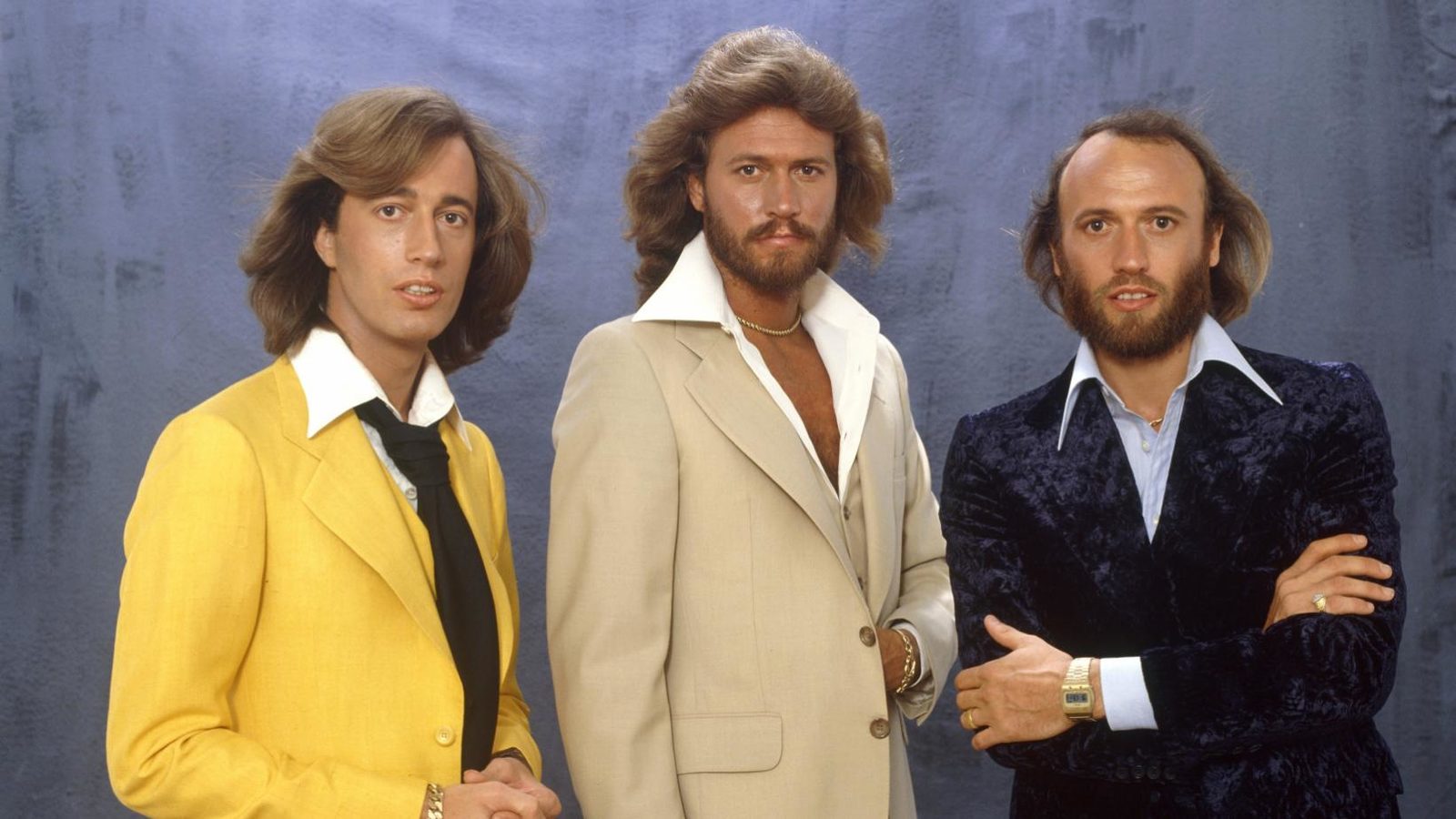
“How Can You Mend a Broken Heart” became the Bee Gees’ first U.S. No. 1 because it did something their earlier hits only hinted at: it turned private sorrow into a melody so wounded, so graceful, that heartbreak itself seemed to sing.
When “How Can You Mend a Broken Heart” was released on May 28, 1971, it did more than give the Bee Gees another hit. It changed their story. Issued as the lead single from Trafalgar, it became the group’s first No. 1 on the Billboard Hot 100, beginning its four-week stay at the top on August 7, 1971. Billboard later ranked it the No. 5 song of the year in America. Yet the song’s history contains a poignant twist that only deepens its legend: while it conquered the United States, it failed to chart in the UK. That contrast still feels astonishing now. A ballad this emotionally complete, this universally wounded, found its first true coronation not at home, but across the Atlantic.
Part of what makes the song so devastating is that it does not merely describe heartbreak; it sounds as though it has already lived through it. The title itself asks one of pop music’s most impossible questions. Not how do you survive a broken heart? Not how do you forget? But how do you mend it? That single word changes everything. “Mend” is domestic, careful, almost old-fashioned. It suggests damage that cannot be denied, only tended to by hand. The Bee Gees understood something profound here: the deepest sadness is often not theatrical. It is quiet, civilized, and all the more unbearable for that reason. This is one reason the song broke hearts so deeply. It did not perform pain in grand gestures. It spoke gently, and that gentleness cut further.
Its backstory makes the ache even richer. According to the group’s own account, Barry and Robin Gibb wrote “How Can You Mend a Broken Heart” after a period of estrangement between the brothers, during the phase when the Bee Gees were finding their way back to one another. The official Bee Gees site says plainly that the song was written after “a period of distance between the brothers,” and that writing it helped bring them back together. Another widely cited account quotes Barry recalling that Robin came to his place, and that they wrote this song and “Lonely Days” that same afternoon. Suddenly the title stops sounding abstract. This was not heartbreak observed from a distance. It came from fracture, reunion, and the fragile work of repairing something precious before it was lost for good.
That emotional truth is carried by the performance itself. Barry Gibb takes the lead with a voice that sounds both tender and resigned, while Robin and Maurice deepen the atmosphere with harmonies that make the whole record feel almost suspended in air. The arrangement, recorded in London on January 28, 1971, moves with remarkable patience. Strings do not overwhelm the song; they ache around it. The rhythm never pushes too hard. Everything seems designed to leave room for the wound at the center. It is one of the Bee Gees’ great gifts as balladeers: they knew how to make elegance serve sorrow rather than soften it. On this record, the polish does not hide the pain. It frames it.
That is why the song mattered so much in 1971, and why it still feels larger than a chart statistic. Before the disco years, before the imperial run of “Jive Talkin’,” “How Deep Is Your Love,” and “Stayin’ Alive,” the Bee Gees were already masters of melancholy. But “How Can You Mend a Broken Heart” sharpened that identity in a new way. It was not simply another beautiful sad song. It was the moment American listeners heard the Bee Gees’ sadness become undeniable enough to top the charts. Trafalgar itself only reached No. 34 in the U.S. and did not chart in Britain, which makes the single’s emotional breakthrough feel even more extraordinary. The song towered above its album commercially because it carried a truth too powerful to stay buried in track listings.
There is also something deeply moving in the fact that the brothers originally considered giving the song to Andy Williams before deciding to record it themselves. One can imagine it in another singer’s hands, beautifully done perhaps, but somehow less fated. The Bee Gees needed to sing this one. Their own history clings to it. Their own fractures and reunions breathe through it. That may be why the song later became important enough to lend its title to the 2020 documentary The Bee Gees: How Can You Mend a Broken Heart. The phrase had grown larger than the single itself. It had become a way of understanding the group’s emotional core.
So why did this song become their first U.S. No. 1? Because it met people at the exact place where polished pop and private grief overlap. It was exquisitely written, beautifully sung, and released at a moment when the Bee Gees’ own story gave it unusual depth. But more than anything, it understood that heartbreak is not just sadness. It is bewilderment. It is the stunned human question that arrives after the damage is already done. “How Can You Mend a Broken Heart” asked that question with such grace that millions recognized themselves in it. And once they did, the song could no longer remain merely admired. It had to be loved. It had to be carried. It had to rise.
That is why the record still feels so immense. Not because it was first to the top, though it was. Not because it announced a new chapter in Bee Gees history, though it did. It endures because it sounds like sorrow trying to remain dignified while the heart quietly breaks beneath it. Few songs have ever balanced beauty and hurt so perfectly. Fewer still have done it with such plainspoken elegance. In “How Can You Mend a Broken Heart,” the Bee Gees found the melody of damage, and in singing it, they gave themselves their first American No. 1—and the world one of the great heartbreak ballads of the modern era.