
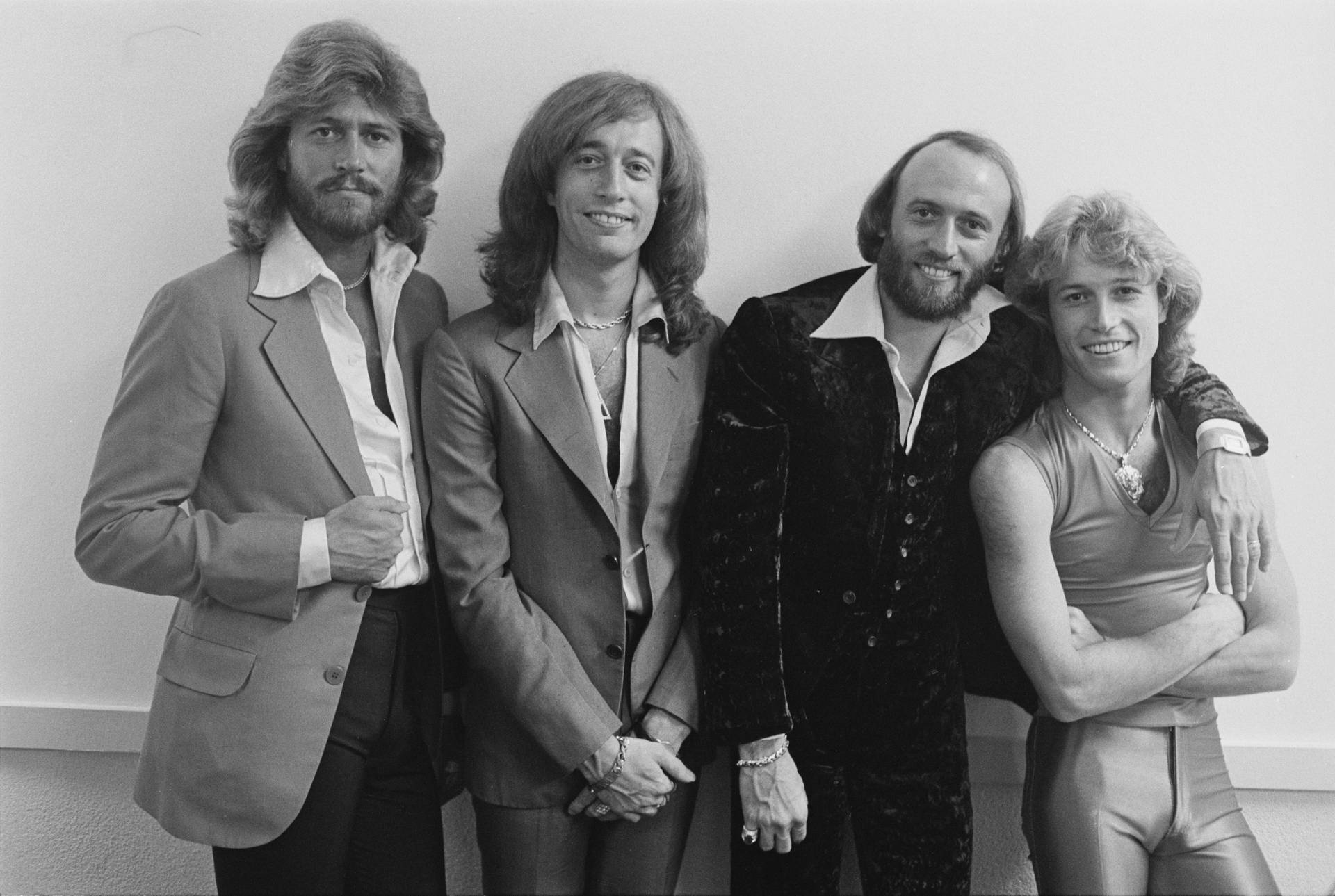
“Swan Song” feels like a goodbye whispered too early—a tender, uneasy vow that beauty can still be made, even when the room is full of tension.
In the late summer of 1968, the Bee Gees closed their album Idea with a track pointedly titled “Swan Song”—side two, track 6, sung by Barry Gibb, running 2:55. On paper it’s simply the final cut on a hugely important record: Idea was released in August 1968, recorded at IBC Studios (London), and it became a major international success, peaking at No. 4 in the UK and No. 17 in the U.S. Yet “Swan Song” has never really lived by chart mathematics—because it wasn’t pushed as a headline A-side. Its notoriety is more like a secret passed between listeners: the last page of a book, where the most honest sentence sometimes waits.
Still, it did brush the world of singles in a small, telling way. When “I Started a Joke” was released, its B-side was usually “Kilburn Towers”—except in France, where the flip side was “Swan Song.” That detail feels almost poetic now: a song called “Swan Song” literally placed on the back of one of the group’s great melancholic statements, as if the era itself insisted on leaving a second, quieter footprint.
The backstory deepens the emotion. According to the album’s recording notes, “Swan Song” was actually the last song recorded for the previous album Horizontal (sessions running July–December 1967), but it wasn’t released until Idea the following year—while “Words” was issued as a single in its place. That swap matters, because it hints at a band (and a management machine) deciding what kind of sadness the public could be trusted with. “Words” is direct and timeless; “Swan Song” is more elusive, more inward—less a message than a mood.
And mood is exactly what Idea was wrestling with. Barry Gibb later described the period bluntly: there was “friction”, ego, a sense of not getting along. In that same breath of context, the album’s notes point out that several songs on side two share a “yearning for escape”—and “Swan Song” is named among them. So listen to the title again: Swan Song. In common speech it means a final statement, a last performance before the lights go out. But here it arrives paradoxically early, in the middle of youth, in the middle of success—like a private fear that something precious might be slipping away even as the crowd applauds.
That tension is baked into the song’s imagery. Without quoting it at length, you can hear the narrator insisting that this is his “swan song,” a kind of personal last will and testament—not of money, but of devotion and craft. There’s also a striking spiritual turn: the idea that if the Lord supplies music for the world, love might “build a castle in the air.” It’s the kind of line that sounds gentle until you sit with it—because a castle in the air is, by definition, both beautiful and impossible. A dream-architecture. A refuge you can see, but not touch. In that sense, “Swan Song” becomes a quietly devastating metaphor for an artist’s life: you build something real out of breath, harmony, and belief, and you pray it doesn’t dissolve the moment the song ends.
Placed as the album closer—after the restless ache of “When the Swallows Fly,” the ceremony of “I Have Decided to Join the Airforce,” and the public melancholy of “I Started a Joke”—“Swan Song” feels like the door softly closing. Not slammed. Not locked. Just closed, carefully, as if to protect what’s inside. It’s a song about legacy before legacy was supposed to be a concern—a confession that even at the height of possibility, the heart can feel its own fragility.
And maybe that’s why it has endured as a deep cut. The album itself sold over a million copies worldwide, a major achievement that could have tempted any band toward triumphalism. But “Swan Song” refuses triumph. It chooses tenderness, and a little fear, and a kind of longing that doesn’t ask to be solved. Decades later, the track even resurfaced in the Bee Gees’ story as a “surprise appearance” on the 2010 Mythology compilation—proof that the brothers, too, remembered the quiet power hiding at the end of Idea.
So when you play “Swan Song” now, you don’t just hear a 1968 album track. You hear an early warning and an early blessing: that music can be both shelter and farewell, sometimes in the same breath—and that the most lasting goodbyes are often the ones sung softly, as if only the truly attentive were meant to notice.