
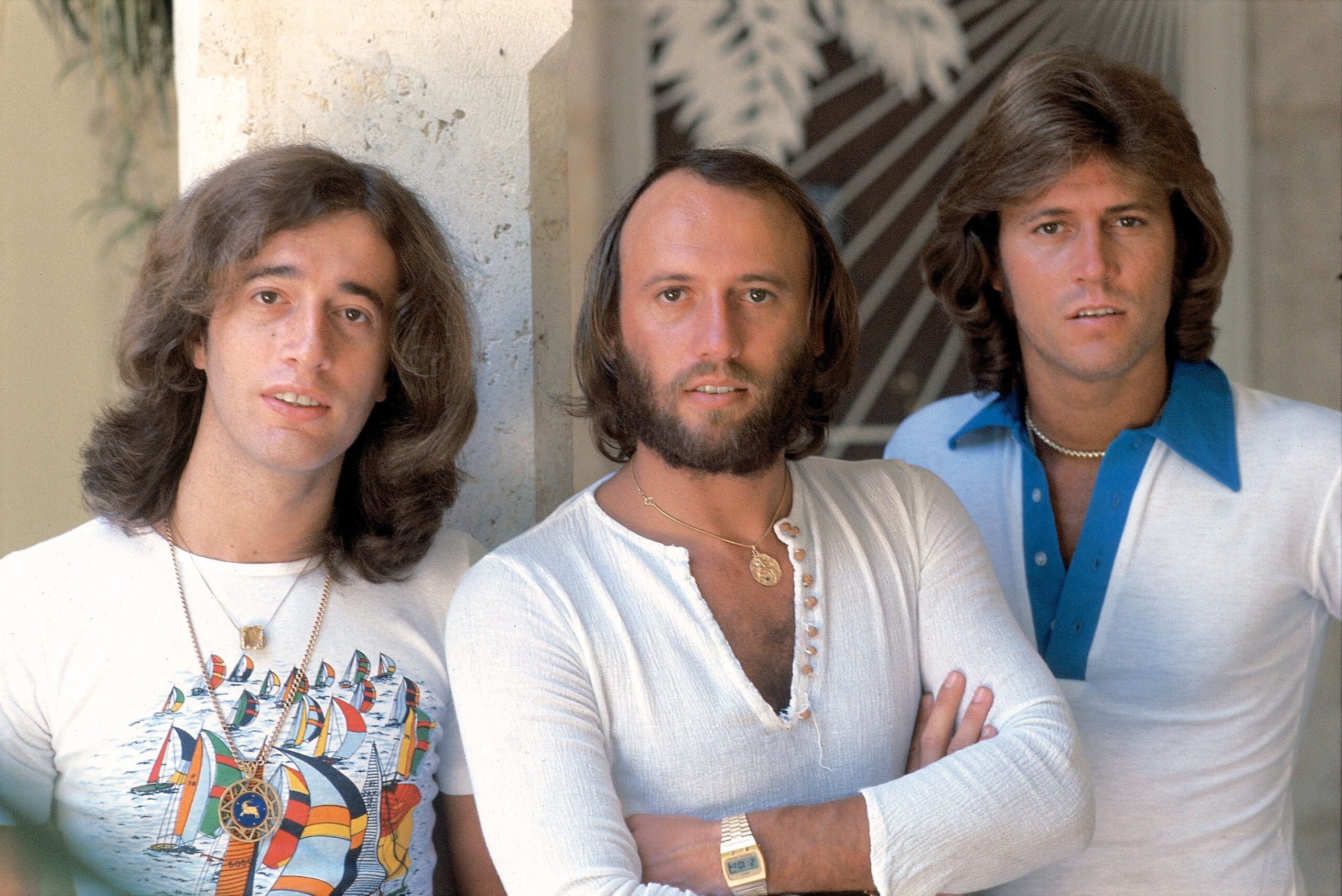
Before the white suits, before the fever, before the Bee Gees became the polished pulse of disco, they gave us “I’ve Gotta Get a Message to You” — a song so dark and urgent it sounds like time itself is running out.
There are songs that make a reputation, and there are songs that reveal an artist’s soul before the world fully understands what it is hearing. “I’ve Gotta Get a Message to You” belongs to the second kind. Released in August 1968, it became a major international hit for the Bee Gees, reaching No. 1 on the UK Singles Chart and No. 8 on the Billboard Hot 100 in the United States. In Britain, it was their second UK No. 1; in America, it marked another strong step in their extraordinary late-1960s run of dramatic, literate pop singles. Those numbers matter, but they only begin to explain why the song still feels so unforgettable. This was not merely a hit. It was a miniature tragedy, delivered with pop precision and almost unbearable emotional compression.
What makes the song so striking, even now, is its premise. This is not a typical heartbreak song, nor even a conventional plea. The narrator is a condemned man, awaiting execution, desperate to get one final message to his wife. That premise alone sets the song apart from almost everything else in the Bee Gees’ early catalog. They had already shown a gift for melancholy and atmosphere in songs like “New York Mining Disaster 1941” and “Massachusetts,” but “I’ve Gotta Get a Message to You” pushes much further into dread. It feels urgent because it is urgent. There is no room left for regret to unfold slowly. The clock is already ticking. That is why the song lands with such force: it is built not around memory, but around the last possible moment before memory is all that remains.
The recording history adds an extra layer of drama. The single was recorded on July 12, 1968 at IBC Studios in London and later appeared on the Bee Gees’ 1969 album Idea. The group’s official history notes that Robin Gibb had imagined the song as a “mini-film,” and that description is exactly right. Everything about the record feels cinematic: the tension in the vocal, the stop-start emotional pull, the arrangement that seems to move with the pressure of a closing door. This was one of the Bee Gees’ great early strengths. Long before disco made them global symbols of rhythm and cool, they were writing songs like little movies — concise, visual, and devastating.
There is also a revealing story behind the lyric itself. In the Bee Gees’ own account, Barry Gibb initially disliked the line about “holding over my head,” feeling it was too stark, but Robin insisted it stay because of the condemned-man narrative. That tension inside the writing process tells us something important: the song’s darkness was not accidental. It was argued for. Protected. Preserved. The brothers understood they were doing something riskier than ordinary pop romance. They were putting capital punishment, guilt, separation, and final words into a song compact enough for radio — and somehow making it sing.
Musically, the record is just as gripping as the story. Robin Gibb takes the lead vocal, and that choice is crucial. Robin had one of the most emotionally arresting voices in pop: tremulous, urgent, slightly wounded even at full strength. On “I’ve Gotta Get a Message to You,” he sounds as though he is trying to force the words through time itself. The arrangement, produced by Robert Stigwood and the Bee Gees with orchestral contributions from Bill Shepherd, never overwhelms the song’s emotional core. It frames the panic, rather than softening it. The result is a record that feels elegant and desperate at the same time — one of the Bee Gees’ great specialties in their pre-disco years.
That is one reason many serious Bee Gees listeners remain so attached to this era. Before “Stayin’ Alive,” “Night Fever,” and “How Deep Is Your Love,” the brothers were already making records of enormous dramatic intelligence. “I’ve Gotta Get a Message to You” proves that their genius did not begin with falsetto, dance-floor glamour, or soundtrack dominance. It began with songwriting — with the ability to take an impossible emotional situation and render it in language plain enough to wound. The song is dark, yes, but never self-indulgent. Urgent, yes, but never chaotic. It knows exactly what it is doing, and that discipline makes it hit even harder.
Its legacy has only grown richer with time. Rolling Stone ranked it among the 20 greatest Bee Gees songs, praising its compressed emotional drama, while later retrospectives have continued to single it out as one of the essential early Bee Gees records. That lasting admiration makes sense. The song captures something many pop songs never dare to approach: the terror of having one truth left to say, and almost no time left to say it.
So yes — before the disco kings, there was this. “I’ve Gotta Get a Message to You” remains one of the most powerful reminders that the Bee Gees were masters of drama long before they ruled the dance floor. It is dark without being heavy, urgent without losing its grace, and unforgettable because it understands the oldest human fear of all: not just death, but the possibility of leaving the most important words unsent. That is why the song still grips so hard. It is not merely heard. It is felt like a last chance.