
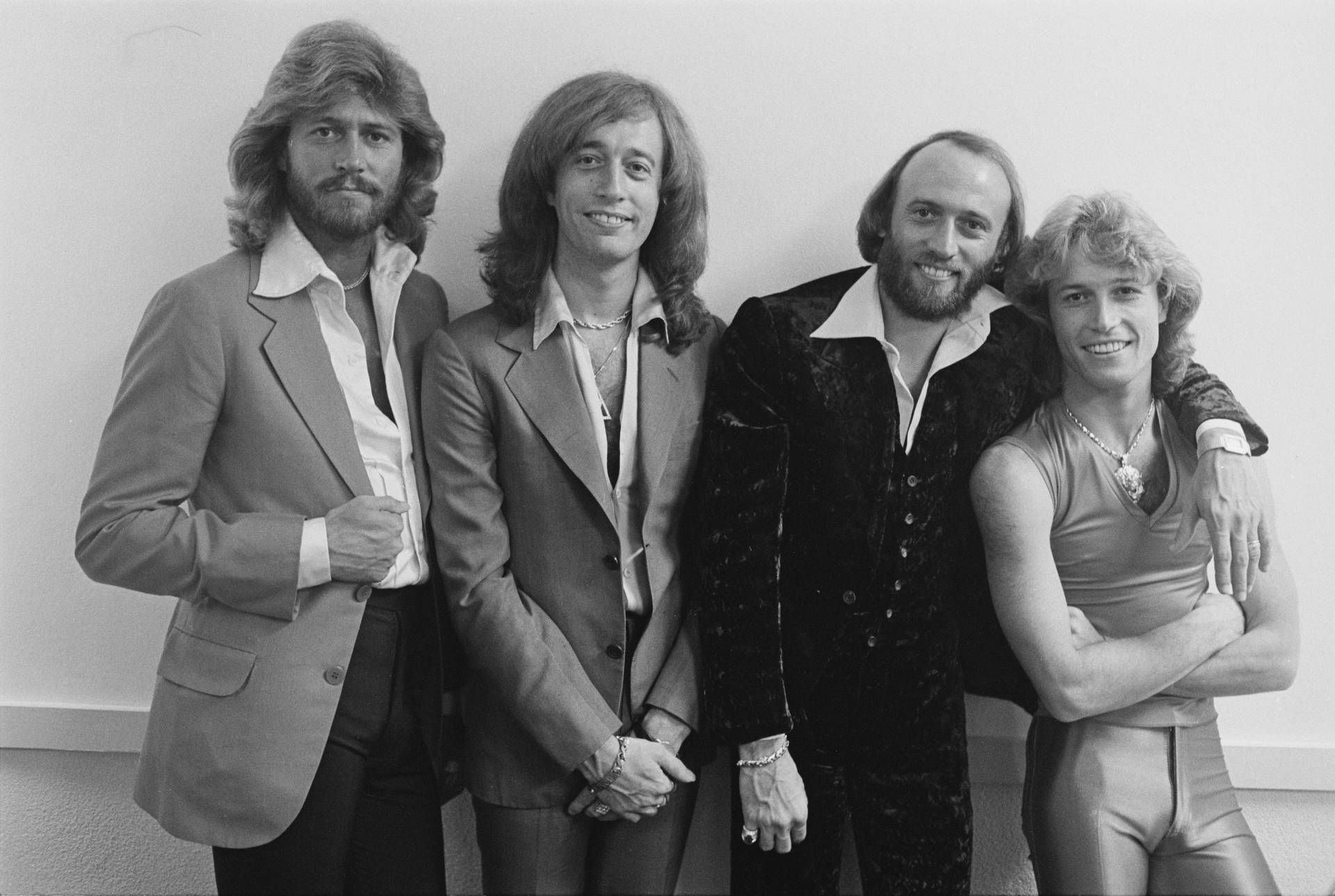
“I Don’t Think It’s Funny” is the Bee Gees before the world called them legends—teenage heartbreak delivered with a straight face, where the smile is gone and the wound is still fresh.
Long before Saturday Night Fever, before falsetto became their global signature, the Bee Gees were already writing songs that understood something adults spend years learning: heartbreak can be humiliating, and the hardest part is pretending it doesn’t matter. “I Don’t Think It’s Funny” comes from the group’s Australian debut LP, The Bee Gees Sing and Play 14 Barry Gibb Songs—credited to Barry Gibb and the Bee Gees—released in November 1965 on the Leedon label.
Here’s the key “behind-the-scenes” fact that places the song in its true frame: only five new songs were recorded specifically for that album, and “I Don’t Think It’s Funny” was one of them (alongside “I Was a Lover, a Leader of Men,” “And the Children Laughing,” “How Love Was True,” and “To Be or Not to Be”). The rest of the LP was largely compiled from earlier singles—so this track mattered enough to be newly cut for their first long-playing statement.
If you’re looking for “ranking at launch,” the honest answer is that “I Don’t Think It’s Funny” was not released as a major charting single in the way later Bee Gees hits were, and standard chart references treat it primarily as an album track from that 1965 LP rather than a chart-entry event. (Some chart databases list a “year” for it, but not a clear mainstream single run.) That non-single status fits the song’s personality: it feels like something too personal to parade—more diary than headline.
The song’s authorship is pure early Bee Gees DNA: Barry Gibb wrote it, during a period when the brothers were still shaping their identities in the Australian pop scene, absorbing rock ’n’ roll and British Invasion harmonies while developing that unique Gibb knack for melodramatic clarity. And you can hear the band’s youthful division of labor in the album notes: Barry on rhythm guitar, Robin and Maurice contributing vocals and instruments, with sources suggesting Maurice may have played acoustic lead guitar on the track.
So what’s the story inside “I Don’t Think It’s Funny”?
It’s the moment after betrayal (or at least after emotional cruelty) when the narrator stops laughing along. The title is devastating because it’s so plain—no poetry, no metaphorical fog—just a refusal. In three short seconds, it flips the power dynamic: the person who was hurt stops being the audience for someone else’s game. That’s the song’s emotional engine: a young voice discovering boundaries. Not “I’m heartbroken” in a romantic, operatic sense, but “I’m done being made small.”
Musically, this is early Bee Gees pop-rock: compact, direct, built for the kind of listening where the record player sits in the corner and the whole room quietly pays attention. There’s already a hint of what they would later master—those close harmonies that feel like siblings speaking the same thought in different tones—but here it’s less polished showmanship and more raw insistence. The performance doesn’t wink. It means it. And that seriousness is exactly why it endures for dedicated listeners: it captures the Bee Gees at a stage when they weren’t yet icons—they were simply young men with feelings too large for their age.
The deeper meaning of the song, heard now, is almost bittersweet. In 1965, the Bee Gees were still becoming the Bee Gees—still learning what to do with disappointment, how to translate embarrassment into melody, how to make a bruised pride singable. “I Don’t Think It’s Funny” is a small early proof that the gift was already there: the ability to turn emotional indignity into art without pretending it didn’t hurt. And maybe that’s why it still lands—because everyone, at some point, has had to say the same thing in their own way: laugh if you want… but I’m not laughing anymore.