
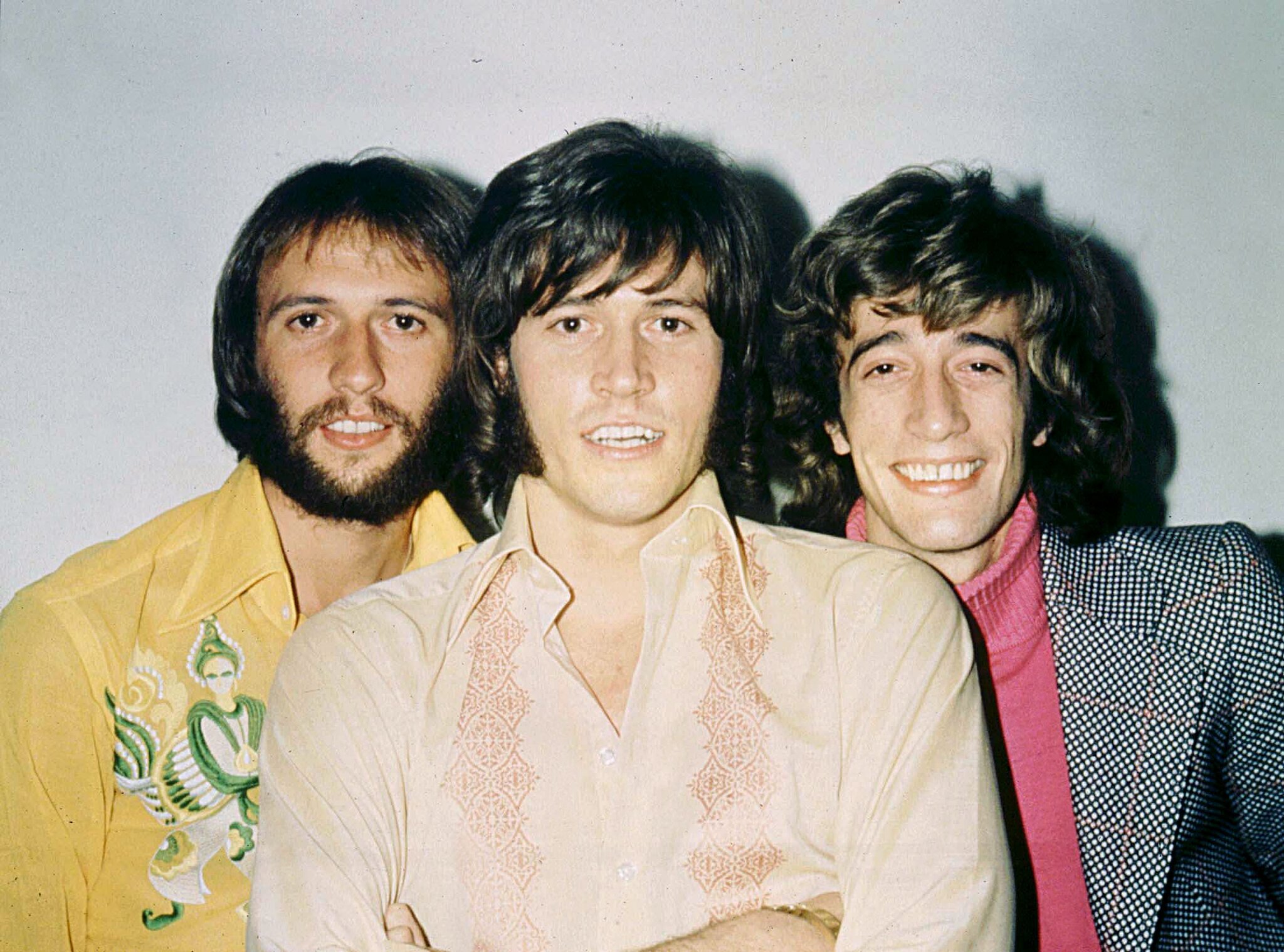
“Run to Me” is one of the Bee Gees’ quiet miracles — soft, intimate, and so emotionally exposed that the song does not simply linger in the ear; it settles somewhere deeper and refuses to leave.
There are Bee Gees songs that arrive with grandeur, and there are Bee Gees songs that break the heart by lowering their voice. “Run to Me” belongs to the second kind. Released on 7 July 1972 as the lead single from To Whom It May Concern, it reached No. 9 in the UK and No. 16 on the Billboard Hot 100 in the United States. It was not one of their biggest chart monsters, and perhaps that is part of why it remains so haunting. This is not a song inflated by cultural mythology. It survives on feeling alone. And feeling, in this case, is everything.
What makes “Run to Me” impossible to shake is the way it turns comfort into longing. On paper, the title sounds simple, almost gentle. It suggests refuge, trust, a hand held out in the dark. But the song is not merely reassuring. It is pleading in the most dignified way possible. The narrator is offering himself as shelter to someone already wounded, which means the tenderness in the song is inseparable from pain. This is not romance in full bloom. It is romance standing at the edge of hurt, hoping it will still be allowed in. That emotional situation is one reason the song deepens with time. It understands that love is not always about ecstasy. Sometimes it is about becoming the place where somebody else might safely fall apart.
The Bee Gees were especially gifted at this kind of emotional architecture in the early 1970s. By the time “Run to Me” appeared, the brothers had already come through separation, reunion, and artistic uncertainty, and their post-reunion work often carried a special kind of bruised elegance. “Run to Me” came from that period, recorded on 12 April 1972 at IBC Studios in London, and it sits in their catalog as one of those songs where the old Bee Gees melancholy remained fully intact even as their songwriting grew more streamlined and mature. It was also one of the songs tied to their renewed creative partnership after earlier fractures, which helps explain why the music sounds so emotionally close rather than merely polished.
The performance is crucial. Barry Gibb and Robin Gibb share the lead vocal, and that division gives the record one of its deepest strengths. Barry brings warmth and steadiness; Robin brings ache and tremor. Together, they create a kind of emotional conversation inside the song. The listener does not hear a single flat mood. One hears solace and vulnerability moving back and forth, almost like two emotional temperatures in the same room. That is part of why the track feels so intimate. It is not over-arranged, and it is not trying to overwhelm. It simply lets the voices carry the wound. The personnel details underline that delicacy too: Maurice Gibb on bass, piano, and rhythm guitar, with Bill Shepherd’s orchestral arrangement framing the song without smothering it.
There is also something beautiful in the song’s origin story. Robin later recalled that they recorded “Run to Me” and that Andy Williams later cut his own version, adding that if they had written it directly for him, he might not even have recorded it. That memory is revealing because it points to the song’s strange balance of pop smoothness and personal intimacy. It has the bones of a standard, certainly. One can imagine another singer taking it on. But in the Bee Gees’ own hands, it becomes much more personal than generic adult-pop craft. It sounds lived in. It sounds like a song that needed these specific brothers to make it fully human.
And that is why “Run to Me” still hits so hard. It is soft, yes, but softness is not weakness here. It is exposure. The song never needs to shout its heartbreak because the heartbreak is already folded into every line. The melody glides, the arrangement shimmers, and beneath that grace there is the unmistakable feeling of someone asking to be trusted with another person’s hurt. Few songs are more tender than that. Fewer still express it with such restraint.
So if “Run to Me” feels impossible to shake, it is because the Bee Gees understood one of pop music’s hardest truths: the quietest pleas are often the ones that last longest. This is not a song built on spectacle or dramatic collapse. It is built on nearness, on offering comfort, on hoping love might still be allowed to enter where pain already lives. And in the Bee Gees’ hands, that becomes something almost unbearably beautiful — not loud enough to dominate the room, but deep enough to stay in the heart for years.