
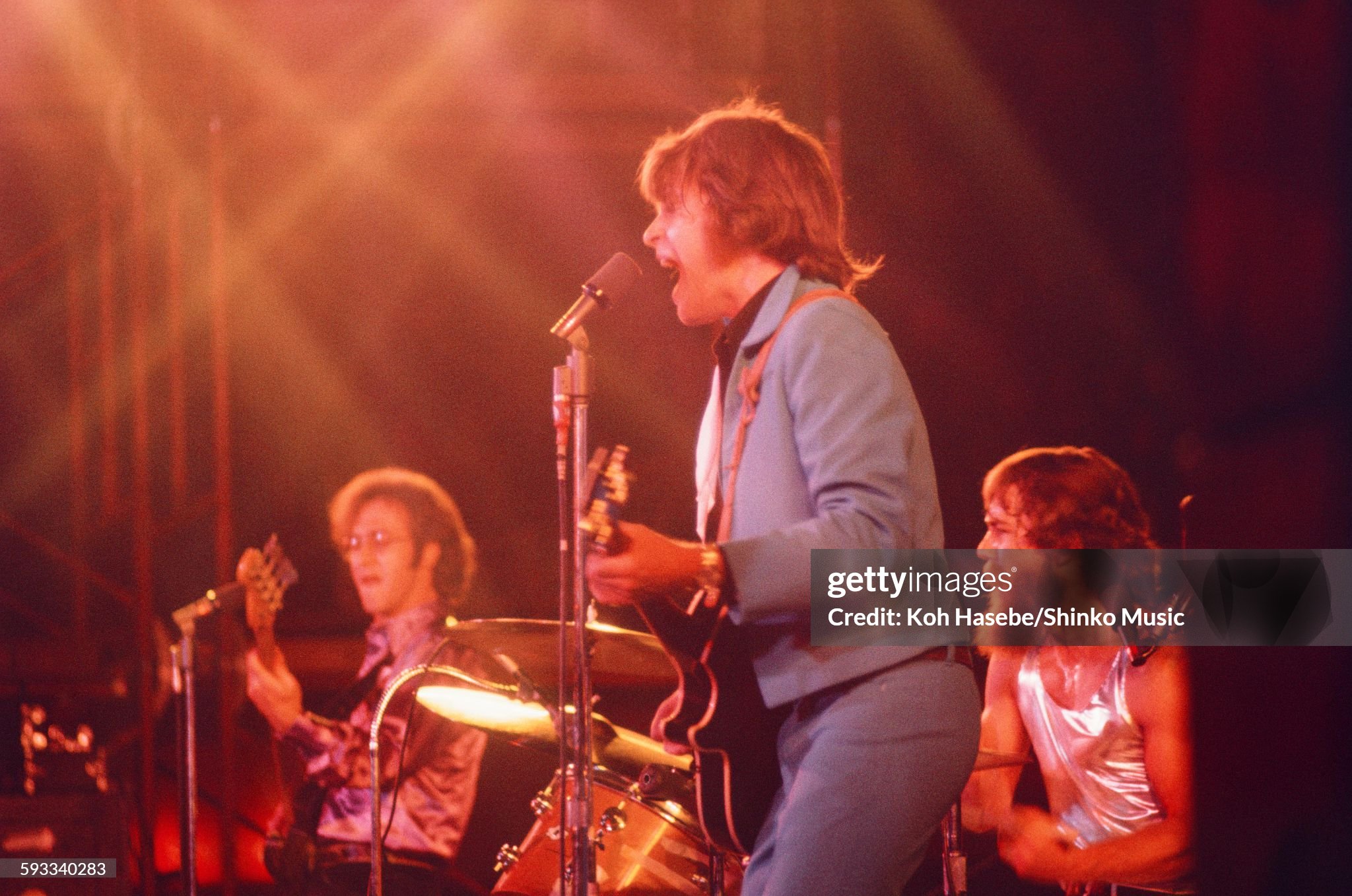
“Run Through the Jungle” was never about Vietnam, yet that misunderstanding may be part of why it still feels so unsettling: Creedence Clearwater Revival built a song so full of dread, confusion, and hunted motion that listeners kept mistaking its shadow for a battlefield. In truth, the danger John Fogerty heard was closer to home.
There is something fascinating about “Run Through the Jungle” because it may be one of rock’s most misread songs, and yet the misunderstanding is easy to forgive. Released in April 1970 as the flip side of “Up Around the Bend,” and later included on Cosmo’s Factory, the song came out at exactly the moment when America was saturated with the imagery of the Vietnam War, political unrest, and a general feeling that the country had lost its bearings. So when people heard the word “jungle,” and heard that stalking, ominous groove behind it, they naturally drew a straight line to Southeast Asia. It sounded like the era’s nightmare. It sounded like combat. It sounded like menace in the undergrowth. And because Creedence Clearwater Revival had already made a song like “Fortunate Son,” listeners assumed they knew what kind of target was being named.
But the song was not about Vietnam at all. John Fogerty later explained that “Run Through the Jungle” was really about the proliferation of guns in the United States. He said he had been struck by reports suggesting there was roughly one gun for every man, woman, and child in America, and what disturbed him was the sense that ordinary citizens were moving through a kind of social jungle simply by living in their own country, surrounded by privately owned weapons in both responsible and irresponsible hands. In other words, the threat in the song was domestic, not distant. The jungle was America itself.
That is what makes the song so powerful in retrospect. The misreading does not weaken it; if anything, it proves how well Fogerty caught the emotional climate of the time. He wrote a song about fear in America so vivid that listeners projected the era’s most visible war onto it. But underneath that projection was something arguably more lasting and more uncomfortable: a song about danger that was already at home, already woven into daily life, already normalized enough that people did not immediately hear it for what it was. That is why “Run Through the Jungle” still feels so dark. It is not just a rock song with spooky atmosphere. It is a warning disguised as a swamp-rock fever dream.
And what a brilliant disguise it is. The opening and closing are wrapped in eerie “jungle” sound effects, created with backward-recorded guitar and piano, according to bassist Stu Cook. Those sounds do exactly what great records do: they make the theme physical before the lyric has fully explained itself. You hear them and feel as though you are entering hostile terrain. But the brilliance of Fogerty’s writing is that he never lets the song become too literal. He keeps it symbolic, almost biblical, with talk of “two hundred million guns” and “Satan” close behind. That kind of imagery is why the record has lasted. It is rooted in one specific anxiety, but it is spacious enough to feel like a general American haunting.
Musically, the song only deepens that sense of unease. It does not race. It stalks. CCR were masters of concise, hard-driving records, but “Run Through the Jungle” is less about speed than about pressure. The groove hangs low. The harmonica cuts through like a warning siren from somewhere far off. The whole thing feels like a pursuit without resolution, a man moving forward while knowing the danger is already around him. That tension helped make the single a major hit: paired with “Up Around the Bend,” it reached No. 4 on the Billboard Hot 100, and Cosmo’s Factory itself went on to spend nine consecutive weeks at No. 1 on the Billboard 200 after its July 8, 1970 release.
Yet for all its success, the song’s legacy has been shaped just as much by its afterlife as by its chart run. Because it sounds like war, it has repeatedly been used in films, television, and video games connected to Vietnam-era imagery, which only reinforced the public misunderstanding. That is one of the great ironies of the song: popular culture kept using it to illustrate a meaning Fogerty himself said was wrong. The myth became part of the song’s identity. But once you know the real subject, the record changes. It becomes less a period piece and more a long, uneasy American meditation on violence and the fear that comes with living among it.
And perhaps that is why “Run Through the Jungle” remains one of rock’s most misread messages. It was never narrowly topical in the way people assumed. It was more troubling than that. It took the imagery of a hunted man moving through darkness and tied it not to a foreign jungle, but to the emotional landscape of the United States itself. That is a harder truth, and a lonelier one. A war song lets people point outward. This song points inward.
So yes, “Run Through the Jungle” was not about Vietnam at all. But it still carried the dread of its era so convincingly that the misunderstanding became part of its legend. What endures now is not just the correction, important as that is. It is the recognition that John Fogerty had written something sharper than people first realized: a song about a country so armed, so nervous, so morally overgrown that it could feel like a jungle even to the people trying simply to walk through it. And that, decades later, may be why the song still sounds less like an old hit than like a warning that never really stopped echoing.