
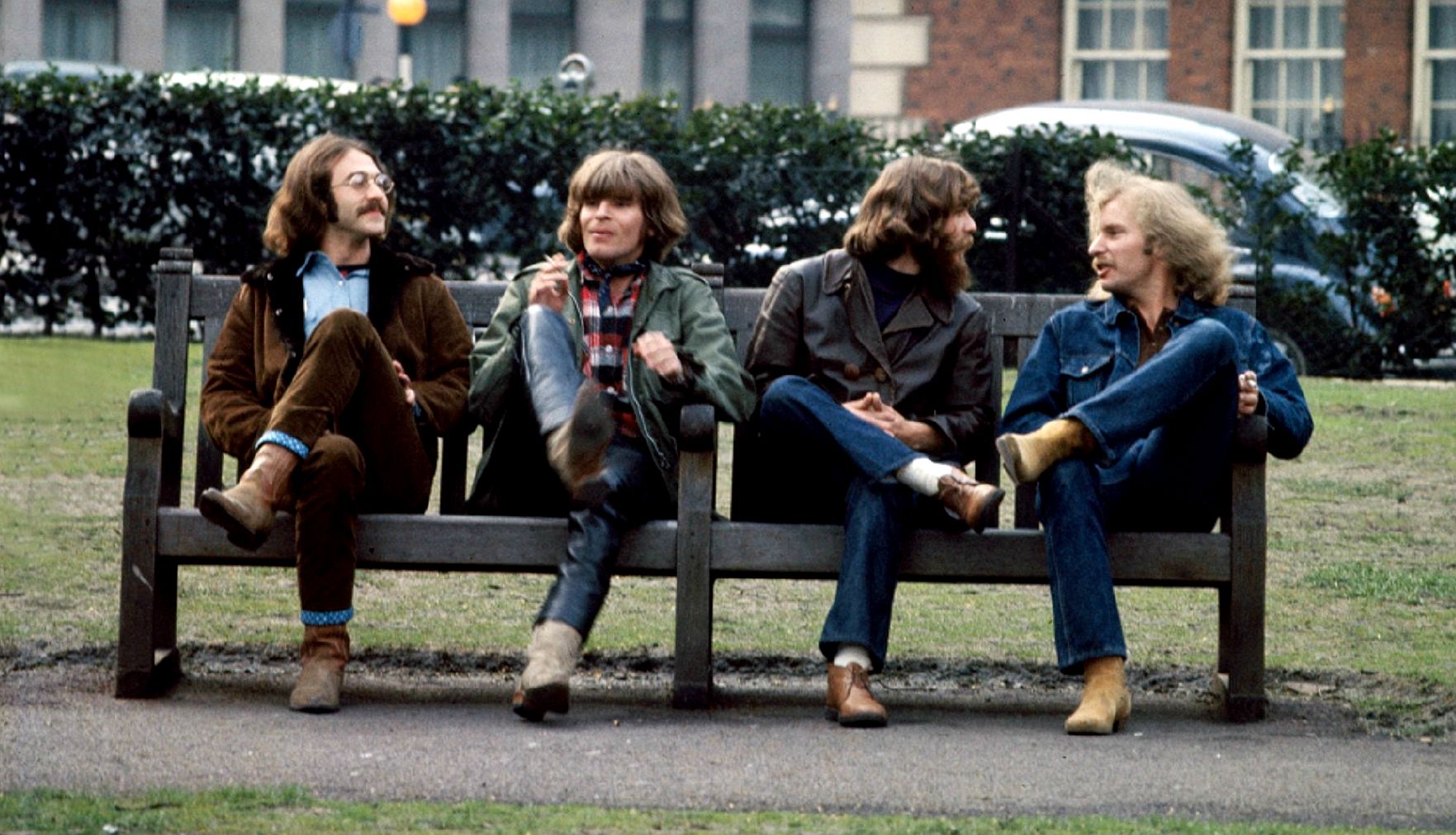
“Wrote a Song for Everyone” is CCR at their most quietly human—when the man who can sing to the whole world realizes he can’t reach the one person at home.
Among the swaggering two-minute classics on Creedence Clearwater Revival’s Green River (released August 7, 1969), “Wrote a Song for Everyone” feels like the room suddenly going still. It isn’t a single, it isn’t a radio hook designed to punch through traffic noise—it’s a slow, bruised confession that sits right at the emotional center of the album’s first side. Green River itself would become CCR’s first No. 1 album on the Billboard 200, reaching the top on October 4, 1969—a landmark moment that makes this song’s intimacy even more striking.
That contrast is the whole drama: while the album was climbing toward the summit on sheer hit-making force, John Fogerty was also writing something that didn’t sound like victory. On the same record that houses juggernauts like “Bad Moon Rising” and “Green River,” this track lingers in the shadows, built not for celebration but for reckoning. The track list places “Wrote a Song for Everyone” as a major statement, not a throwaway—right there among the core cuts, with an extended runtime that lets the feeling breathe.
The story behind it—at least the emotional truth of it—has long been linked to Fogerty’s home life. Reference summaries about Green River note that the song, as discussed in a VH1 Legends context, deals with Fogerty’s failing marriage at the time. And a later piece reflecting on Fogerty’s writing points out the paradox at the heart of the track: it’s one of his most personal songs, not a “cartoon,” but something visceral and real.
Listen closely and you can feel that paradox in the song’s posture. The title sounds generous—almost noble—like a songwriter’s mission statement. But the lyric twists it into an ache: what good is being able to speak to strangers in stadiums if you can’t speak to the person in your kitchen? That’s the kind of thought that arrives not in youth’s dramatic lightning, but in adult life’s slow realization—when success doesn’t fix the things you hoped it would fix, and the applause can’t warm a cold silence at home.
Musically, CCR don’t dress the pain in velvet. They keep it plain, steady, almost weary—swamp-rock economy with a gospel-blues undertow. The groove moves like a long drive taken alone: the wheels keep turning, but the mind won’t stop returning to the same sentence. It’s also pure Fogerty craft: a song that feels simple on first listen, then reveals how carefully it’s built to carry tension without theatrics. That’s why it doesn’t need to “explode.” It sits there, stubbornly, like a truth you can’t talk your way out of.
In the context of 1969, the song hits with a particular kind of American melancholy. This was a year of noise—war, unrest, volume everywhere—yet Fogerty’s most haunting moment here is quiet and domestic. “Wrote a Song for Everyone” becomes less about politics and more about the private fractures that public life can hide. Even its mythic phrasing—those sweeping lines that sound bigger than the room—ultimately circles back to something painfully ordinary: a relationship slipping, words failing, love becoming hard to translate.
And perhaps that’s why the song endures as a deep cut rather than a chart statistic. “Wrote a Song for Everyone” wasn’t built to “rank” like a single; it was built to last. It’s the sound of a man discovering that communication isn’t measured by audience size. Sometimes the hardest listener to reach is the one sitting closest.
In the end, this track is a reminder—delivered with Fogerty’s grit and restraint—that the most universal songs often begin in the smallest heartbreak. A songwriter can speak for everyone… and still, in the quietest hour, be left searching for the right words.