
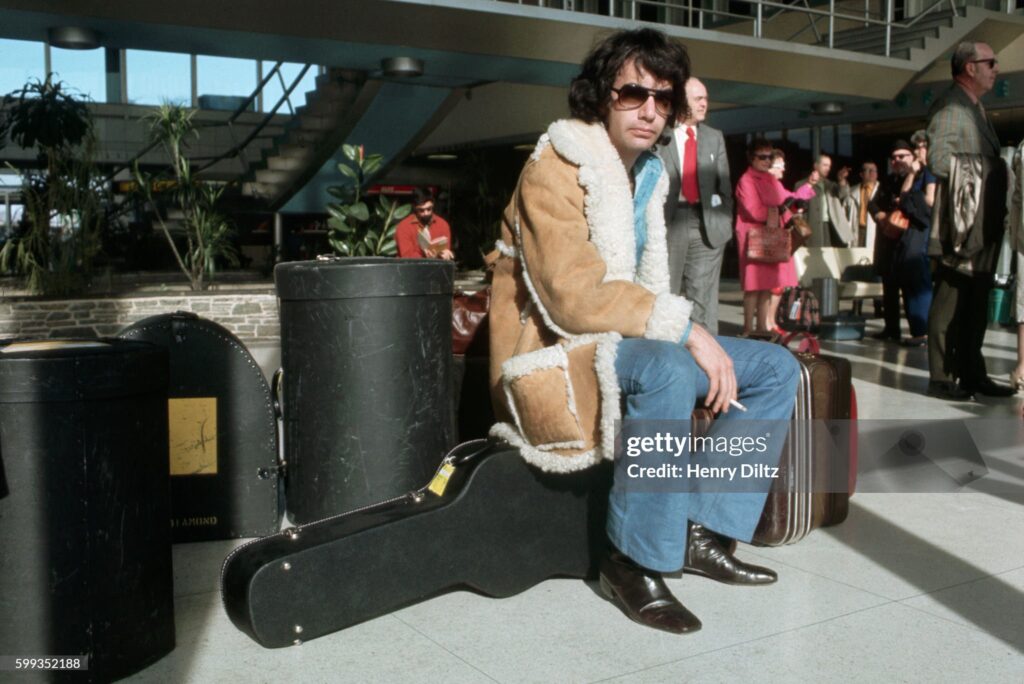
Written after life had already taught him what refusal feels like, “I’ve Been This Way Before” carries the weary grace of a man who no longer mistakes heartbreak for surprise.
Some Neil Diamond songs arrive with a public glow around them. They announce themselves like standards the moment they begin. “I’ve Been This Way Before” works more quietly than that, and perhaps more deeply. It does not depend on a grand hook in the usual sense. Its hook is recognition. From the first lines, Diamond sounds like someone who has already stood in this emotional weather, already watched hope rise and fail, already learned that pain does not always come as a thunderclap. Sometimes it comes as something far more intimate and more exhausting: a sorrow you recognize because you have lived inside it before.
Released as the second single from Serenade in late 1974, the song became a notable Adult Contemporary success, reaching No. 1 on Billboard’s Easy Listening chart and No. 34 on the Billboard Hot 100. The album itself, issued in September 1974, climbed to No. 3 in the United States and became Diamond’s third straight platinum album. Those details matter, but mostly because they show that this was not some hidden fragment tucked away in his catalog. It was a major part of a period when Neil Diamond was writing with unusual inwardness, and listeners could hear that inward pull very clearly.
What makes the song hit harder, though, is not simply the chart story. It is the life already behind the voice. By the time “I’ve Been This Way Before” appeared, Neil Diamond was no innocent narrator of romantic pain. His first marriage to Jaye Posner had ended years earlier, after a separation in 1967 and divorce in 1969, and his songwriting had long since earned a reputation for drawing strength from intensely personal feeling. Even “I Am… I Said,” one of his defining earlier songs, was widely described as among his most personal works. So while I have not found a reliable source in which Diamond explicitly says this song was written about one specific breakup, the emotional world of the record clearly comes from someone who had already known real upheaval, refusal, and disappointment at close range. That is the honest way to put it, and in some ways it makes the song more affecting, not less. It feels lived rather than invented.
That distinction matters, because “I’ve Been This Way Before” is not a young man’s heartbreak song. It does not sound shocked by pain. It sounds acquainted with it. The title itself tells you everything. Not I’m hurt. Not I can’t believe this happened. But I’ve been this way before. There is resignation in that phrase, but also dignity. The singer is not collapsing. He is remembering. He is measuring the present wound against older ones and realizing, with a kind of sorrowful calm, that the heart has a history of its own.
That is where the song’s power really lives. Many ballads beg to be felt by enlarging emotion, by pushing anguish forward until it fills the room. Neil Diamond does something subtler here. He lets the words carry the fatigue of repetition. Love has failed before. Faith has been bruised before. The eyes he sees now call up eyes seen once already. The pattern is familiar, which somehow makes the hurt colder and more adult. It is one thing to suffer for the first time. It is another to realize you are walking a road you know too well.
Even the song’s journey into the world has a slightly wistful cast. Sources note that “I’ve Been This Way Before” had originally been intended for the Jonathan Livingston Seagull project but was completed too late for inclusion there, before finding its home on Serenade instead. That small detail gives the song an added sense of displacement, as though it too had taken a longer path before arriving where it belonged. On Serenade, it became the closing track, and that placement feels exactly right. It sounds like the kind of song that belongs at the end of something, when the room has grown quieter and the singer has stopped pretending he does not know the cost of feeling too much.
Contemporary reaction picked up on that seriousness. Billboard praised it as lyrically stronger than some of Diamond’s recent work, while Cash Box heard a moody ballad glowing through its piano opening, strings, and rising vocal. Those old reviews matter because they confirm what is still audible now: this was not merely another polished Neil Diamond single. It was a performance with bruises under the surface.
So the life behind the song does deepen it, even if the truth is more nuanced than a neat biographical slogan. It is fair to say the song was written after real heartbreak had already shaped Neil Diamond’s emotional vocabulary. It is fair to hear, in the voice, a man no longer writing from innocence. And that is why “I’ve Been This Way Before” still lands with such force. It carries the weariness of repetition, the grace of survival, and the terrible knowledge that some sorrows do not feel new when they return. They feel familiar. In Neil Diamond’s hands, that familiarity becomes the ache itself.