
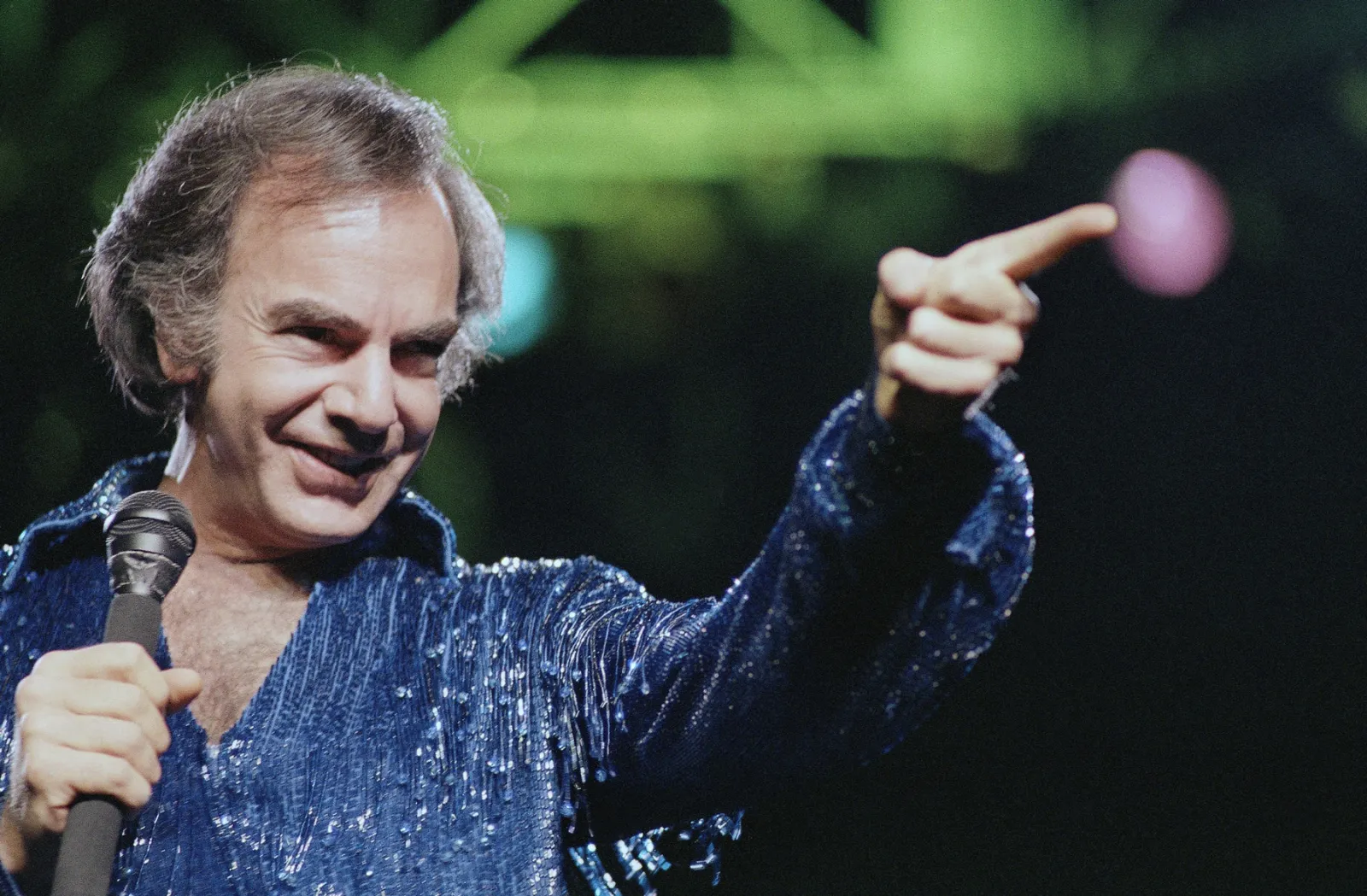
In “Glory Road,” Neil Diamond makes ambition sound less like vanity than destiny—restless, human, and full of the ache of someone chasing something too large to ignore.
There is something moving about a song that dares to reach upward without pretending the climb will be easy. That is what gives Neil Diamond’s “Glory Road” its strength. It is not remembered as one of his biggest signature hits, and perhaps that is exactly why its power can catch listeners by surprise. Released first on Brother Love’s Travelling Salvation Show in 1969, “Glory Road” was not the song that defined the album in the public eye. The album itself reached only No. 82 on the Billboard 200, and later pressings were overshadowed by the added presence of “Sweet Caroline,” which quickly became the commercial centerpiece of that era. But tucked into that record, “Glory Road” already carried something that would remain central to Diamond’s art: the belief that striving—however lonely, however unfinished—could be turned into song with grandeur and feeling.
That is the first precious fact worth keeping close: “Glory Road” comes from a period when Neil Diamond was still building the myth of himself in public, yet he was already writing as though ordinary ambition were too small a frame. The title alone suggests movement, ascent, longing, almost pilgrimage. In many singers’ hands, that kind of phrase might have sounded inflated. With Diamond, it sounds personal. He had a rare ability to write songs that reached toward something vast—faith, destiny, belonging, transcendence—while still sounding like a man singing from inside his own hunger. That is why the song feels bigger than its place in the charts. It carries the emotional weather of someone who wants more from life not out of greed, but out of necessity.
And there is another detail that makes the story warmer: “Glory Road” did not vanish after its original album appearance. Diamond kept bringing it back. It later appeared on official collections such as Neil Diamond 50 – 50th Anniversary Collection, and it remained alive in performance, turning up on Love at the Greek in 1977 and in archival live form on Stages (Live), drawn from a 1978 concert. That kind of afterlife matters. Artists do not keep returning to songs that mean nothing to them. The fact that Diamond continued to sing “Glory Road” suggests that it carried a pulse he still recognized in himself long after 1969 had passed. It was not merely an album track left behind by history. It was part of the road he kept walking.
What makes the performance feel more powerful than fans expect is the balance inside it. The song is ambitious, yes, but not coldly so. It does not sound like an abstract declaration about success. It sounds like yearning with dust on its shoes. Diamond was always at his best when he could make large emotions feel inhabited rather than announced, and “Glory Road” is one of those songs where his reach and his humanity remain beautifully connected. You hear movement in it, but also cost. Hope, but also strain. The dream is big, yet the man singing it still sounds flesh-and-blood, still vulnerable to fatigue and doubt.
That is what separates the song from mere uplift. “Glory Road” does not offer ambition as an easy banner to wave. It feels closer to a private vow—a promise made by someone who knows that standing still would be worse than failing. Diamond had this gift for turning aspiration into something almost spiritual, and here the effect is especially striking. The road in the title does not feel like a highway to applause. It feels like the path toward becoming fully oneself, however uncertain the distance, however harsh the weather.
There is also a quiet irony in the song’s place in his catalog. Because Neil Diamond is so strongly associated with massive sing-along favorites—“Sweet Caroline,” “Cracklin’ Rosie,” “Song Sung Blue”—it can be easy to forget how often he wrote with a larger, almost mythic emotional scale. “Glory Road” reminds us of that side of him. It shows that he could make ambition sound not merely triumphant, but vulnerable. Not merely huge, but lived in. The song does not puff itself up. It opens itself up. And that is why it moves.
By the time he was performing it live years later, the meaning seems to deepen almost on its own. A song about striving, sung by a man who had already lived through rising, falling, surviving, and enduring, cannot help but gather extra weight. What might have begun as youthful reaching starts to sound like testimony. A younger artist sings of the road ahead; an older one sings of the road already walked, and still somehow unfinished. That tension gives “Glory Road” its lasting dignity.
So yes, more powerful than fans expect is exactly the right way to approach it. “Glory Road” proves that Neil Diamond could make ambition sound moving, human, and huge because he never treated longing as a slogan. He treated it as a condition of the soul. In his voice, the climb is never just about winning. It is about becoming. And that is why the song still carries such force: beneath its upward sweep is a man who sounds as if he knows glory is not a prize at the end of the road, but the act of continuing down it with heart still burning.