
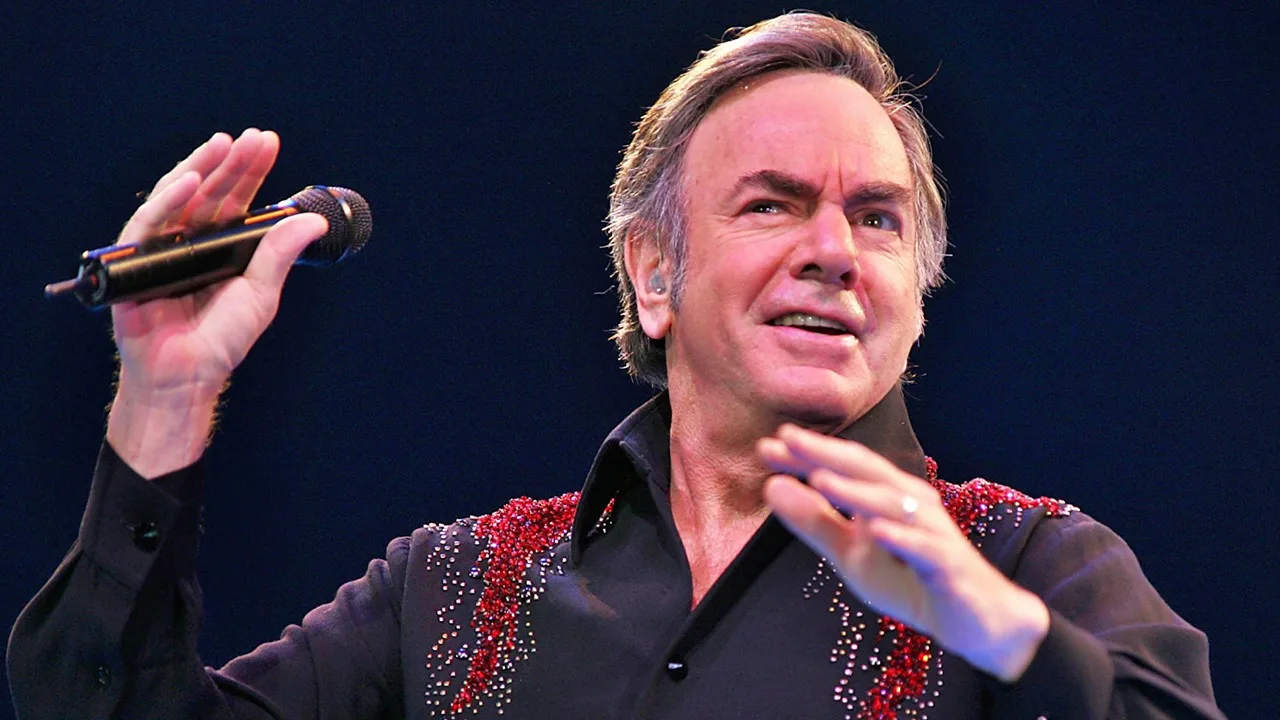
In “Create Me,” Neil Diamond does not sound passive or defeated. He sounds like a man brave enough to ask to be remade—an act of surrender so complete it becomes its own kind of strength.
Some Neil Diamond songs arrive with their power already visible. They announce themselves in the title, in the chorus, in the sheer size of the performance. “Create Me” works differently. It does not stride into the room. It opens its hands. And perhaps that is why it feels more provocative than fans remember. The song appeared on 12 Songs, released on November 8, 2005, an album produced by Rick Rubin that marked one of the most important late-career renewals of Diamond’s life in music. The record debuted at No. 4 on the Billboard 200, which was then his highest-charting album debut, and critics widely heard it as a stripping-away of excess—a return to the songwriter rather than the grand entertainer. In that setting, “Create Me” feels especially revealing: not flashy, not defensive, but startlingly open.
The most valuable fact here is also the simplest one: Neil Diamond wrote the song himself. That matters because “Create Me” does not sound like a clever exercise in romantic rhetoric. It sounds personal in a deeper way, as if the words had to be asked rather than merely composed. The lyric fragments publicly available from the official streaming metadata tell the story clearly enough: “Take me in your hands and shape me,” he sings, and later, “Lift me up and give a meaning / To a dream that I’ve been dreaming.” Those are not the words of a man performing invulnerability. They are the words of someone admitting incompleteness.
And that is where the song becomes more powerful than it first seems.
Because surrender in popular music is often treated as weakness, humiliation, or collapse. But “Create Me” does not sound humiliated. It sounds willing. That is a very different emotional color. Diamond is not begging to be rescued from nothingness in some pitiful way. He is offering himself to transformation. There is trust in that, and risk, and a kind of emotional nakedness that many performers spend entire careers trying to avoid. The title itself is bold for that reason. To ask someone—or perhaps something greater than oneself—to create you is to admit that self-sufficiency has limits. It is also to admit that love, faith, or meaning may require a person to be remade from the inside out.
That is why the song feels more provocative than many listeners remember. Not provocative in the obvious sense of scandal or confrontation, but in a quieter, more unsettling way. Neil Diamond had long been associated with command, sweep, theatrical force, and emotional certainty. Yet here he lets himself sound unfinished. He does not hide behind the old armor of charisma. On 12 Songs, with Rick Rubin guiding the sound toward something leaner and more exposed, that vulnerability lands with unusual clarity. The production does not inflate the song into a monument. It leaves room for the plea to tremble.
There is also something moving about where this song sits in Diamond’s long story. By 2005, he had nothing left to prove in the ordinary commercial sense. He was already a major figure, already woven into American popular song, already the voice behind records that had survived for decades. And yet one of the most striking moments on this comeback album comes not from triumph, but from openness. That gives “Create Me” its dignity. It is not youthful yearning. It is seasoned yearning—desire still alive after years, still searching, still willing to be changed.
Some listeners hear the song in romantic terms, others in spiritual ones. There is enough in the language to allow both. Even a fan discussion archived online reads it as possibly addressed to God, especially in light of Diamond’s broader themes of meaning and calling. That interpretation cannot be treated as definitive on its own, but it does point toward the song’s special power: “Create Me” does not close itself inside one narrow emotional lane. It reaches toward love, but also toward renewal. Toward intimacy, but also toward purpose. That ambiguity is part of what makes it linger.
So yes, “Create Me” proves that Neil Diamond could make surrender sound powerful. He does it not by disguising surrender as strength, but by revealing that true surrender already contains strength inside it. To ask to be shaped, lifted, given meaning—that is not the language of defeat. It is the language of someone who still believes transformation is possible. And in Diamond’s voice, that belief carries real weight. The song does not shout. It does something rarer. It kneels without losing its stature.