
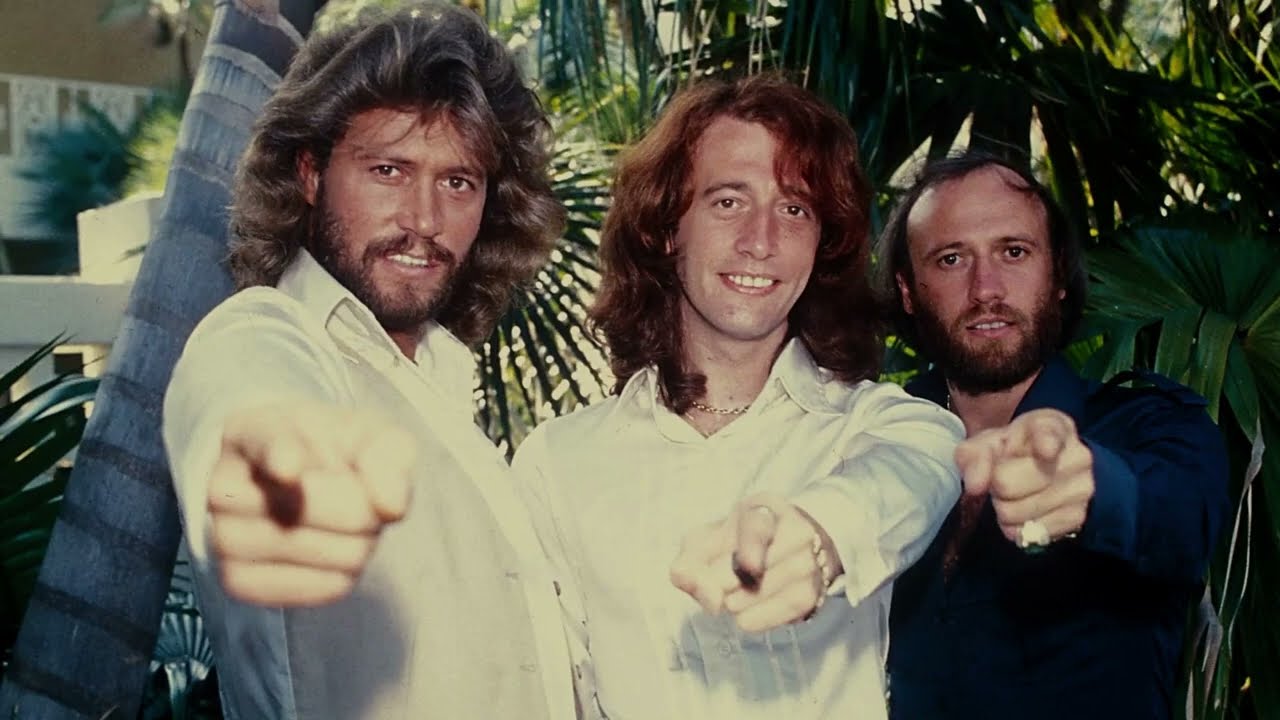
“Guilty” endures because it turns polished pop into something intimate: a love song carried by two voices that never compete, only lean closer.
There are songs that arrive as hits, and then there are songs that seem to drift into memory as atmosphere—soft light, late-night radio, the glow of a dashboard, the feeling that elegance itself once had a melody. “Guilty”, the 1980 duet by Barbra Streisand and Barry Gibb, belongs to that second kind. Released from Streisand’s landmark album Guilty, the song rose to No. 3 on the Billboard Hot 100, confirming that this was far more than a celebrity pairing. It was one of those rare collaborations in which two musical worlds met and somehow made each other sound even more complete.
The timing mattered. By 1980, the Bee Gees had already shaped the sound of an era. Their songwriting gifts had carried them far beyond their own recordings, and Barry Gibb in particular was entering a remarkable period as a writer and producer for other artists. Barbra Streisand, meanwhile, was already an artist of immense stature, known for control, precision, emotional intelligence, and a voice that could move from steel to silk in a single phrase. Bringing those two forces together might have felt risky on paper. In practice, it sounded effortless.
The story behind “Guilty” is inseparable from the album that shares its name. The Guilty album was largely written and produced by Barry Gibb, with key production help from Albhy Galuten and Karl Richardson. It became one of the biggest commercial triumphs of Streisand’s career. The title track itself was written by Barry, Robin, and Maurice Gibb, which means the song carries the full songwriting imprint of the Bee Gees, even as it is delivered through the sophisticated dramatic poise of Streisand and the tender, unmistakable high tenor of Barry.
What makes the song linger is not merely its success, but its emotional architecture. “Guilty” is a love song, yes, but not a naïve one. Its language suggests surrender without shame, devotion without apology. The title hints at scandal, yet the song itself feels almost serene—as if love has reached the point where explanation is no longer necessary. That tension gives the song its quiet sophistication. It does not plead. It does not chase. It simply confesses, with grace.
Listen closely to the way Barbra Streisand enters the song. Her phrasing is calm, centered, and luminous. Then Barry Gibb appears, not as a rival presence but as a warm current running beneath her voice. Their blend is the real revelation. Streisand brings clarity and dramatic poise; Barry brings softness, ache, and a kind of romantic vulnerability that only he could make sound this natural. Together, they create the feeling of two people meeting in the same emotional room at the exact right time.
Musically, the arrangement is pure early-1980s adult pop at its finest—sleek, melodic, and unhurried. Yet beneath that polish is the craftsmanship that made the Bee Gees such formidable songwriters. The melody unfolds with patience. The chorus lands gently but memorably. Nothing is overdone. There is no need for vocal acrobatics or heavy drama because the song trusts its own elegance. That restraint is part of its lasting power. Many songs chase intensity; “Guilty” lets intimacy do the work.
It also reveals something important about Barry Gibb as a songwriter. Long before people began speaking in reverent tones about legacy catalogs and cross-generational influence, Barry was already proving that he could shape songs around other artists without losing his identity. On “Guilty”, the Bee Gees sound is present, but it never overwhelms Streisand. Instead, it frames her beautifully. That balance is harder to achieve than it sounds. Many collaborations feel negotiated. This one feels natural.
Commercially, the song helped reinforce the extraordinary success of the Guilty project, an album that went on to become one of Barbra Streisand’s signature releases. Culturally, it did something even finer: it gave adult contemporary pop one of its defining duets. Decades later, when people return to “Guilty”, they are not simply revisiting a chart hit. They are revisiting a mood—a certain kind of sophistication that mainstream pop once embraced without embarrassment.
And perhaps that is why the song still resonates. It reminds listeners of a time when romance in popular music could be mature, composed, and deeply felt all at once. No excessive production trick can replace what is here: a beautifully written melody, two instantly recognizable voices, and the confidence to let a song unfold with dignity. In an age that often rewards speed and noise, “Guilty” still feels like an exhale.
There is also something moving in the way the song reflects the wider Bee Gees legacy. The brothers were never just hitmakers; they were architects of feeling. Whether writing for themselves or for others, they understood how to wrap longing, devotion, and memory into melodies that stayed behind long after the record stopped spinning. “Guilty” is one of the finest examples of that gift. It is polished, certainly, but never cold. Refined, but never distant.
In the end, the song’s title almost feels ironic. There is nothing to defend here. Barbra Streisand and Barry Gibb created a duet of unusual grace—one that honored the strengths of both artists while giving the Bee Gees songbook another chapter of quiet distinction. Some songs age because they are tied to a moment. “Guilty” endures because it still sounds like what great popular music can be when taste, feeling, and craft meet in perfect balance.