
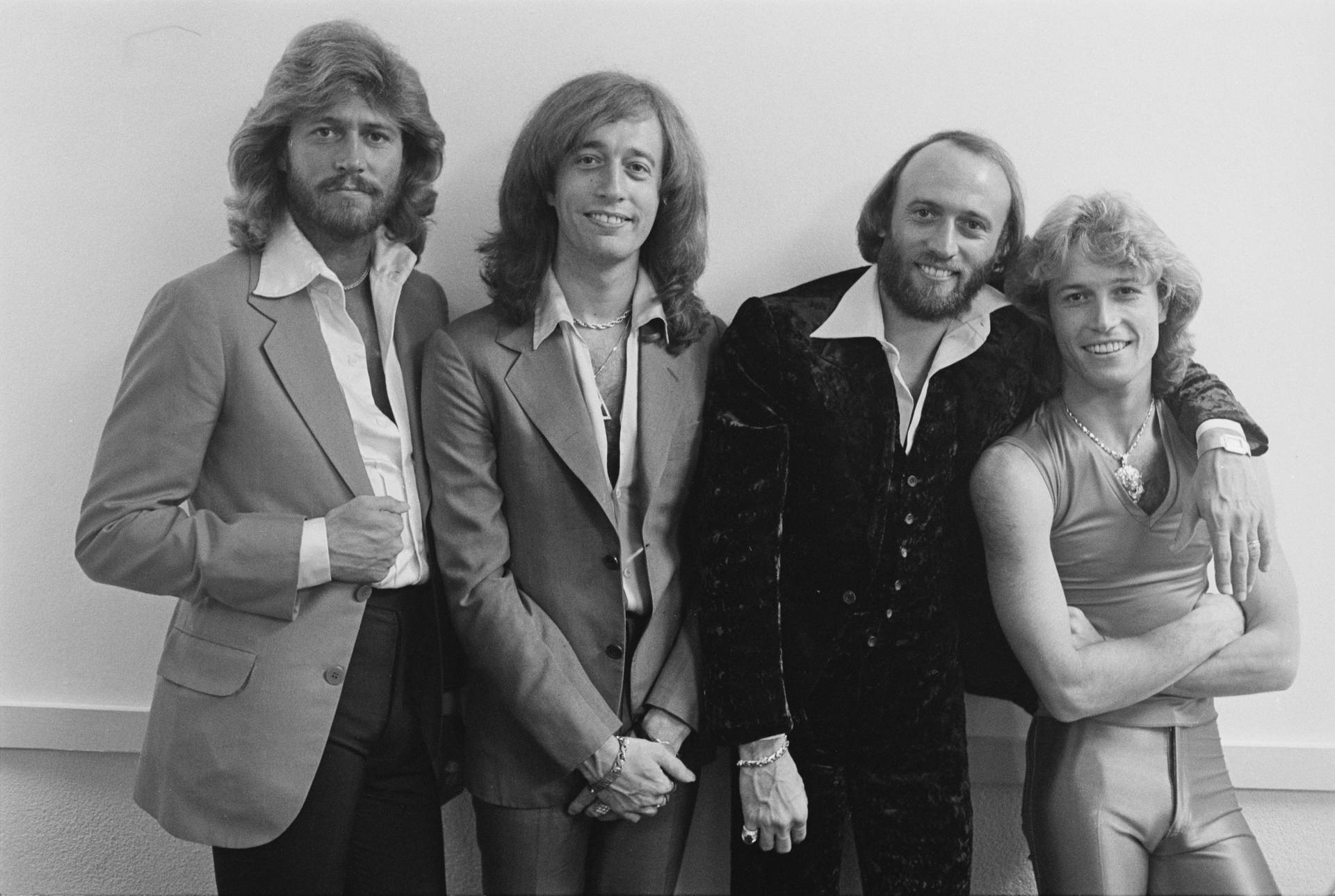
“Children of the World” feels like a mission statement—one of those Bee Gees recordings that didn’t just fill an album, but captured the sound of three brothers stepping into a brighter, bolder chapter.
There is something deeply moving about hearing a turning point while it is still unfolding. That is part of what makes “Children of the World” by the Bee Gees so fascinating. Released in 1976 as the title track of the album Children of the World, the song was not the record’s big chart single, yet it carries the spirit of the entire project more clearly than almost anything else on it. If you want to understand the moment when the Bee Gees stopped looking backward and began charging toward the sound that would soon define an era, this song tells the story beautifully.
The album Children of the World arrived in September 1976 and reached No. 8 on the Billboard 200 in the United States. It also became a major international success, helped by the explosive No. 1 single “You Should Be Dancing”, which topped the Billboard Hot 100. Another single from the album, “Love So Right”, climbed to No. 3 in the U.S. That chart performance matters, because it places “Children of the World” inside a very specific historical moment: the Bee Gees were rebuilding their identity, and the public was beginning to hear them in a new way.
What makes this chapter especially important is that it came after a period of uncertainty. The Bee Gees—Barry Gibb, Robin Gibb, and Maurice Gibb—had already known enormous fame in the late 1960s with elegant, melancholic pop songs that showcased their gift for harmony and aching melody. But by the mid-1970s, popular music was changing quickly, and they needed more than nostalgia to survive. They needed momentum, confidence, and a fresh sonic language. Children of the World became one of the albums that gave them exactly that.
There is also a technical and emotional backstory here that longtime listeners often appreciate. For earlier recordings, the group had worked extensively with producer Arif Mardin, whose influence on their sophisticated sound was substantial. But when it came time to make Children of the World, Mardin was unavailable, and rather than simply repeat old methods, the Bee Gees produced the album themselves with engineers Karl Richardson and Albhy Galuten. That mattered. It forced the brothers to trust their own instincts more fully, and the result was a record with greater rhythmic confidence, richer groove, and a more modern pulse.
The title track, “Children of the World”, reflects that transition in a particularly striking way. It does not rely on the fragile chamber-pop mood of the group’s earlier classics. Instead, it opens outward. The arrangement has lift, movement, and a sense of collective invitation. Even the title itself suggests something larger than romance or heartbreak. This is a song that reaches for unity, youthfulness, and possibility. It sounds like a band trying to speak not just to existing fans, but to the atmosphere of the decade.
Lyrically, “Children of the World” carries a generous, almost idealistic warmth. It is not a protest anthem, nor is it wrapped in heavy-handed slogans. The Bee Gees were too musical, too emotionally intuitive, for that. Instead, the song offers a feeling—one of human closeness, shared rhythm, and hopeful belonging. In that sense, it fits the 1970s perfectly. This was a time when pop and dance music were increasingly becoming communal experiences, songs built not just for private reflection but for movement, gathering, and release. The Bee Gees understood that change as well as anyone.
And yet, even as the groove grows stronger, what remains unmistakably Bee Gees is the emotional intelligence in the vocals. The blend of the brothers’ voices still carries that familiar ache and refinement. Barry Gibb was by then leaning more confidently into the vocal style that would soon become iconic, but the group never abandoned harmony as their true center. That is why the song feels so satisfying. It is modern without losing its bloodline. It evolves, but it still belongs unmistakably to the same three brothers who once gave the world “Massachusetts”, “I Started a Joke”, and “How Can You Mend a Broken Heart”.
In hindsight, Children of the World now feels like a bridge between two identities: the thoughtful pop craftsmen of the late 1960s and early 1970s, and the global hitmakers who would soon dominate with Saturday Night Fever. That is why the title track deserves more affection than it usually receives. It may not have stormed the singles charts on its own, but it gave the album its name and its emotional thesis. It told listeners that the Bee Gees were thinking bigger, sounding freer, and aiming for a wider emotional horizon.
For many fans, that is the quiet beauty of songs like this. They do not always arrive with the fanfare of the biggest hit. They are not always the track radio played endlessly. But years later, they reveal themselves as the heart of the story. “Children of the World” is one of those recordings. It stands as a reminder that reinvention does not always announce itself with noise. Sometimes it arrives with harmony, confidence, and the unmistakable feeling that a beloved group has found the road ahead.
And perhaps that is why the song still resonates. It holds the optimism of its title, the craftsmanship of the Bee Gees, and the excitement of a band on the edge of something enormous. Before the soundtrack fame, before disco history turned them into symbols of an age, there was this song, this album, and this quietly thrilling declaration that their world was getting larger. Listening now, one can still hear that door opening.