
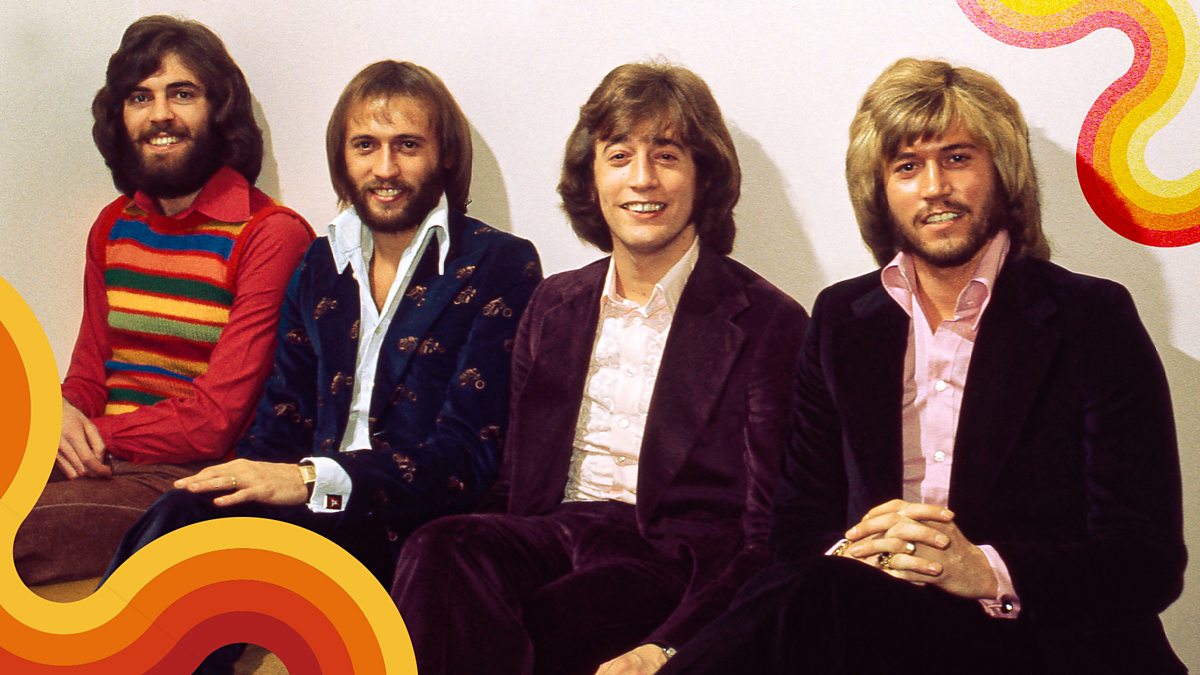
Gentle on the surface and wounded underneath, And The Sun Will Shine shows how the early Bee Gees could make hope sound as fragile as heartbreak.
Released in early 1968 on Horizontal, And The Sun Will Shine was not issued as one of the Bee Gees‘ main chart singles, so it did not receive its own separate major chart peak. Even so, its parent album performed strongly, reaching the Top 20 in both the UK and the US, at a moment when the group were building one of the most remarkable runs in late-1960s pop. That matters, because this song belongs to a very special chapter in their story: the period before the world came to define them by disco, when the brothers were writing lush, sorrowful, exquisitely melodic records that lived somewhere between pop, chamber music, and private confession.
Written by Barry Gibb, Robin Gibb, and Maurice Gibb, And The Sun Will Shine carries the emotional signature that made the early Bee Gees so distinctive. The arrangement is elegant and restrained, shaped by the group’s gift for melody and by the orchestral atmosphere that surrounded many of their finest recordings from this era. On Horizontal, a record filled with rich harmonies and introspective moods, the song feels like one of those quieter treasures that reveals more of itself with age. It may not have arrived with the commercial weight of Massachusetts or the immediate familiarity of World, but that is part of its lasting beauty. It was never overplayed into predictability. It remained something listeners could come back to and rediscover.
What makes And The Sun Will Shine so moving is the contradiction at its center. The title seems to offer reassurance. It suggests warmth, clearing skies, and the return of calm after emotional weather. But the song does not rush toward comfort. Instead, it lingers in uncertainty. The promise of sunlight is there, yet the sadness has not fully lifted. That tension gives the performance its depth. The Bee Gees understood, even at this early stage, that hope means more when it arrives slowly. They do not sing as if pain has already passed. They sing as if light is still being waited for, still being trusted, still being imagined through tears.
That emotional sophistication is one reason the early Bee Gees continue to be admired by serious listeners. Their best songs were never simply pretty. They carried ache inside the beauty. In And The Sun Will Shine, the melody feels delicate, but it is not weak. The vocal blend has tenderness, but also a certain distance, as though the singer is reaching for peace without quite being able to touch it. This was one of the brothers’ rare gifts: they could make sorrow sound dignified. They did not need grand gestures to make a song devastating. A measured phrase, a suspended harmony, a soft rise in the arrangement—these were enough.
There is also something unmistakably period-specific about the song, and that is part of its charm. The late 1960s were full of ambitious pop records dressed in strings and introspection, yet the Bee Gees brought a uniquely intimate sensibility to that world. Their melancholy was not theatrical in the way some of their contemporaries could be. It was inward, thoughtful, almost literary. On Horizontal, that quality appears again and again, but And The Sun Will Shine captures it with unusual grace. It sounds like a letter never sent, or the quiet sentence spoken after a long silence in a room where two people already know what has been lost.
For many listeners, the song’s deeper meaning lies in its refusal to separate grief from endurance. It does not pretend that optimism is easy. Instead, it suggests that emotional survival is a gradual act. The sun will shine, yes—but not because the world suddenly becomes simple. The light returns because the heart, however bruised, keeps going. That message may be subtle, but it is one of the reasons the song has endured among devoted fans. Beneath its gentleness is a very adult truth: recovery is rarely dramatic. More often, it is quiet. It begins before we fully believe in it.
It is also worth remembering how different this song is from the image many casual listeners still have of the Bee Gees. Later generations often meet the group through the dazzling pulse of the 1970s, through falsetto, rhythm, and dance-floor immortality. But songs like And The Sun Will Shine remind us that the brothers were master songwriters long before that era. They had already learned how to shape mood, how to make vulnerability sound timeless, and how to build records that did not merely entertain but stayed in the memory like weather, like fragrance, like an old ache returning unexpectedly.
That is why this song continues to matter. It is not one of the loudest entries in the Bee Gees catalog. It is not among the most commercially celebrated. But its quietness is its power. In a catalog full of famous titles, And The Sun Will Shine remains one of those beautiful lesser-spoken songs that reveals the soul of the group with unusual clarity. It catches them in that early, poetic phase when sadness and melody seemed inseparable, and when even a promise of sunshine could sound tender, hesitant, and profoundly human.