
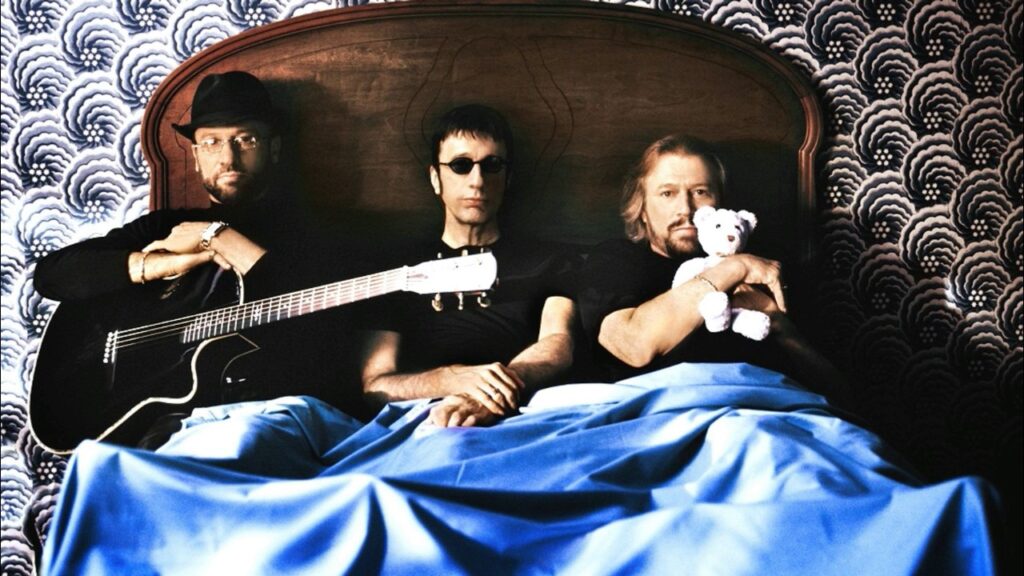
More than a disco favorite, More Than a Woman gave Saturday Night Fever its gentlest heartbeat, revealing how the Bee Gees could make longing sound as luminous as a dance floor.
When the Saturday Night Fever soundtrack arrived in late 1977, it did far more than accompany a hit film. It became a cultural event, rising to No. 1 on the Billboard 200 and holding that position for an extraordinary 24 consecutive weeks. It would go on to become one of the best-selling soundtrack albums ever released and later win the Grammy Award for Album of the Year. Inside that towering success were the obvious giants, songs like Stayin’ Alive, Night Fever, and How Deep Is Your Love. But for many listeners, the song that quietly lingers the longest is More Than a Woman, because it carries something the others only hint at: tenderness.
Written by Barry Gibb, Robin Gibb, and Maurice Gibb, More Than a Woman was created for the world of Saturday Night Fever, yet it never feels trapped inside the film. That is part of its beauty. It belongs to the disco era, certainly, but it also floats above it. Where some songs from that period chase rhythm first, this one wraps rhythm around emotion. The groove is smooth, the melody is soft-edged and glowing, and the harmonies arrive like warm light through a window at dusk. Even now, it sounds elegant rather than dated, heartfelt rather than theatrical.
One fascinating detail in the song’s history is that Saturday Night Fever included two well-known versions of More Than a Woman: one by the Bee Gees and one by Tavares. The Tavares recording leans more directly into the dance floor, while the Bee Gees version feels dreamier, more intimate, more inward. That contrast says a great deal about the song itself. It was sturdy enough to work as disco, but sensitive enough to become a romantic confession. The Bee Gees understood that balance better than almost anyone. They knew how to make music feel polished and immediate at the same time.
What gives this recording its enduring power is the way it slows the pulse without losing momentum. Barry Gibb’s lead vocal is tender and airy, never rushed, and the group’s signature harmonies give the song a sense of emotional lift, as though the melody is being carried rather than simply sung. There is a kind of grace in the arrangement. The beat moves, but it does not push. The strings shimmer, the rhythm section glides, and everything is placed with exquisite restraint. This is not the sound of a crowded club demanding attention. It is the sound of one private feeling surviving inside all that noise.
Lyrically, More Than a Woman is a declaration of devotion, but it is also a song about transformation. The title itself suggests that ordinary language is no longer enough. The singer is trying to describe a love that exceeds category, that changes the emotional weather of a room, perhaps even of a life. That may sound simple on paper, yet the Bee Gees give it weight by refusing to oversell it. They sing with longing instead of excess. The feeling is deep, but the performance remains poised. That is why the song still reaches people decades later. It trusts melody, phrasing, and atmosphere to do the work that louder records often try to force.
There is also something important about where the song sits within the mythology of Saturday Night Fever. The film is often remembered through its sharp images: Brooklyn streets, bright lights, restless youth, and the famous white suit that became a symbol of an era. But those images alone do not explain why the soundtrack still resonates. The real reason is emotional contrast. A world of swagger needs vulnerability somewhere beneath it, and More Than a Woman provides exactly that. It softens the edges of the story. It reminds us that beneath style, movement, and ambition, there is still yearning. There is still the hope that another person might see the best version of who we are.
In the larger story of the Bee Gees, the song also shows how complete their artistry had become by 1977. They were not merely writing hits; they were shaping moods, scenes, and memory itself. The brothers could deliver a global anthem, a dance-floor staple, and a love song of almost fragile delicacy within the same creative period. That range is one reason their legacy has endured beyond changing fashion. People may first come to them through the rhythm, but they stay because of the feeling. More Than a Woman is one of the clearest examples of that truth.
Perhaps that is why the song feels so moving today. It has none of the strain of trying to prove itself. It simply arrives, graceful and sure, with the quiet confidence of a record made by artists at the height of their powers. Even listeners who know every beat of the Saturday Night Fever era often return to this track with a special kind of affection. Not because it shouts the loudest, but because it understands the softer side of memory. Long after the lights dim and the scene fades, More Than a Woman remains what it has always been: one of the Bee Gees’ most elegant reminders that disco could shimmer, sway, and still speak directly to the heart.